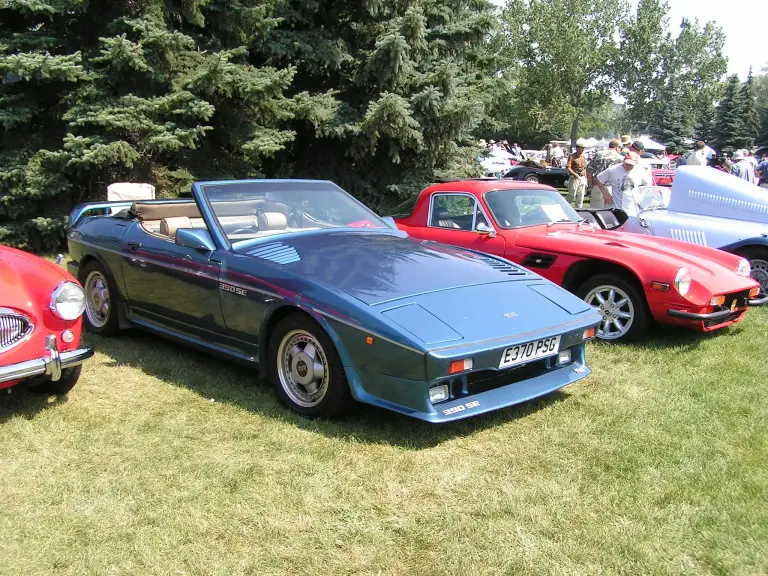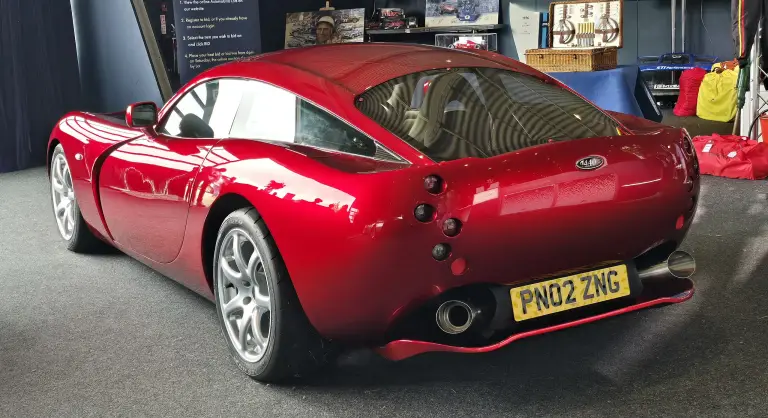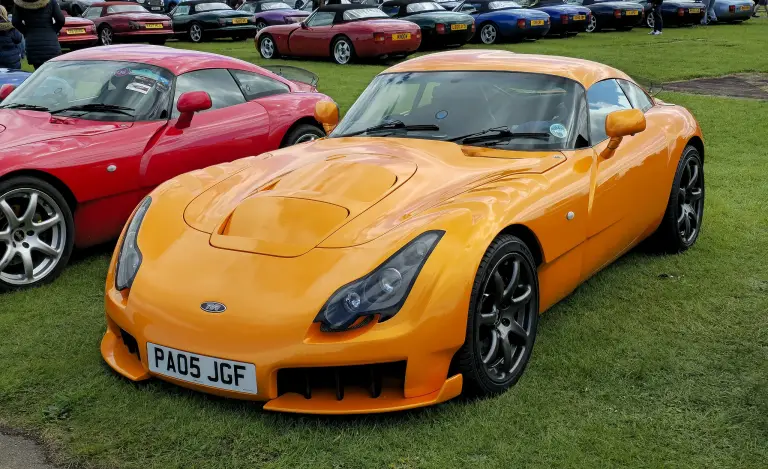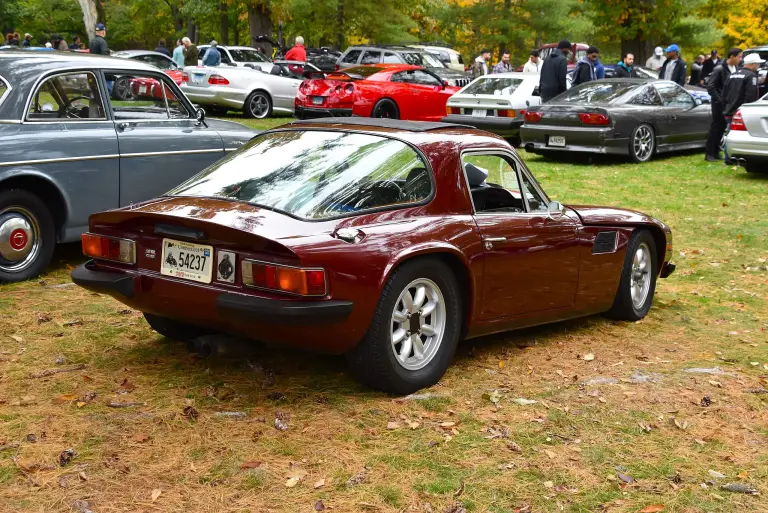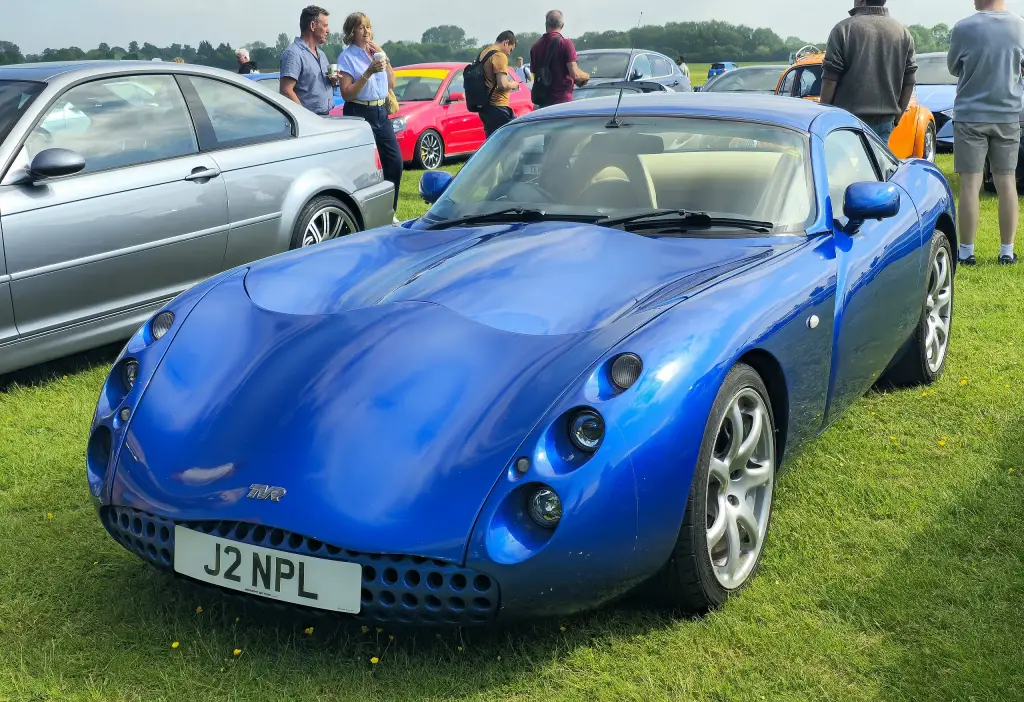
The TVR Tuscan Speed Six revived a name first used in 1967, but the engine was entirely new: TVR’s own 4.0-litre inline six, built in-house. Introduced in 1999, it stayed in production until TVR closed in 2006.
TVR Tuscan Speed Six at a glance
| Maker | TVR, Blackpool |
|---|---|
| Production | 1999–2006 |
| Name | a tribute to the original Tuscan of 1967 |
| Engine | 4.0 L TVR Speed Six, 3,996 cc, or a 3.6 L short-stroke version |
| Power | 360 hp at 7,000 rpm; 380 hp with the Red Rose pack; 390 hp in the Tuscan S |
| Torque | 420 N·m (310 lb·ft) at 5,250 rpm |
| Bore and stroke | 96 mm × 92 mm (4.0 L); 96 mm × 83 mm (3.6 L) |
| Weight | 1,100 kg |
| 0–60 mph | 3.68 seconds in a post-2003 Tuscan S |
| 0–100 mph | 8.08 seconds |
| Facelift | 2005, sold as the Tuscan 2 |
Based on one source: the English Wikipedia article on the TVR Tuscan Speed Six.
History of the TVR Tuscan Speed Six
The Tuscan Speed Six was introduced in 1999, though press reviews were held back until 2000 because Peter Wheeler imposed a ban on them. It began with the 4.0-litre version of the Speed Six, rated at 360 hp at 7,000 rpm and 420 N·m at 5,250 rpm. A Red Rose pack raised output to 380 hp and brought track-focused chassis upgrades and an AP Racing braking system, while the top-of-the-range Tuscan S made 390 hp and added aerodynamic aids, most noticeably a rear lip spoiler to increase downforce.
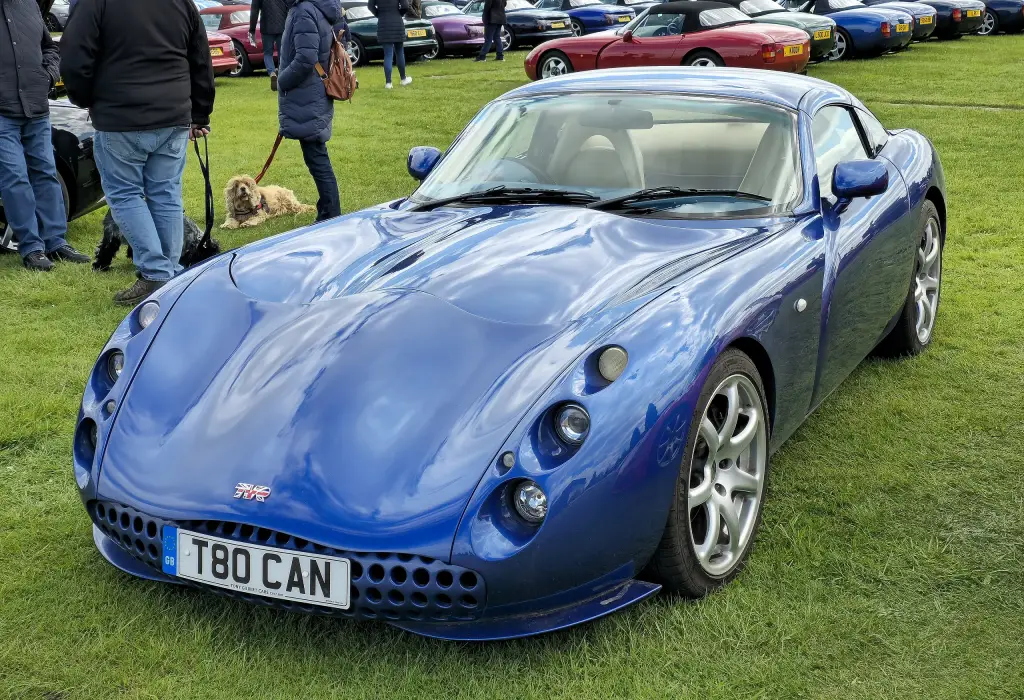
Five inline-six engines were offered over the life of the car. Four were naturally aspirated 4.0-litre Speed Six units in different states of tune, and the fifth was a 3.6-litre short-stroke version producing the same power as the least powerful 4.0 but slightly less torque. Although the chassis and suspension were repeatedly revised, the size and appearance of the variants stayed almost identical apart from the S model’s front undertray and small boot-lid spoiler.
In October 2005 the Tuscan 2 arrived, though in reality it was a minor facelift: cosmetic changes to the front and rear lights, the dashboard and the S model’s spoilers, plus small chassis changes to improve handling. At the same time a full soft-top was added alongside the original targa. The base models were detuned to 350 hp and 393 N·m while keeping the 1,100 kg weight, and the interior was refreshed with a more conventional and ergonomic layout. Test figures for a post-2003 Tuscan S, achieved without traction control or anti-lock brakes, were 0–60 mph in 3.68 seconds and 0–100 mph in 8.08 seconds. TVR’s design philosophy held that such aids did not improve either performance or safety, and the company rejected the idea that they were safety devices at all. A modified Tuscan raced at the 24 Hours of Le Mans in 2003 and again the following year, and production lasted until TVR closed in 2006.
Design and features
- In-house six: the 4.0-litre Speed Six, from 360 to 390 hp.
- Tuscan S: the 390 hp top model with a rear lip spoiler.
- Red Rose pack: 380 hp plus chassis and brake upgrades.
- No driver aids: no traction control or ABS, by company philosophy.
TVR Tuscan Speed Six versions
- Tuscan Speed Six (1999): the original 360 hp car.
- Red Rose: 380 hp with chassis and AP Racing brake upgrades.
- Tuscan S: 390 hp with aerodynamic additions.
- 3.6-litre: the short-stroke engine option.
- Tuscan 2 (2005): the facelift, with a soft-top option.
The Tuscan Speed Six began life as a proposed Griffith and shared its engine with the T350 and Sagaris. More cars are in the TVR collection.
Sources
- TVR Tuscan Speed Six, English Wikipedia: engines, versions, facelift, performance