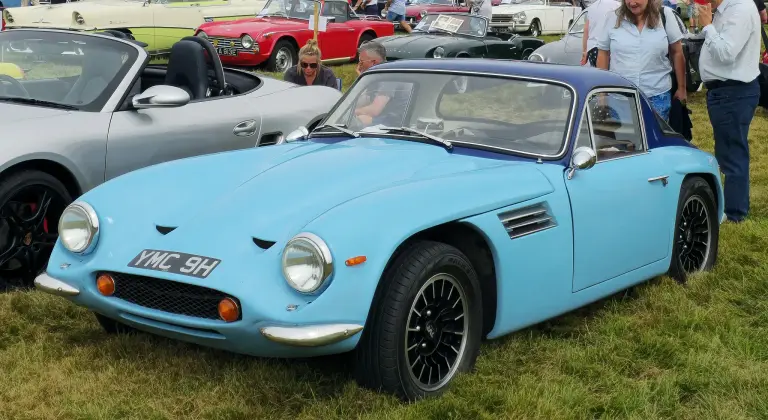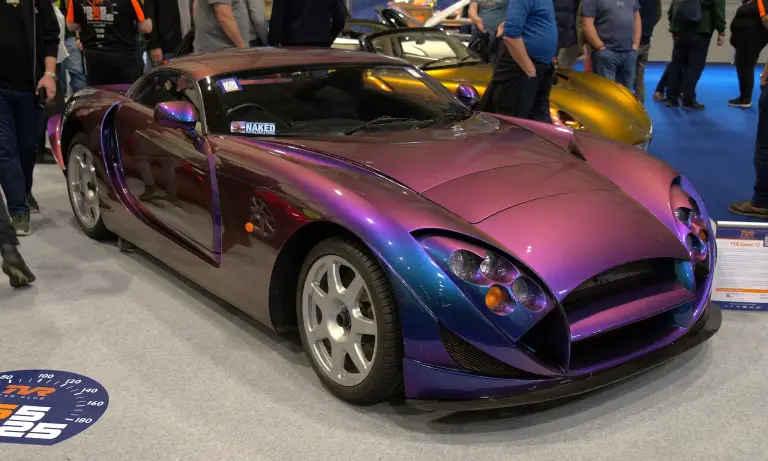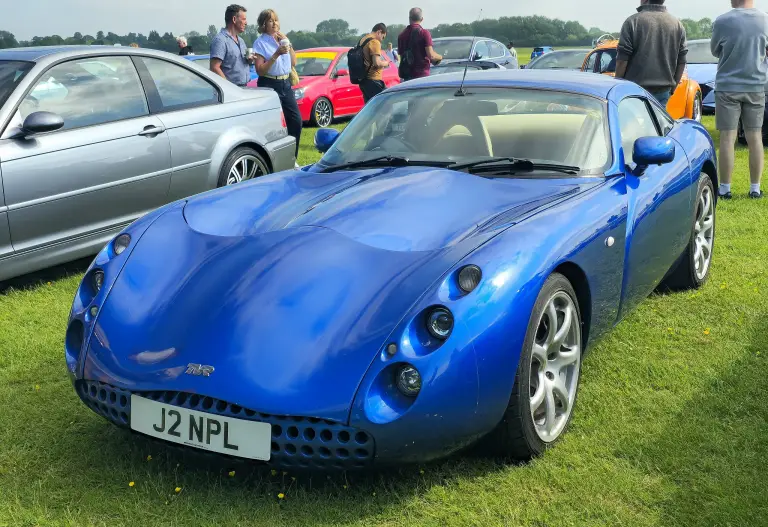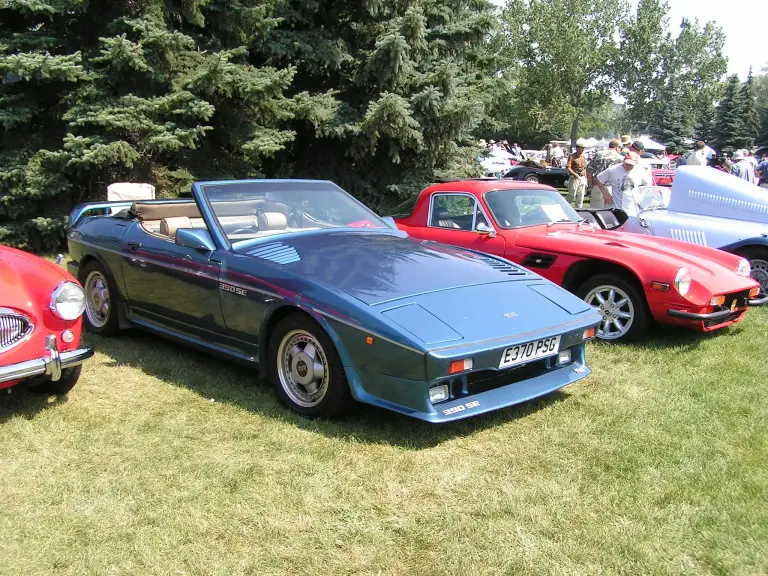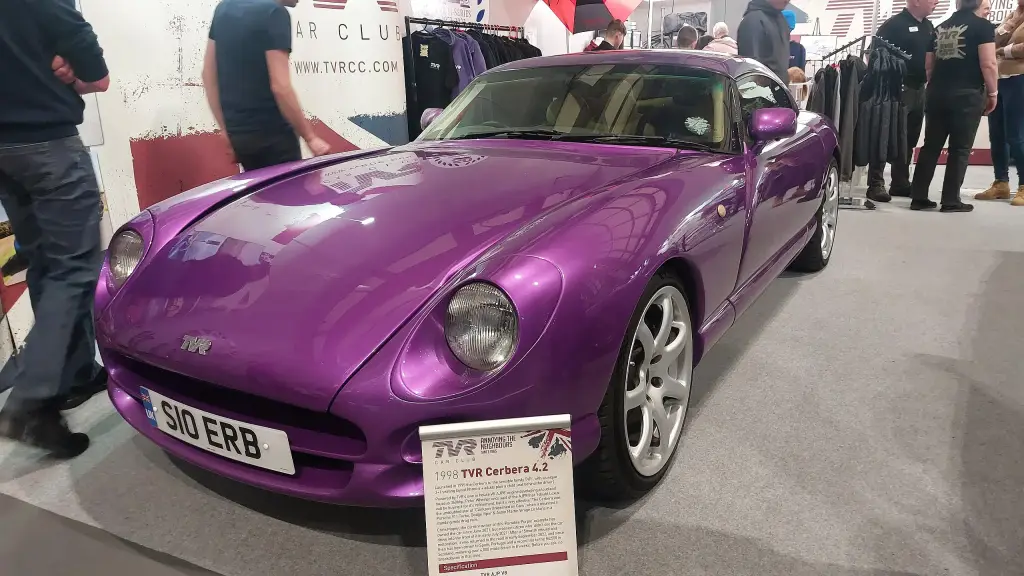
The TVR Cerbera was the third car built under Peter Wheeler’s leadership, after the Griffith and the Chimaera, and it broke three pieces of TVR tradition at once: it had a hardtop, it seated 2+2, and it was powered by an engine designed and built by TVR itself.
TVR Cerbera at a glance
| Maker | TVR, Blackpool |
|---|---|
| Production | 1996–2006 |
| First shown | 1993 London Motor Show |
| Layout | 2+2 coupé, which TVR called a “3+1” |
| Engine | TVR Speed Eight (AJP8), 4.2 or 4.5 litres |
| 4.2-litre output | 360 hp (268 kW), top speed 297 km/h |
| 4.5-litre output | 420 hp (313 kW); 440 hp with the Red Rose option |
| Six-cylinder | 4.0-litre Speed Six, added later |
| Quoted weight | 1,100 kg |
| Steering wheel | two-spar, so the minor gauges below it stay visible |
| Facelift | 2000, with headlights closer to the Tuscan’s |
| Last car | 4.5 Lightweight auctioned in August 2006 |
Based on one source: the English Wikipedia article on the TVR Cerbera.
History of the TVR Cerbera
The Cerbera’s name comes from Cerberus, the three-headed beast of Greek legend that guarded the entrance of Hades. Introduced at the 1993 London Motor Show, the coupé was the first TVR hardtop, since the Griffith and the Chimaera were both convertibles, the first TVR with 2+2 seating and the first to use a TVR engine. The rear seats are smaller than the front, and the passenger seat slides farther forward than the driver’s to give the person behind more room, which is why TVR called the layout “3+1”.
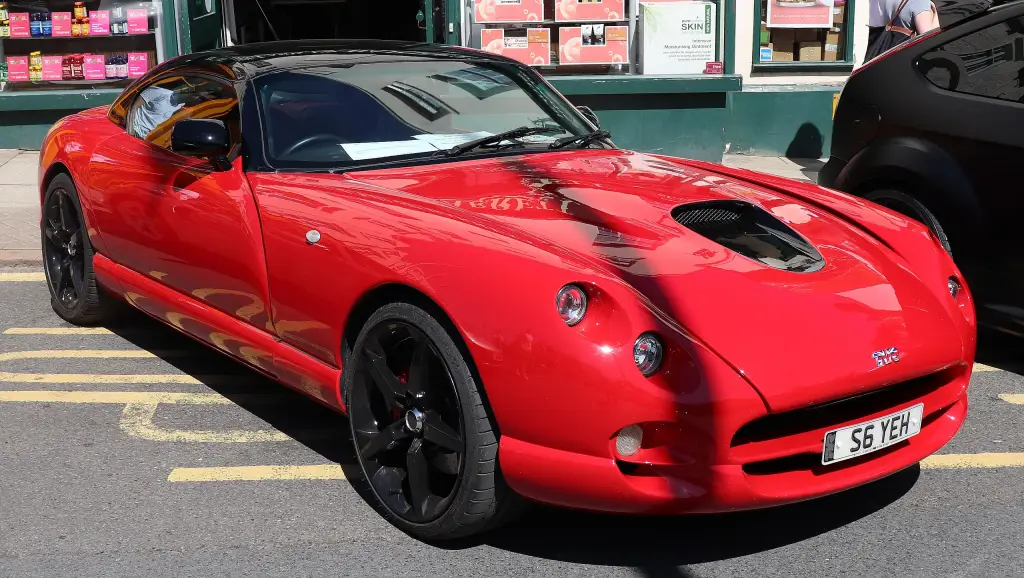
Until the Cerbera, TVR had bought V8s from Rover and tuned them; when Rover was bought by BMW, Peter Wheeler did not want to depend on German decisions about the engine’s future. He engaged the race engineer Al Melling to design a V8 that TVR could build itself. The result was the Speed Eight, officially the AJP8 after Al Melling, John Ravenscroft and Peter Wheeler: a 75-degree V8 with a flat-plane crank, 4.2 litres and 360 hp, giving a top speed of 297 km/h. A 4.5-litre version followed with 420 hp, and later 4.5s offered the Red Rose option that raised output to 440 hp on super-unleaded fuel, selected by an unmarked dashboard button. The whole engine weighs 121 kg according to TVR. A 4.0-litre Speed Six slant six, with four valves per cylinder instead of two, also debuted in the Cerbera, although early examples proved unreliable and many needed rebuilding.
The dashboard was designed for this car alone, with a two-spar steering wheel because a third spar would have obscured the small instruments mounted below the wheel. TVR quoted 1,100 kg, though owners reported anything between 1,060 and 1,200 kg. Like other Wheeler-era TVRs the Cerbera had a long-travel throttle and very sharp steering, two turns lock to lock in the V8 cars. In 2000 the headlights were restyled to look like the Tuscan’s, and 4.5-litre cars could be ordered with a lightweight option using thinner body panels and a reworked interior. In August 2006 TVR auctioned what it called “The Last Cerbera”, a 4.5 Lightweight in Pepper white with Prussian blue leather, which sold below its reserve to the highest bidder for under £45,000.
Design and features
- TVR’s own V8: the AJP8 Speed Eight, 4.2 or 4.5 litres, up to 440 hp.
- First hardtop: a fixed-roof coupé after two decades of TVR convertibles.
- 2+2 layout: a “3+1” cabin with a sliding front passenger seat.
- Purposeful cabin: two-spar wheel and a dashboard designed only for this car.
TVR Cerbera versions
- 4.2 (1996 onwards): 360 hp and a 297 km/h top speed.
- 4.5: 420 hp, or 440 hp with the Red Rose option.
- Speed Six: the 4.0-litre slant six version.
- 2000 facelift: Tuscan-style headlights across the range.
- 4.5 Lightweight: lighter panels and a reworked interior.
- Last Cerbera (2006): a one-off Pepper white car sold at auction.
The Cerbera spawned the extreme Cerbera Speed 12, and it followed the Chimaera in the range. More cars are in the TVR collection.
Video: Old Top Gear – TVR Cerbera
Video by stewester on YouTube.
Sources
- TVR Cerbera, English Wikipedia: history, engines, cabin, facelift, last car