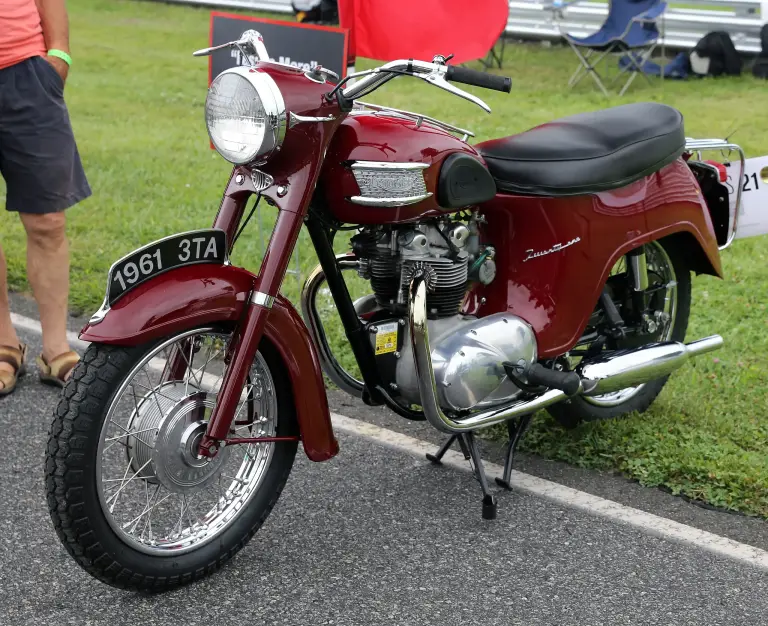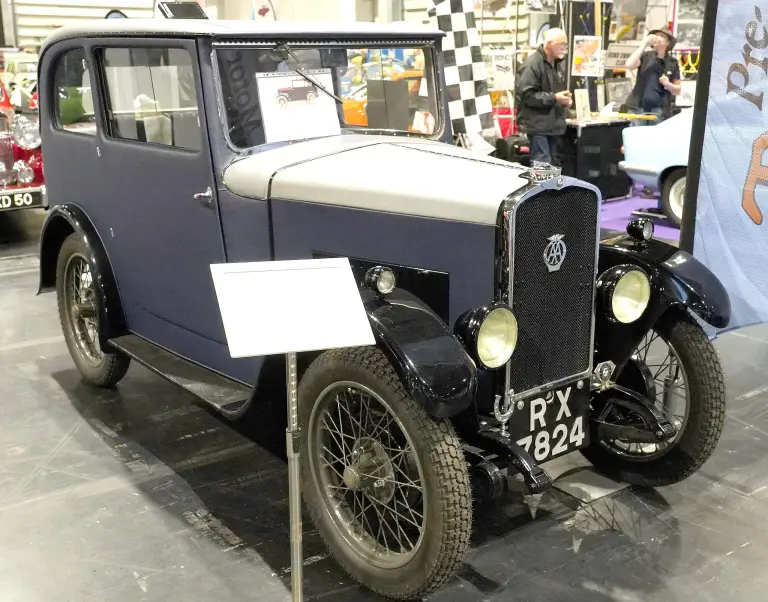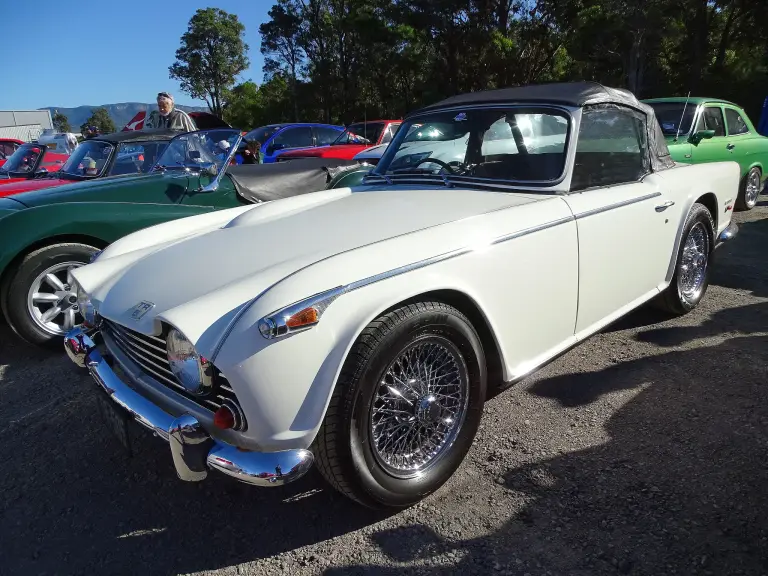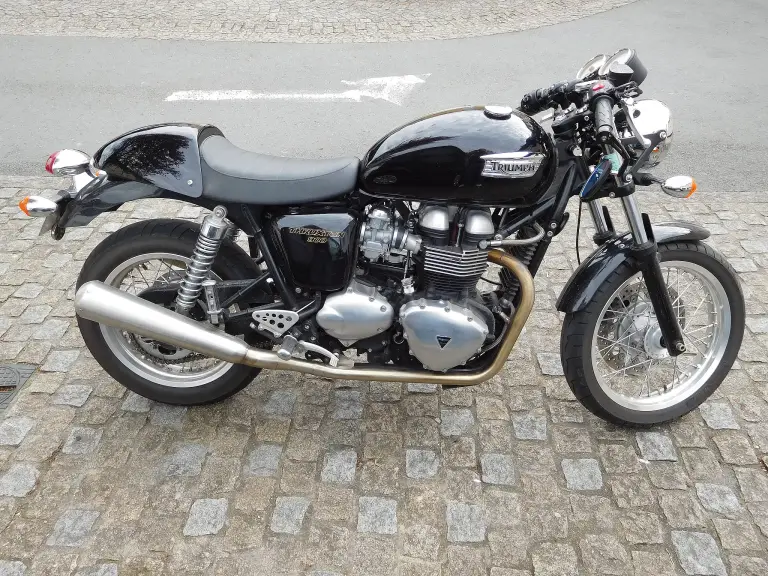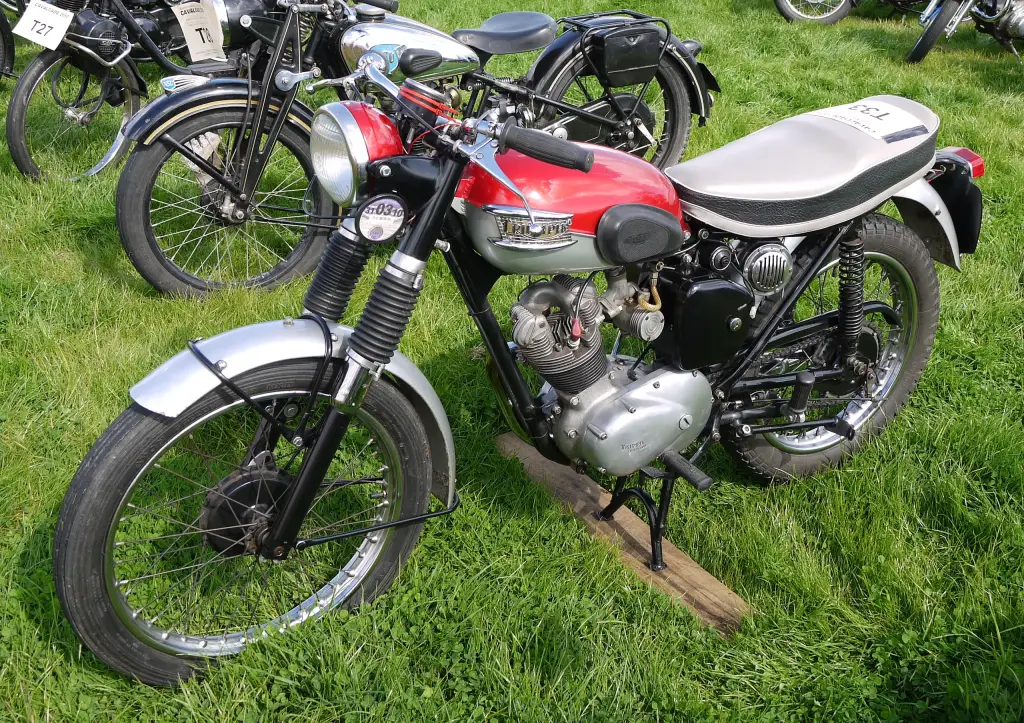
The Triumph Tiger Cub was a 200 cc single-cylinder motorcycle built at Meriden. Designed by Edward Turner and launched at the Earls Court show in November 1953, it became one of the most popular small British bikes of its era.
Triumph Tiger Cub at a glance
| Maker | Triumph Motorcycles, Meriden |
|---|---|
| Launched | Earls Court show, November 1953 |
| Designer | Edward Turner |
| Basis | Triumph T15 Terrier, 150 cc |
| Engine | 200 cc single-cylinder |
| First model | T20, 1954–1956 |
| Rear suspension | plunger to 1957, then swinging arm with twin units |
| Sports Cub | T20SH, 74 mph mean maximum |
| Off-road | TS20 Scrambles Cub, TR20 Trials Cub |
| Last model | T20 Super Cub, 1966–1968 |
Based on the English Wikipedia article on the Tiger Cub.
History of the Triumph Tiger Cub
1953: from Terrier to Cub
The Tiger Cub was based on the Triumph T15 Terrier of 150 cc, itself a surprise announcement just before the 1952 show. The 200 cc T20 Tiger Cub was designed by Edward Turner and launched at the Earls Court show in November 1953, and it competed well against the small-capacity motorcycles of the time, including Villiers-engined two-strokes. The first T20 of 1954–1956 came from the Terrier with the same frame and forks.
Development
The early Cub used the Terrier’s plunger rear suspension frame; from 1957 this gave way to a more modern swinging arm with twin suspension units. The ignition points sat in a distributor-type device on the crankcase behind the cylinder, and in 1963 they moved to the end of the camshaft, reached through a chrome cover below the base of the cylinder.
Sports and off-road versions
The Sports Cub, designated T20SH, had slimline mudguards, no rear panelling or headlamp nacelle, a higher compression ratio and other engine work; Motor Cycle timed it at a 74 mph mean maximum. Off-road versions with a high-level exhaust, altered suspension and studded tyres were sold as the TS20 Scrambles Cub and the TR20 Trials Cub.
The end and the military Cubs
The last model was the T20 Super Cub, which used a basic frame and parts shared with the BSA Bantam D10, including larger-diameter wheels with full-width hubs, to keep production costs down. Launched in November 1966, it was discontinued in 1968 and briefly replaced by the 250 cc TR25W Trophy, based on BSA’s B25 Starfire. A small number of T20WD Tiger Cubs went to the French Army, set up for a pillion passenger, painted green, with an extended heavy-duty kickstand, an extended rear carrier and leather pannier bags; a chrome crash bar could be fitted at the front.
Design and features
- Edward Turner design — a 200 cc single developed from the 150 cc Terrier.
- Sports Cub — T20SH timed at a 74 mph mean maximum.
- Off-road range — TS20 Scrambles and TR20 Trials Cubs.
- Military use — green T20WD machines supplied to the French Army.
Triumph Tiger Cub versions
- T20 Tiger Cub (1954–1956): plunger frame, Terrier cycle parts.
- From 1957: swinging-arm rear suspension.
- T20SH Sports Cub: slimline mudguards, higher compression, 74 mph.
- TS20 Scrambles and TR20 Trials: off-road versions.
- T20 Super Cub (1966–1968): BSA Bantam-derived frame and wheels.
The Cub is the small sibling of the Tiger family and of the bigger Thunderbird twins. More in the Triumph collection.
Sources
- Triumph Tiger Cub, English Wikipedia: launch, development, Sports Cub, off-road models, Super Cub, military