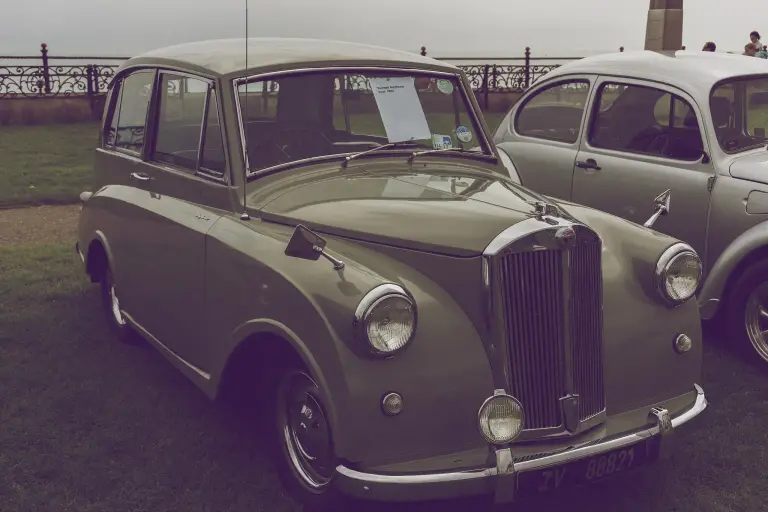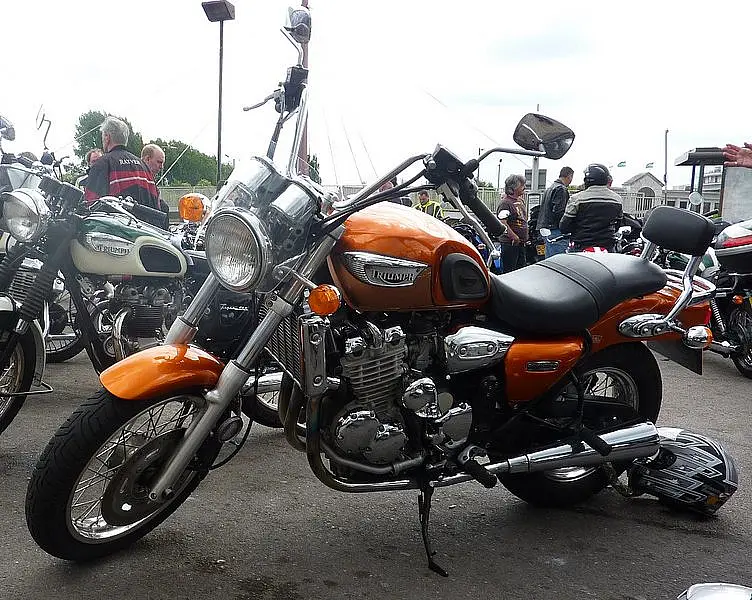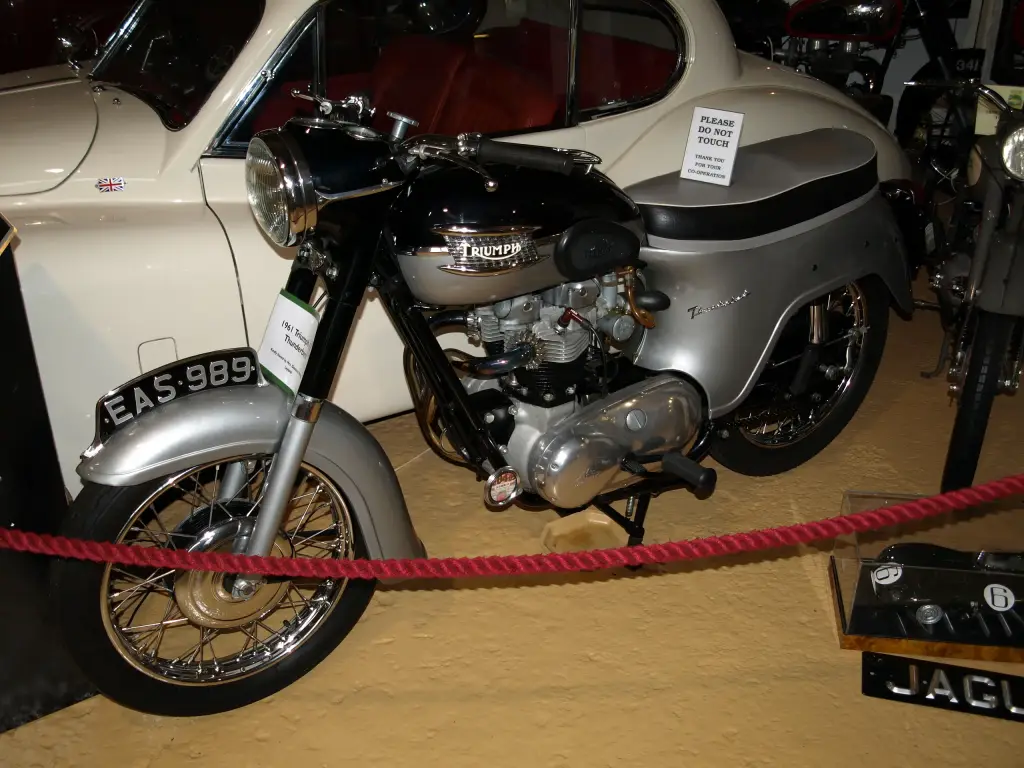
The Triumph Thunderbird was introduced in 1949 and built in many forms until 1966. A 650 cc twin intended to win American buyers, it became one of the most famous British motorcycles of the 1950s, and its name was reused three more times.
Triumph Thunderbird at a glance
| Maker | Triumph Engineering, Meriden |
|---|---|
| Introduced | 1949 |
| Original model | 6T Thunderbird |
| Engine | 650 cc parallel twin, bored out from the 500 cc Speed Twin |
| Origin of idea | Edward Turner, on trips to the USA |
| Launch run | three standard bikes, 500 miles at 92 mph average, Montlhéry |
| Logo | the ‘paper dart’ on the chain case, 1955–1962 |
| Bathtub fairing | from 1960, dropped quickly in the USA |
| Unit engine | 1963 |
| Meriden revival | TR65 Thunderbird, April 1981 |
Based on the English Wikipedia article on the Thunderbird.
History of the Triumph Thunderbird
1949: the 6T
To capture the American market, the 6T Thunderbird used a version of the earlier Speed Twin’s parallel twin bored out from 500 cc to 650 cc for the extra horsepower American customers wanted. The idea of enlarging the Speed Twin, the Thunderbird name and its paper dart logo were all thought up by managing director Edward Turner on his regular trips to Triumph’s operations in the United States. The paper dart was embossed on the chain case cover from 1955 to 1962; before that it appeared as a decal on the headlamp nacelle.
The launch and The Wild One
The 6T was launched at Montlhéry near Paris, where three standard-production bikes were ridden around the circuit by a relay of riders who averaged 92 mph over 500 miles; all three were ridden to the circuit and back to the Meriden factory. Triumph gained further publicity from Marlon Brando’s 1953 film The Wild One, in which he rode a 1950 6T Thunderbird; the book Triumph Motorcycles In America reproduces a letter from Triumph’s importers objecting to the producers using the bike in a film about rowdy motorcycle gangs.
Bathtub and unit engine
From 1960 the Thunderbird received Turner’s rear fairing, nicknamed the bathtub because of its shape. It was unpopular, dropped quickly in the United States, and survived in ever shorter forms in Britain until it disappeared in the final year, 1966. In 1963 the Thunderbird, like Triumph’s other 650s, was given Turner’s unit-construction engine, but it kept its distinctive nacelle throughout. A 1966 Thunderbird appears prominently in the 2006 film Once.
1981: the TR65
The Meriden workers’ co-operative brought the name back in April 1981 with the TR65 Thunderbird, a 650 cc parallel twin using a short-stroke version of the 750 cc T140 Bonneville engine. It was the cheapest model in the range, with a drum rather than disc rear brake, no tachometer, a merged exhaust, painted rather than polished alloy and economy Dunlop Gold Seal tyres, and it used contact breaker points where the 750s had electronic ignition. It kept the paper dart logo on its side panels with an updated Thunderbird script, and cost £1,829.82 at launch. The economy finish was upgraded for 1982 export models, though the points and drum brake stayed.
Design and features
- 650 cc twin — a bored-out Speed Twin engine aimed at American buyers.
- Paper dart logo — embossed on the chain case from 1955 to 1962.
- Montlhéry launch — three standard bikes averaged 92 mph over 500 miles.
- TR65 revival — the cheapest Triumph of 1981, with a 650 short-stroke twin.
Triumph Thunderbird versions
- 6T Thunderbird (1949–1966): the original 650 twin.
- Bathtub models (1960–1966): with Turner’s rear fairing.
- TR65 Thunderbird (1981–1983): Meriden co-operative economy model.
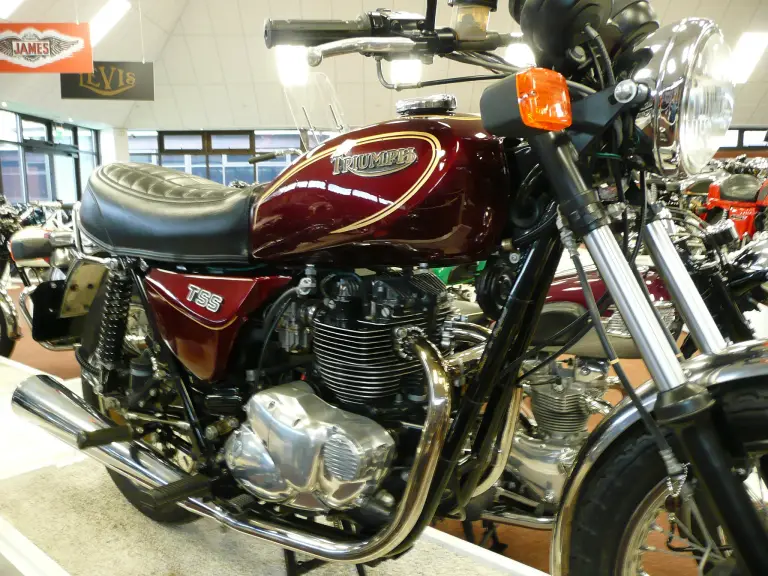
The Thunderbird shares its engine family with the Bonneville and the TSS. More in the Triumph collection.
Sources
- Triumph Thunderbird, English Wikipedia: 6T, launch run, Wild One, bathtub, TR65