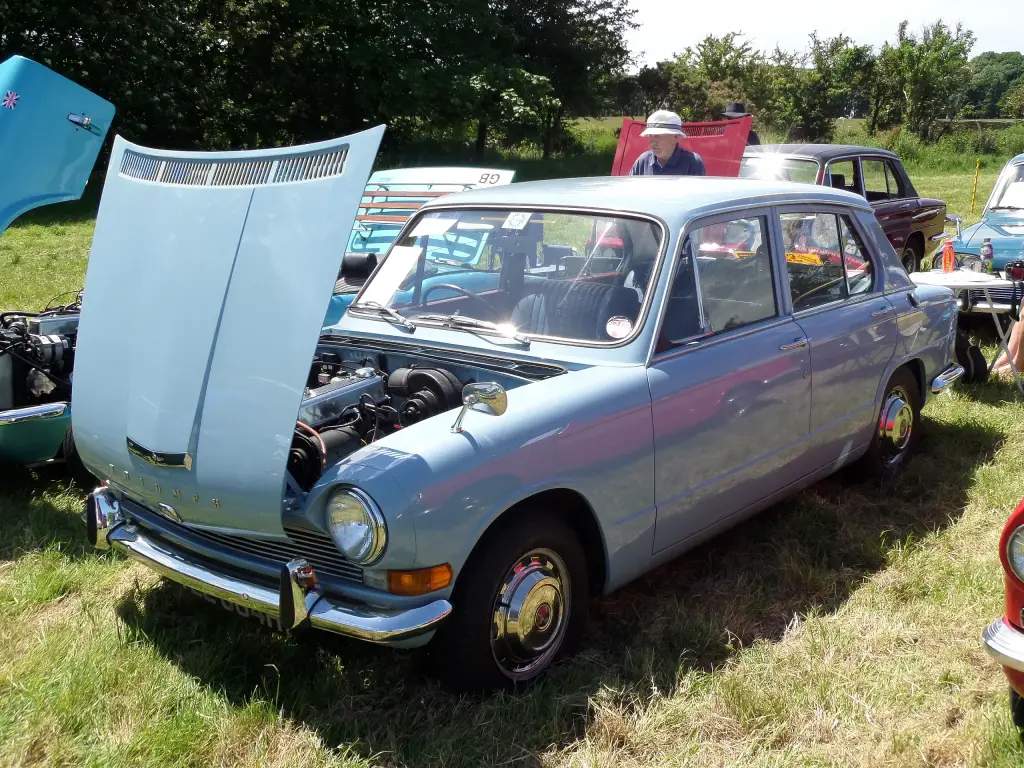
The Triumph 1300 was a four-door saloon built by Standard Triumph in Coventry from 1965 to 1970. It was the first front-wheel-drive design from Leyland, styled by Michelotti in the manner of the bigger Triumph 2000, and it was replaced by the Triumph 1500.
Triumph 1300 at a glance
| Maker | Standard Triumph, Coventry (Leyland Motors) |
|---|---|
| Production | 1965–1970 (1500 from 1970 to 1973) |
| Launched | London Motor Show, October 1965 |
| Replaced | Triumph Herald |
| Body | four-door saloon, styled by Michelotti |
| Layout | front-wheel drive, longitudinal engine above the gearbox |
| Engine | 1296 cc OHV four, 61 hp with a single Stromberg carburettor |
| Gearbox | four-speed, all-synchromesh |
| Suspension | double wishbone front, semi-trailing arms and coil springs rear |
| Top model | 1300 TC of 1968, twin SU carburettors, 75 hp |
| Replaced by | Triumph 1500 (1493 cc), August 1970 |
The English Wikipedia article covers the 1300, the 1300 TC and the 1500; this page follows it.
History of the Triumph 1300
1965: a small front-wheel-drive Triumph
The 1300 was shown at the London Motor Show in October 1965 as the replacement for the Triumph Herald. It was Leyland’s first front-wheel-drive car, aimed at the huge success of the BMC 1100 range. Triumph chose a different layout from BMC: the engine sat longitudinally above the gearbox rather than across the car. That made the engine and gearbox package tall, which limited the styling, but it kept the mechanicals familiar to Triumph dealers.
Styling and equipment
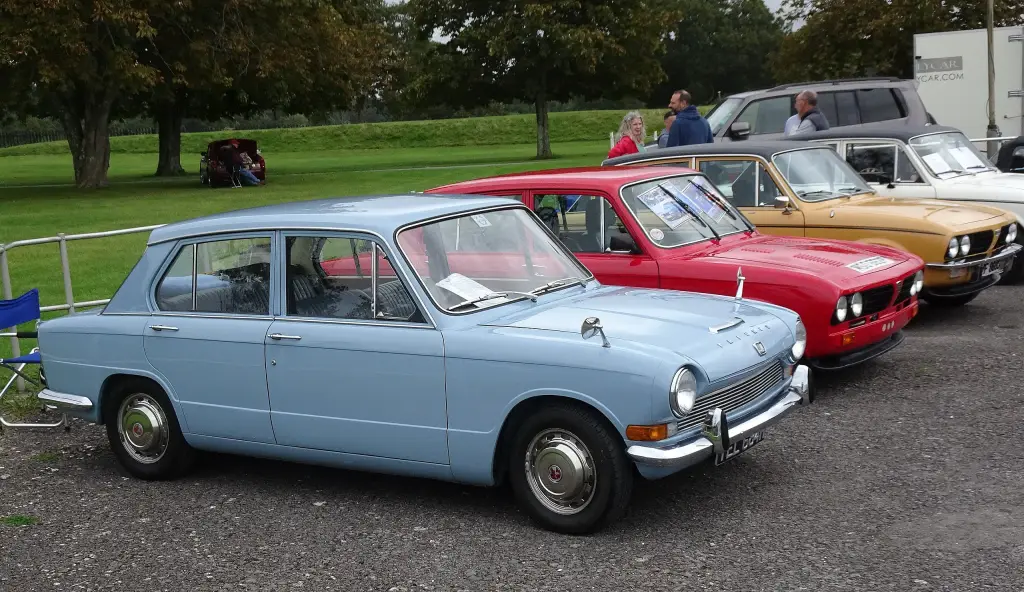
The body was drawn by Michelotti with a clear family resemblance to the Triumph 2000: a squashed version of the 2000 front with single headlamps, and a short, chopped-off tail. Only a four-door saloon was offered. Inside there was a wooden dashboard with full instrumentation, wooden door cappings, an adjustable steering column and ventilated PVC upholstery. Standard equipment was generous for the class, and the front seats could be adjusted for both height and rake.
1968: the 1300 TC
For 1968 Triumph added the 1300 TC, using the twin-SU engine already fitted to the Spitfire. Power rose to an advertised 75 hp and the compression ratio from 8.5:1 to 9.0:1. Triumph claimed 90 mph and a 0–50 mph time of 11.5 seconds; a road test soon afterwards recorded 93 mph and 10.5 seconds. At £909 the TC cost only £41 more than the standard car.
1970: replaced by the 1500
In August 1970 the 1300 and 1300 TC gave way to the Triumph 1500. The engine grew to 1493 cc, which brought more torque but slightly less power and higher fuel consumption; the front was cleaned up and the tail lengthened for a larger boot. Front-wheel-drive Triumph production ended in 1973. The 1300 was then re-engineered with rear-wheel drive to become the basis of the Toledo and the Dolomite.
Design and features
- First front-wheel-drive Leyland — a deliberate answer to the BMC 1100, with a longitudinal engine instead of a transverse one.
- Michelotti body — a scaled-down Triumph 2000 with a stubby boot and a pronounced lip above the rear window.
- Well-equipped cabin — wooden dashboard and door cappings, full instruments and an adjustable steering column.
- 1300 TC — twin SU carburettors and 75 hp from 1968, with a claimed 90 mph.
Triumph 1300 versions
- 1300 (1965–1970): the standard single-carburettor saloon, 61 hp.
- 1300 TC (1968–1970): twin SU carburettors, 75 hp, TC badges.
- 1500 (1970–1973): 1493 cc engine, revised front and a longer tail.
- Estate: reached the concept stage but was never put into production.
The 1300 was re-engineered as the rear-wheel-drive Toledo, which in turn grew into the Dolomite. More cars are in the Triumph collection.
Sources
- Triumph 1300, English Wikipedia: development, equipment, 1300 TC, replacement by the 1500