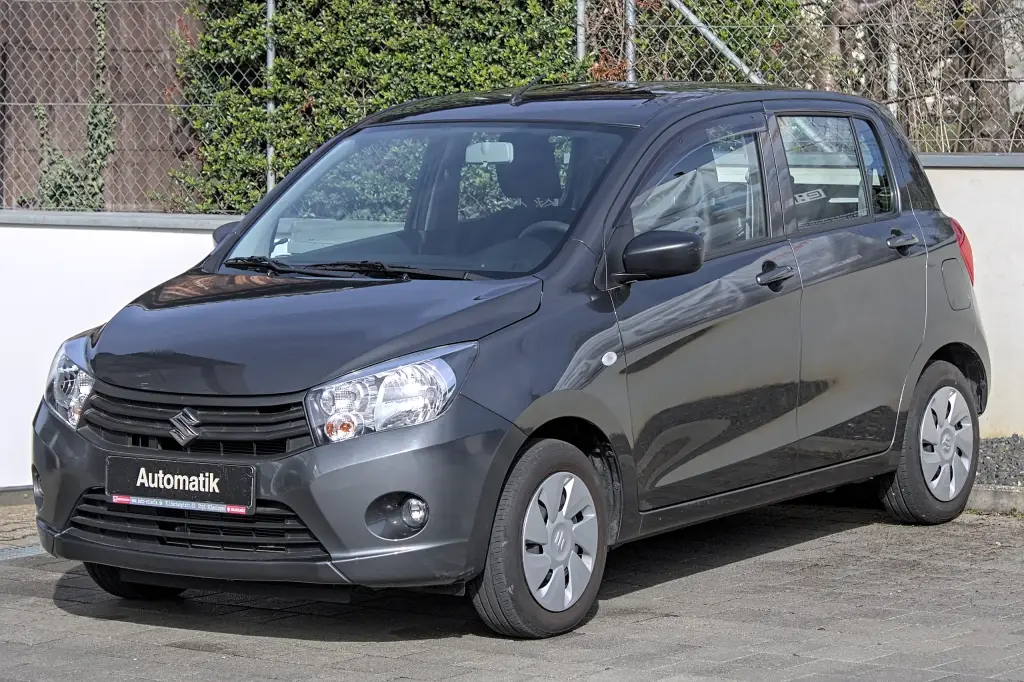
The Suzuki Celerio is a small hatchback that Suzuki has produced since 2008. At first the name was used for rebadged Alto and A-Star city cars in some markets; from 2014 the Celerio became a model of its own and replaced the A-Star.
Suzuki Celerio at a glance
| Production | since 2008 |
|---|---|
| Class | city car hatchback |
| First generation | rebadged Alto/A-Star, 2008–2013 |
| Second generation | FE, from 2014 |
| Third generation | from November 2021 |
| Petrol engine | 1.0-litre K-series K10B, later K10C Dualjet |
| Diesel | 793 cc two-cylinder, 49 hp, 2015–2017 |
| Platform | HEARTECT on the third generation, shared with Wagon R and Ignis |
| Built in | India, Thailand and Pakistan |
| Pakistani name | Cultus, from 2017 |
| Toyota twin | Toyota Vitz in southern Africa from 2023 |
History of the Suzuki Celerio
A borrowed name
The Celerio badge first appeared in 2008 on rebadged Alto and A-Star city cars sold in certain markets. That arrangement lasted until 2013, when Suzuki prepared a model designed around the name.
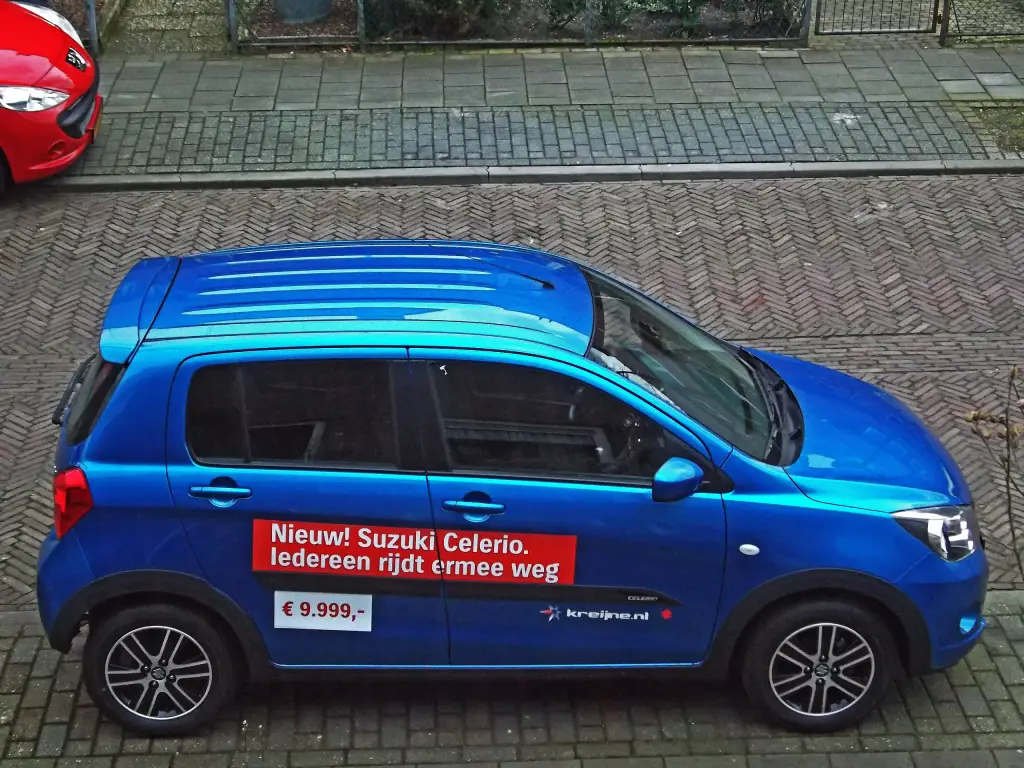
The second generation
The FE-generation Celerio was unveiled at the 2014 Auto Expo in India, after being previewed as the A:Wind concept in Thailand in November 2013, and went on sale with six variants. It used the 1.0-litre K10B engine in its latest K-Next form, with a compression ratio of 11:1 and a manual gearbox whose hydraulics are shifted by a transmission control unit. The Celerio X added a sportier look and AGS automated shifting. European sales began in the second half of 2014 after the Geneva show, with cars for Britain, Ireland, Australia and New Zealand built in Thailand. In Pakistan the same car was launched in 2017 as the Cultus.
Diesel and safety
On 3 June 2015 Maruti Suzuki added a 793 cc two-cylinder diesel, the DDiS125, with 49 hp and 125 Nm, the company’s first indigenously developed engine of its kind. It was dropped in February 2017. Safety results varied widely: Global NCAP gave the Indian Celerio zero stars in 2016, Latin NCAP awarded four stars to a two-airbag Latin American car in 2013, and Euro NCAP gave three stars in 2014.
The third generation
The current Celerio was unveiled in India on 10 November 2021. It rides on the lightweight HEARTECT platform shared with the Wagon R and Ignis and uses a 1.0-litre K10C Dualjet engine with two injectors per cylinder. From January 2023 it has also been sold in South Africa and neighbouring right-hand-drive markets as the Toyota Vitz.
Design and features
- Light platform: the HEARTECT base of the third generation, shared with the Wagon R and Ignis.
- Efficient petrol engine: 1.0-litre K-series, later with dual injection.
- Short-lived diesel: Suzuki’s first two-cylinder diesel, sold only from 2015 to 2017.
- Many badges: Suzuki Celerio, Cultus in Pakistan and Toyota Vitz in southern Africa.
Suzuki Celerio versions
- First generation (2008–2013): a rebadged Alto/A-Star.
- Second generation FE (2014): the standalone car, with the Celerio X variant.
- DDiS125 diesel (2015–2017): 793 cc two-cylinder.
- Cultus (2017): the Pakistani version with VXR, VXL and VXL AGS trims.
- Third generation (2021): HEARTECT platform and Dualjet engine.
The Celerio replaced the Alto and A-Star in Europe and shares its platform with the Wagon R and Ignis. More Suzukis are in the Suzuki collection.
Video: Maruti Suzuki Celerio – First Drive Review
Video by OVERDRIVE on YouTube.
Sources
- Suzuki Celerio, English Wikipedia: generations, engines, safety, market names