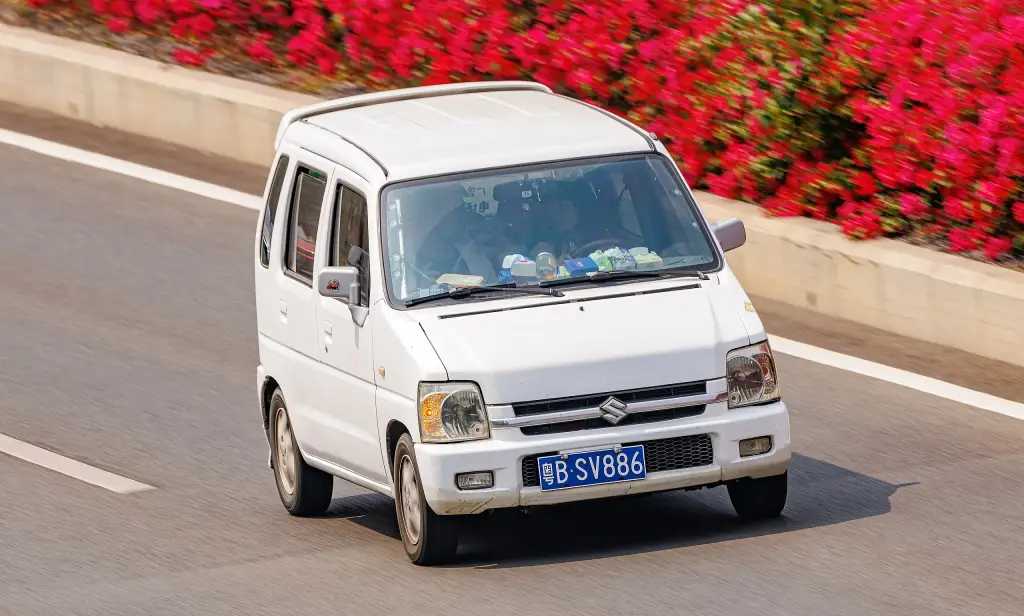
The Suzuki Wagon R is a kei car that Suzuki has made since 1993. Its R stands for Revolution and Relaxation, and its tall-wagon body squeezes the maximum cabin space out of kei-class dimensions. It has been Japan’s best-selling kei car since 2003.
Suzuki Wagon R at a glance
| Production | since 1993 |
|---|---|
| Type | tall kei car |
| First generation | CT21S, 1993 |
| First engine | 660 cc F6A three-cylinder |
| Parts commonality | 70 percent with the Alto by value |
| Height | 1,640 mm, 255 mm taller than the Alto |
| First body | asymmetric doors, five-door from August 1996 |
| Award | Japanese Car of the Year, 1994, from automotive journalists |
| Mazda twins | AZ-Wagon from 1994, Flair from 2012 |
| Milestones | 3 million in 2008, 5 million in February 2010 |
| Fifth generation | September 2012, with mild hybrid |
History of the Suzuki Wagon R
A tall Alto
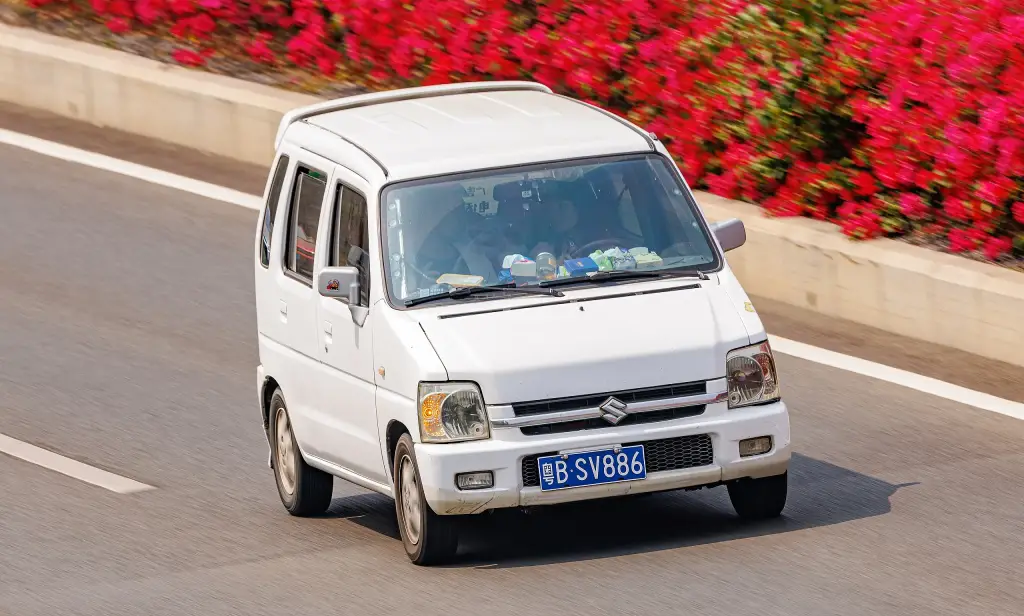
The first Wagon R went on sale in 1993 and was shown at that year’s Tokyo Motor Show. It was 1,640 mm tall, 255 mm taller than the Alto of the time with 170 mm more inside, yet identical in length and width because kei rules dictated them. It used the same 660 cc F6A three-cylinder as the Alto and was designed for cheap production, with 70 percent of its parts by value shared with the smaller car. Its first body had two doors on the left and a single door on the driver’s side; the symmetrical five-door arrived in August 1996 and soon took over. The car won the Automotive Researchers’ and Journalists’ Conference Car of the Year for 1994 and became an unexpected runaway success, with 900,000 first-generation cars sold in Japan and occasional months outselling the Toyota Corolla.
Mazda and a bigger brother
From September 1994 Mazda sold an OEM version as the Autozam AZ-Wagon, later simply the Mazda AZ Wagon, and the Mazda Flair took over in 2012. A wider, non-kei Wagon R+ joined the range in early 1997 for Europe, with a 996 cc K10A four and later a 1.2-litre K12A; it was built in Japan until the end of 2000 for export, and the later version was made in Hungary and India and supplied to Opel as the Agila.
Later generations
The second generation came in 1998, the third in September 2003 for the car’s tenth anniversary with 660 cc K6A engines and the sportier RR and later Stingray versions, the fourth in September 2008 with the Stingray and Mazda AZ Wagon Custom twins, and the fifth in September 2012 with an optional ENE-CHARGE mild hybrid and ECO-COOL air conditioning. That system uses an R06A engine with a motor-generator and lithium-ion battery for regenerative braking and power assist, reaching 28.8 km/l on the Japanese JC08 cycle; a facelift followed in August 2014. Suzuki built its three-millionth Wagon R in 2008 and sales passed five million at the end of February 2010.
Design and features
- Tall-wagon packaging: a kei car as tall as the rules allow, with maximum cabin space.
- Cheap to build: 70 percent Alto parts by value.
- Japan’s favourite kei: the best-selling kei car since 2003.
- Mild hybrid: the ENE-CHARGE system of the fifth generation.
Suzuki Wagon R versions
- First generation (1993): asymmetric doors, later five-door.
- Wagon R+: the wider European version with 1.0 and 1.2 engines.
- Wagon R RR and Stingray: sportier turbocharged versions.
- Second to fifth generations: 1998, 2003, 2008 and 2012.
- Mazda AZ-Wagon and Flair: OEM versions sold by Mazda.
The Wagon R is the taller cousin of the Alto, and its wider versions grew into the Solio. More Suzukis are in the Suzuki collection.
Video: First impression review Suzuki Karimun Wagon R GS LCGC 2014
Video by AutonetMagz on YouTube.
Sources
- Suzuki Wagon R, English Wikipedia: generations, engines, sales, Mazda twins