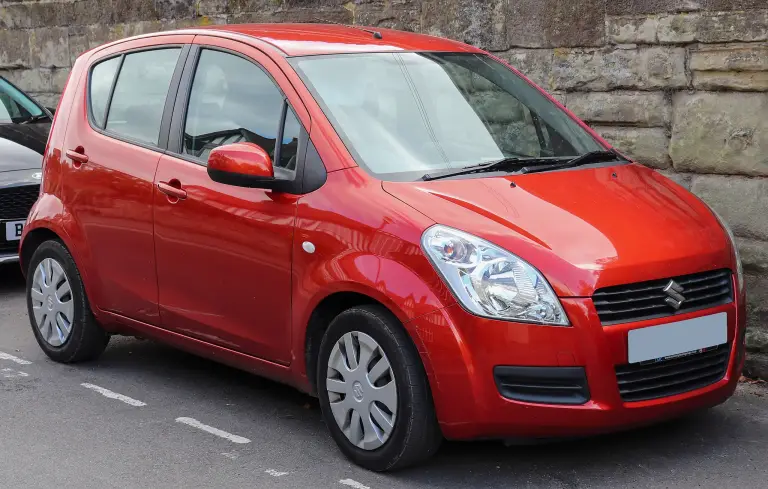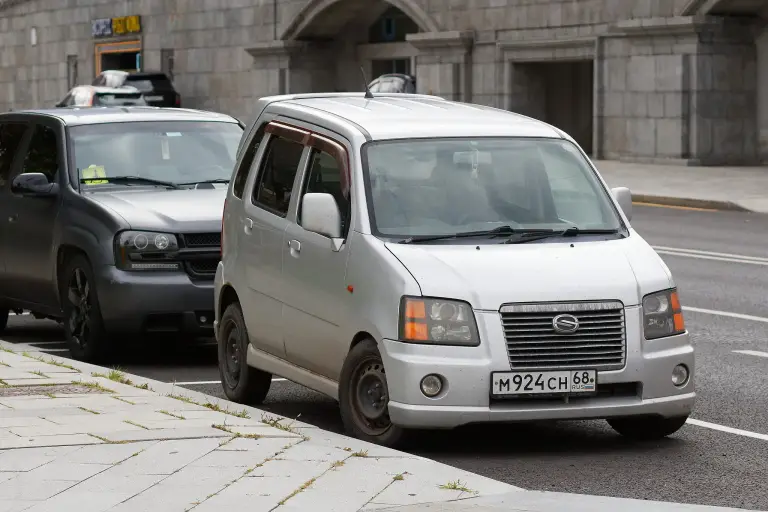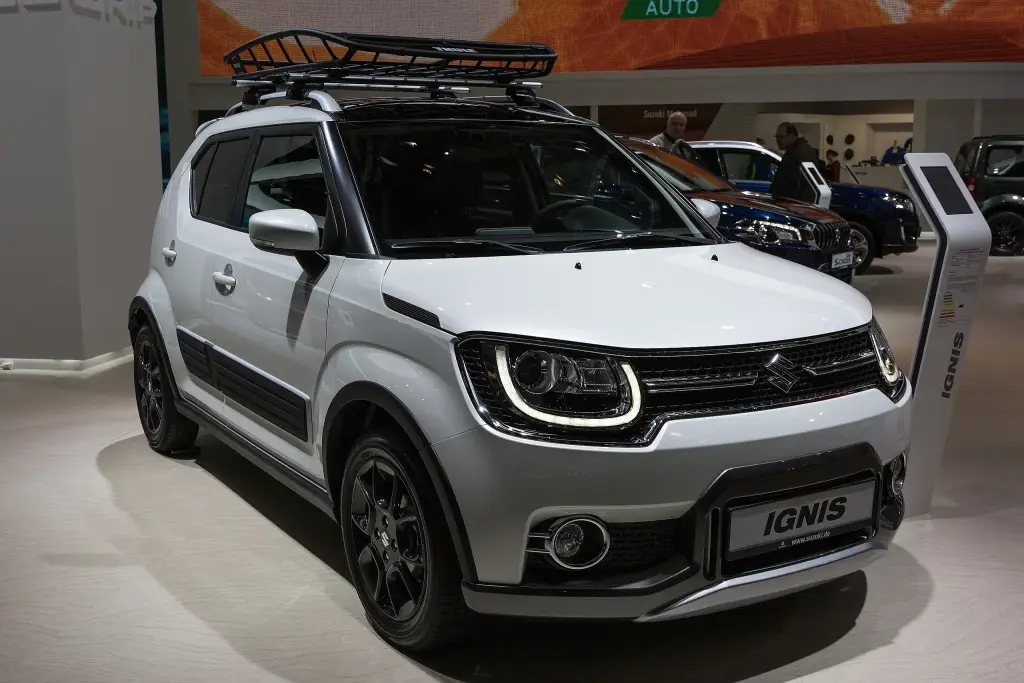
The Suzuki Ignis is a name used twice. It appeared in 2000 as a subcompact hatchback replacing the Cultus, and came back in 2016 as a crossover-styled city car. The word ‘ignis’ is Latin for fire.
Suzuki Ignis at a glance
| First production | 2000 |
|---|---|
| First generation | FH/MH, three- and five-door hatchback |
| Engines | 1.3 M13A, 88 PS; 1.5 M15A, 110 PS |
| Gearboxes | five-speed manual, four-speed automatic |
| Drive | front- or all-wheel drive |
| Ignis Sport | 2003, 116 PS, 0–100 km/h in 8.9 seconds |
| Twin models | Chevrolet Cruze from 2001, Subaru G3X Justy from 2003 |
| First generation ended | 2006 |
| Second generation | crossover city car, 2016–2026 |
| Name meaning | Latin for fire |
History of the Suzuki Ignis
Replacing the Cultus
The first Ignis arrived in 2000 as Suzuki’s subcompact replacement for the Cultus, which was sold in most markets as the Swift. In Europe and Australasia the Ignis took over from the Cultus-based Swift, while in Japan the new car was badged Suzuki Swift, which is how the Swift name first appeared at home. The first series used the new M-family four-cylinder engines with double overhead camshafts, four valves per cylinder and variable valve timing: a 1.3 of 88 PS and a 1.5 of 110 PS, with a five-speed manual or four-speed automatic and front- or four-wheel drive.
The Sport
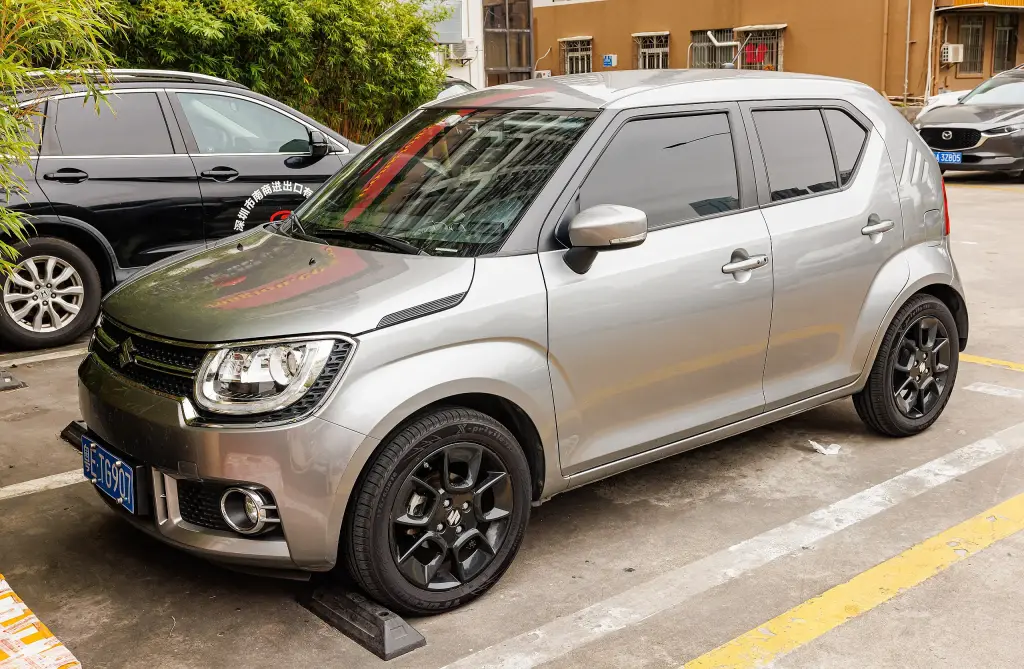
After using the car in the 2002 World Rally Championship, Suzuki launched the Ignis Sport in 2003. Based on the three-door, it used the 1.5-litre engine lifted to 116 PS, or 109 PS for Europe, with a body kit, lowered and firmer suspension, a close-ratio gearbox, tuned exhaust, Recaro seats, white dials with blue lighting and carbon-effect panels. The roof bars were removed. It reached 100 km/h in 8.9 seconds and 185 km/h, and was built until 2005 in red, blue, silver, black or yellow.
Twins and facelifts
As part of a GM-Suzuki venture, the Ignis formed the basis of the Chevrolet Cruze from 2001, a small SUV developed by Holden with 1.3 and 1.5 engines; from 2003 Suzuki of Europe sold a lengthened version of that car as the facelifted Ignis, and Subaru took it as the G3X Justy. A minor facelift in 2003 brought new wheel trims, a revised grille and clear indicator lenses, and production ended in 2006.
The crossover returns
The Ignis name came back in 2016 on a small crossover-styled city car, which remained on sale until 2026 and shared its HEARTECT platform thinking with the Celerio and Wagon R.
Design and features
- M-family engines: 1.3 and 1.5 fours with variable valve timing.
- Rally pedigree: the Ignis Sport followed Suzuki’s 2002 WRC campaign.
- GM and Subaru twins: the Chevrolet Cruze and Subaru G3X Justy.
- Two lives: a 2000s supermini and a 2016 crossover city car.
Suzuki Ignis versions
- Ignis FH (2000): three- and five-door with 1.3 or 1.5 engines.
- Ignis Sport (2003–2005): 116 PS three-door rally-inspired model.
- Chevrolet Cruze (2001): the Holden-developed SUV derivative.
- Subaru G3X Justy (2003): the European Subaru version.
- Ignis (2016): the crossover-styled city car.
The Ignis replaced the Cultus and was later joined by the Swift and Celerio. More Suzukis are in the Suzuki collection.
Video: VW Polo Fun vs. Subaru Justy vs. Suzuki Ignis: Vergleich der Gelände-Kleinwagen
Video by Motorvision Deutschland on YouTube.
Sources
- Suzuki Ignis, English Wikipedia: generations, engines, Sport, twins