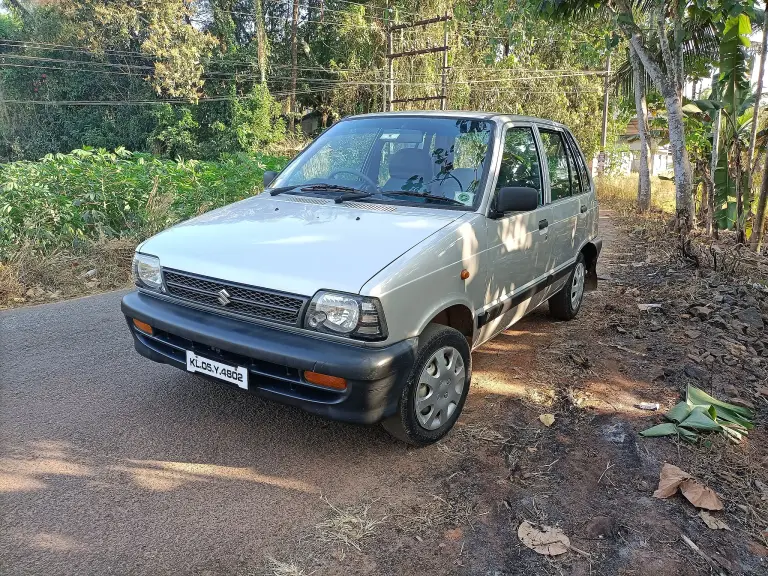
The Suzuki Cultus is a supermini that Suzuki produced from 1983 to 2016. In Japan it was always the Cultus, while most of the world knew it as the Suzuki Swift, and General Motors sold the same car under more than a dozen names.
Suzuki Cultus at a glance
| Production | 1983–2016 |
|---|---|
| First shown | 25th Tokyo Motor Show |
| On sale in Japan | from October 1983 |
| Origin | General Motors M-car project, sold to Suzuki for a 5% stake |
| Early export code | SA310 |
| First engine | 993 cc G10 three-cylinder |
| Turbo | G10T, 80 PS, from May 1984 |
| Five-door and 1.3 | added August 1984 |
| Facelift | June 1986, coil springs at the rear |
| GM names | Geo Metro, Chevrolet Sprint, Pontiac Firefly, Holden Barina and others |
| Second generation | still built in Pakistan until late 2016 |
| Name today | rebadged Celerio in Pakistan since 2017 |
History of the Suzuki Cultus
GM’s abandoned M-car
The first Cultus began as a General Motors project known internally as the M-car. GM decided it would not be profitable enough and sold the unfinished design to Suzuki in exchange for a five per cent stake. Suzuki completed the development and put the car on sale in Japan in October 1983. That history explains why the Cultus looked so at home in GM showrooms, with a clear corporate look. It was Suzuki’s first serious move above the kei class, and the first-generation cars all carry SA model codes.
The first SA310
Early exports were sold simply by model code, the SA310, and soon gained market names, most often Swift. The original car had leaf-spring rear suspension and a 993 cc three-cylinder G10 engine, and came as GA, GL and GLX in three-door form; Finland called it the Suzuki Extra. A turbocharged G10T of 80 PS and a three-speed automatic arrived in Japan on 31 May 1984, and in August 1984 came a five-door body 10 cm longer and a 1,324 cc four-cylinder 1.3. A sporting European Swift GS used a 1.3 with two-tone paint, flush headlights and fog lamps, and the 1985 model year brought the Swift name to Europe.
Forsa and the facelift
In Indonesia a five-door version with a locally built 970 cc F10A engine from the Carry appeared in early 1986 as the Forsa, with flush headlamps. The June 1986 facelift replaced the rear leaf springs with coils, remodelled the nose and dashboard and caulked the windscreen in place; the turbo gained fuel injection and 82 PS, and the twin-cam GTi joined the range.
A car with a dozen names
An alliance formed in 1981 between General Motors, Suzuki and Isuzu let GM sell the Cultus as a captive import under names including the Geo Metro, Chevrolet Sprint, Pontiac Firefly, Isuzu Geminett and Holden Barina. The second generation stayed in production in Pakistan until late 2016, and since 2017 the Cultus name has been used there for a rebadged second-generation Celerio.
Design and features
- Designed by GM, finished by Suzuki: the M-car became Suzuki’s first supermini.
- Global badge engineering: sold as Swift, SA310, Forsa, Geo Metro, Chevrolet Sprint and more.
- Turbo and GTi versions: a turbo from 1984 and a twin-cam GTi from the 1986 facelift.
- Long life: built for 33 years, ending in Pakistan in 2016.
Suzuki Cultus versions
- SA310 (1983): the original three-door with the 993 cc three-cylinder.
- Turbo (1984): G10T engine with 80 PS, later 82 PS with injection.
- Swift GS: a sporting European 1.3 three-door.
- Forsa (1986): the Indonesian five-door with a 970 cc Carry engine.
- GTi: the twin-cam hot version added with the 1986 facelift.
- GM-badged versions: Geo Metro, Chevrolet Sprint, Pontiac Firefly, Holden Barina and others.
The Cultus was the ancestor of the Suzuki Swift and its 1995 successor in the compact class was the Baleno. More Suzukis are in the Suzuki collection.
Sources
- Suzuki Cultus, English Wikipedia: history, engines, GM names