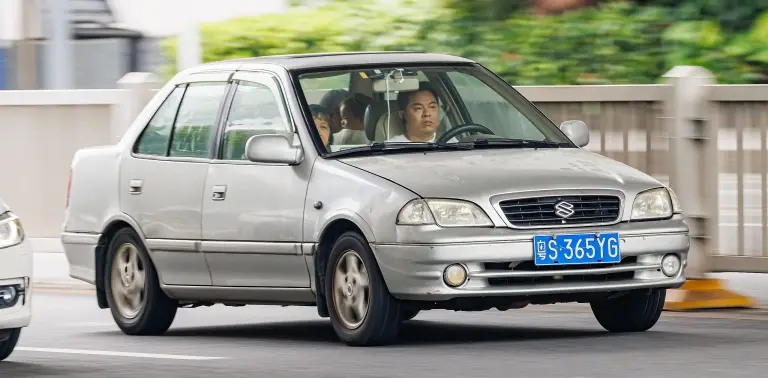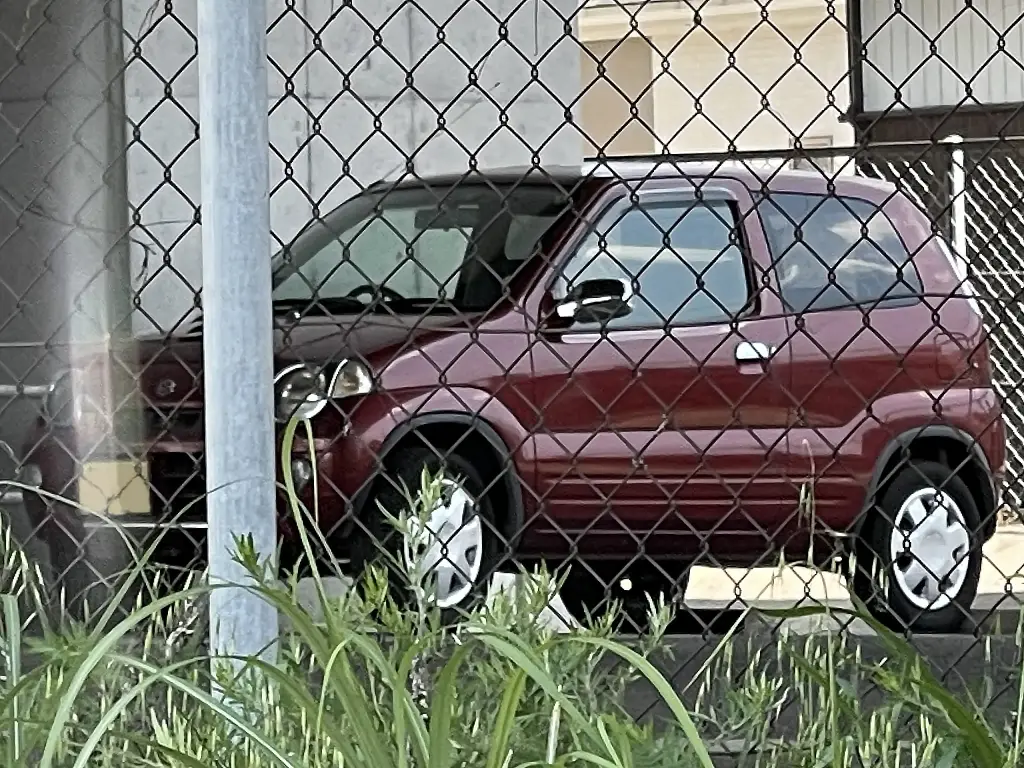
The Suzuki Kei is a kei car that Suzuki built from 1998 to 2009. It was launched in October 1998 as the company’s answer to revised kei car dimensions, and it was the basis for the first-generation Ignis and the Mazda Laputa.
Suzuki Kei at a glance
| Production | October 1998 – 2009 |
|---|---|
| Launched | October 1998 |
| Original body | three-door hatchback |
| Five-door | added March 1999 |
| Early grades | G, X and S |
| Three-door dropped | 2000 |
| Facelifts | October 2000, 2001 dashboard, April 2006 |
| Mazda twin | Mazda Laputa, 1999–2006 |
| Special editions | FIS Freestyle World Cup, up to you KANSAI |
| Grades from 2003 | A with K6A VVT, B Turbo with K6A M Turbo |
| Successor | Hustler, December 2013 |
History of the Suzuki Kei
A new kei for new rules
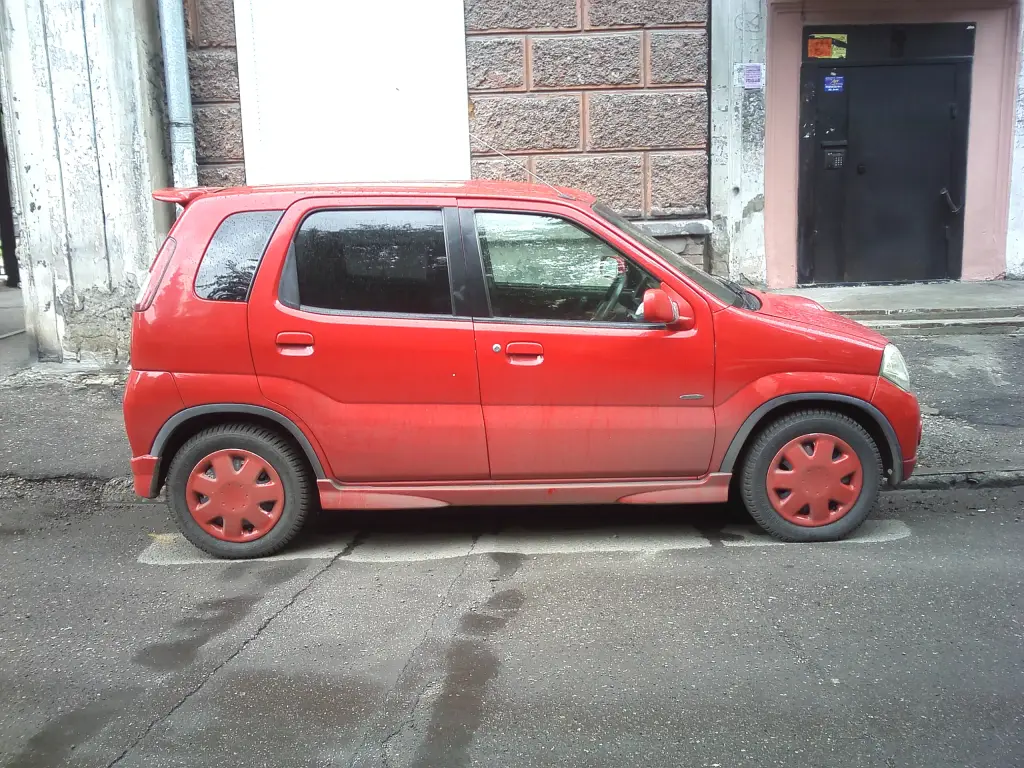
The Kei was launched in October 1998 as Suzuki’s response to the revision of kei car dimensions. At first there was only a three-door, with G, X and S grades, and a five-door joined in March 1999. From 2000 the three-door was dropped to avoid overlap with the Jimny, leaving the Kei as a five-door only.
Facelifts and specials
The October 2000 facelift changed the front end substantially, and a 2001 update brought a new dashboard; another facelift in April 2006 added a new bumper and grille. As official sponsor of the 2001 FIS Freestyle Cup, Suzuki released an FIS Freestyle World Cup Limited edition alongside similar Jimny and Escudo versions, and in the same year it collaborated with the Japanese fashion designer Kansai Yamamoto on the up to you KANSAI edition.
Sport and Works
The Kei Special of May 1999 was a rugged three-door S with a dedicated bonnet cover, heavy-duty bumpers and side skirts with fog lamps and a roof spoiler. The Kei Sport of October 2000 had a horizontal-bar grille, black seats and a large tachometer, with F6A or K6A twin-cam engines and five-speed manual or four-speed automatic gearboxes. On 12 November 2002 the Kei Works replaced it, with the Alto Works engine tuned to 64 PS, 15-inch alloys, four-wheel disc brakes and Recaro seats; it was slower and heavier than the Alto Works and never sold as well as expected.
Relatives and the end
The Kei shared many parts with the first-generation Ignis, and from May 1999 to 2006 Mazda sold a rebadged version as the Laputa. In 2003 the range was cut to two grades, the K6A VVT-engined A and the turbocharged B Turbo. The Kei stayed on sale for 11 years with minor changes and went out of production in 2009; its direct successor, the Hustler, did not arrive until December 2013.
Design and features
- Kei packaging: a tall five-door body in the Japanese light-car class.
- Sport versions: the Kei Sport and Kei Works with twin-cam engines.
- Shared with the Ignis: many common parts with the first-generation Ignis.
- Mazda twin: sold as the Mazda Laputa from 1999 to 2006.
Suzuki Kei versions
- Kei (1998): three-door, later five-door.
- Kei Special (1999): rugged three-door with fog lamps and spoiler.
- Kei Sport (2000): sporty version with F6A or K6A twin-cam.
- Kei Works (2002): 64 PS, disc brakes and Recaro seats.
- Mazda Laputa: the rebadged version sold by Mazda.
The Kei shares its parts with the Ignis and its kei class with the Alto Lapin. More Suzukis are in the Suzuki collection.
Video: Suzuki Kei 2009 года
Video by Анатолий Чусовитин on YouTube.
Sources
- Suzuki Kei, English Wikipedia: launch, facelifts, versions, Laputa