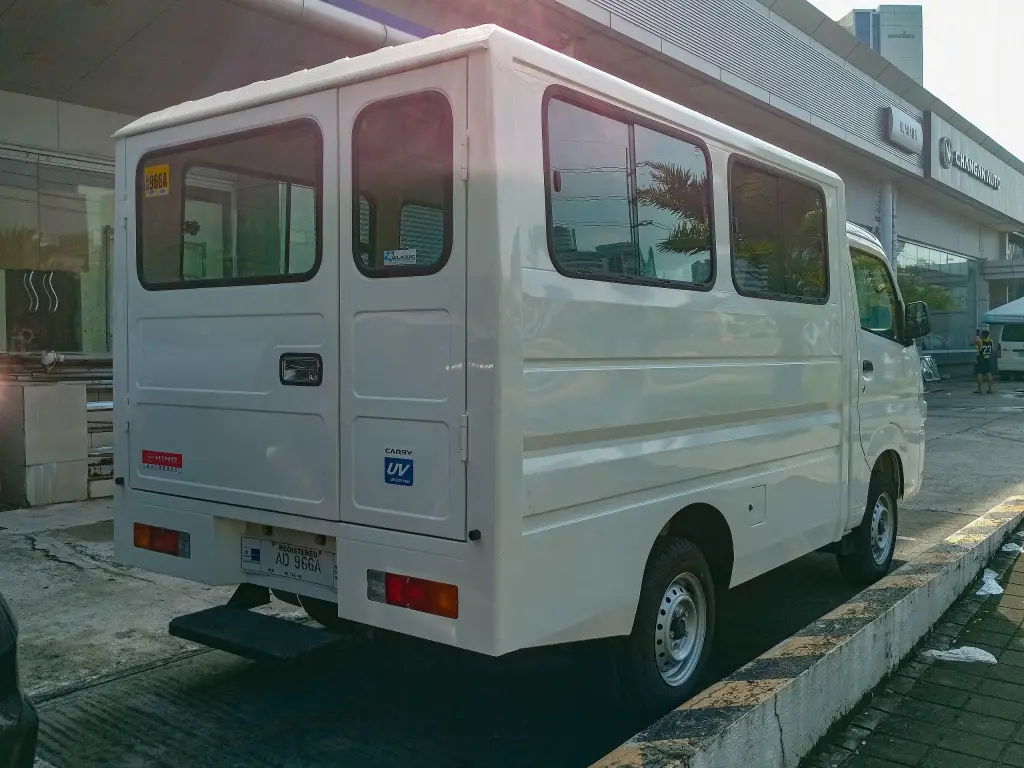
The Suzuki Carry is a kei truck that Suzuki has built since October 1961. In Japan it is a kei-class commercial vehicle, while export versions and their derivatives have used engines of up to 1.6 litres and been sold under many different names around the world.
Suzuki Carry at a glance
| Production | since October 1961 |
|---|---|
| First model | FB Suzulight Carry pickup |
| First engine | 359 cc air-cooled two-stroke twin, 21 PS |
| Layout | engine under the front seat, short bonnet |
| Van versions | Carry van until 1982, then Every |
| Second generation | L20, June 1965 |
| Third generation | L30, February 1966, full cabover |
| Fourth generation | L40, July 1969, designed by Giugiaro |
| Fifth generation | L50/L60, May 1972 |
| Load capacity | 350 kg in the early generations |
| Export engines | up to 1.6 litres |
| Badges | the only car sold with both Chevrolet and Ford badges |
History of the Suzuki Carry
The first Carry
The Carry series began in October 1961 with the FB Suzulight Carry, a pickup with the engine under the front seat and a short bonnet, a layout sometimes called semicabover. Its FB engine was a 359 cc air-cooled two-stroke twin of 21 PS, and top speed was no more than 76 km/h. A panel van followed in July 1962 and a glassed Carry Van in September 1964. The first two generations wore the Suzulight badge rather than the Suzuki name, underlining the company’s focus on light cars.
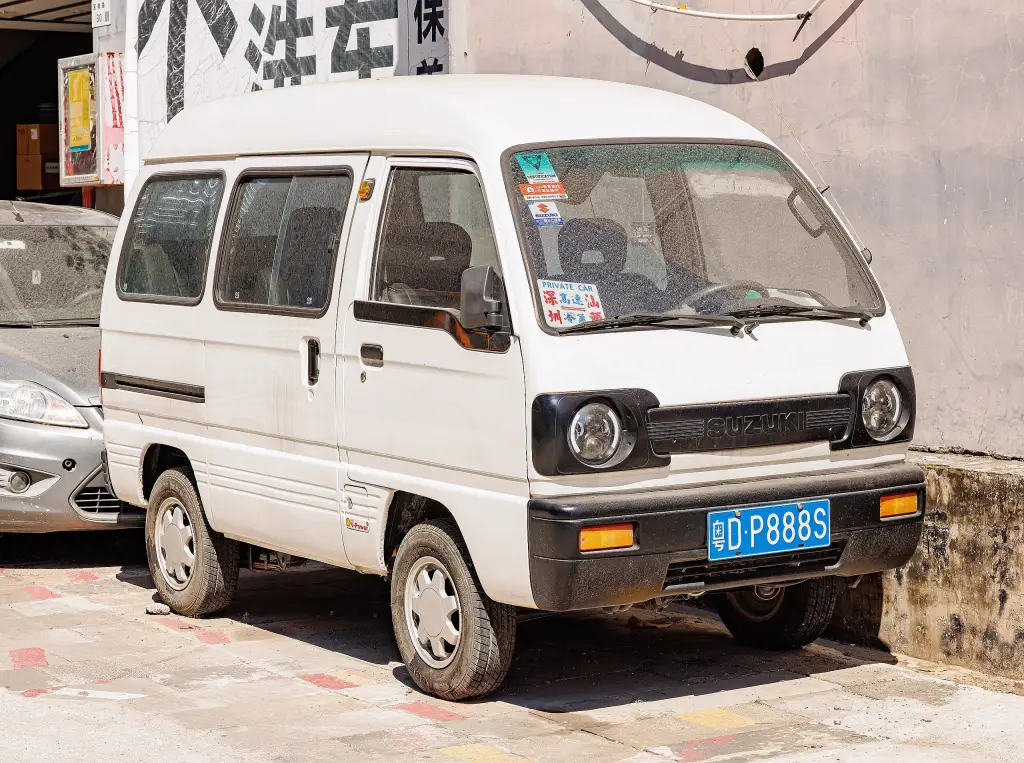
Towards a cabover
The L20 of June 1965 brought a modified ladder frame with independently sprung front wheels on torsion bars and Suzuki’s Cylinder Crank Injection lubrication. A dropside pickup and a canopied four-seat L20H were offered. In February 1966 the L30 became the first full cabover Carry, with the engine mounted horizontally under the load area and the starter and generator combined on the front of the crankshaft; it was built alongside the older L20 until both gave way to the L40.
The Giugiaro Carry
The L40 of July 1969 was styled by Giorgetto Giugiaro. It was arguably too modern and not utilitarian enough for Japanese commercial buyers, but it was quick: a 25 PS reed-valve FB engine gave 95 km/h, and a 27 PS version arrived in 1971. A camper version that slept two adults and two children was added the same year. About 233,000 L40s were built in under three years, with the truck outselling the van roughly eight to one.
Later generations and names
The L50 truck arrived in May 1972, followed by a new van. In 1982 the passenger van versions were renamed Every, while the truck kept the Carry name. Export versions and their derivatives, including the Bolan of Pakistan and the Super Carry, were fitted with larger engines of up to 1.6 litres and sold under many badges, making the Carry the only car offered with both Chevrolet and Ford emblems.
Design and features
- Kei commercial layout: a compact cab and a useful load bed, with the engine under the seats in early models.
- Giugiaro styling: the L40 of 1969 was styled by the Italian master.
- Badge engineering: sold as Chevrolet and Ford as well as Suzuki, and as the Bolan in Pakistan.
- Van and truck branches: the van line became the Every in 1982.
Suzuki Carry versions
- FB Suzulight Carry (1961): the original semicabover pickup.
- L20 (1965): torsion-bar front suspension and a canopied four-seater.
- L30 (1966): the first full cabover Carry.
- L40 (1969): Giugiaro body, camper version from 1971.
- L50/L60 (1972): the fifth generation truck and van.
- Every (1982 onwards): the passenger van branch of the family.
- Bolan, Super Carry and export versions: larger-engined derivatives built and sold abroad.
The Carry’s engine family also powered the early Suzuki Jimny, and the first Carrys wore the Suzulight badge. More Suzukis are in the Suzuki collection.
Sources
- Suzuki Carry, English Wikipedia: generations, engines, names