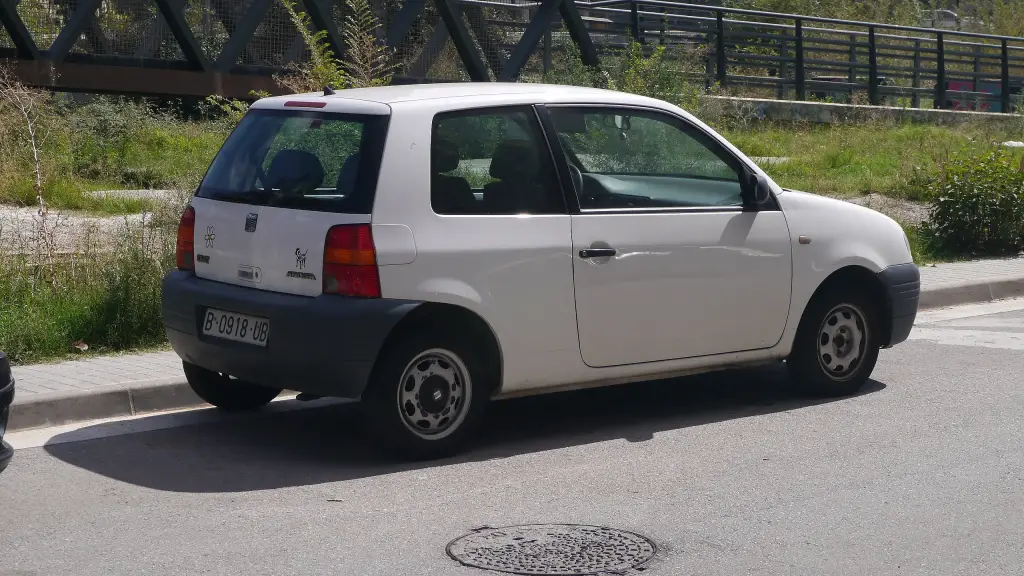
The SEAT Arosa was SEAT’s small city car of the late 1990s, built from 1997 to 2004. It shared its platform with the Volkswagen Lupo and was mostly identical apart from equipment, styling and trim, and it replaced the SEAT Marbella in the range.
SEAT Arosa at a glance
| Maker | SEAT (Typ 6H) |
|---|---|
| Production | February 1997 – July 2004 |
| Début | March 1997, Geneva Motor Show |
| Facelift | October 2000, Paris Motor Show |
| Platform | Volkswagen Group A00 |
| Body | three-door, four-seat hatchback |
| Designer | Jozef Kabañ |
| Built in | Wolfsburg until May 1998, then Martorell |
| Petrol engines | 1.0 of 50 PS, 1.4 of 60 and 101 PS |
| Diesel engines | 1.4 TDI of 75 PS, 1.7 SDI of 60 PS |
| Sold | more than 175,000 |
| Replaced by | SEAT Mii (2012) |
This page is based on one source, the English Wikipedia article on the SEAT Arosa.
History of the SEAT Arosa
1997: a Spanish city car from Wolfsburg
The Arosa, Typ 6H, made its début at the Geneva Motor Show in March 1997. It was named after Vilagarcía de Arousa, a municipality in the province of Pontevedra, and it was only available as a three-door, four-seater hatchback. To a large extent it was identical to Volkswagen’s own city car, the Lupo, which arrived at the end of 1998, and both used the Volkswagen Group A00 platform, a shortened version of the A03 base of the larger Polo and Ibiza. It was designed by Jozef Kabañ, the man behind the Bugatti Veyron 16.4. Production began at a Volkswagen plant in Wolfsburg and only moved to SEAT’s Martorell factory in May 1998. Škoda planned its own version for 1998, but it was never officially introduced.
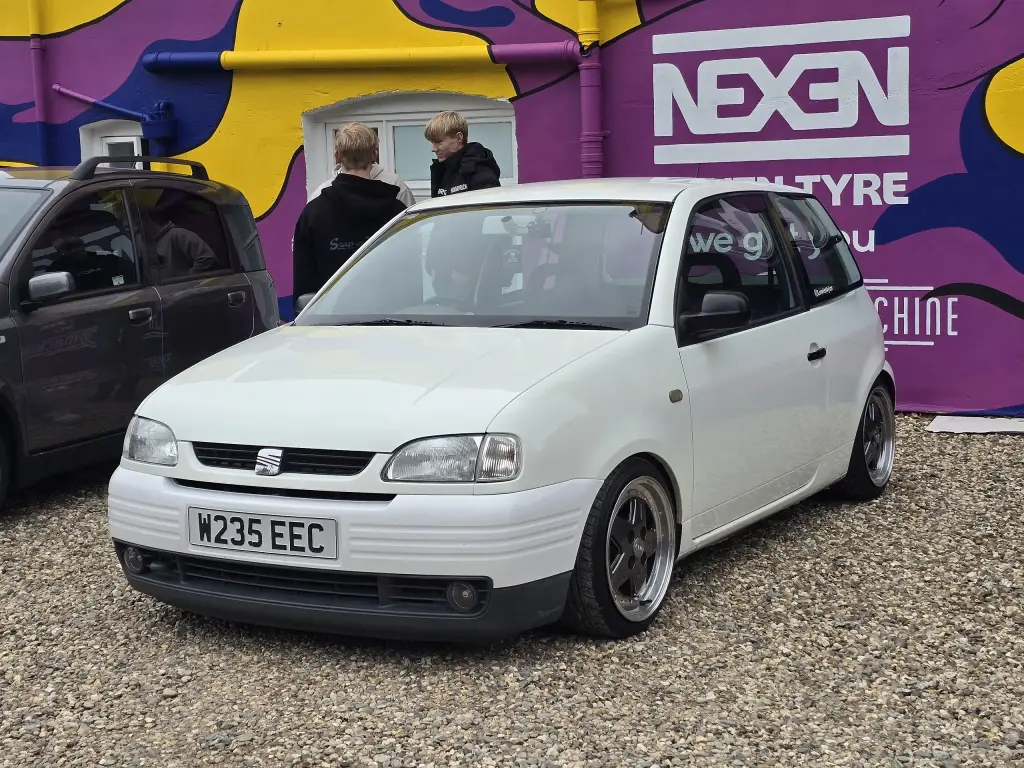
2000: the facelift
In October 2000 the Arosa received a facelift with a restyled exterior and a completely new dashboard inside. The Arosa had replaced the SEAT Marbella in the range, but when production stopped in July 2004 no SEAT model took its place directly. Volkswagen had decided to use the Fox instead of developing a genuine replacement for the Lupo, which left SEAT unable to build its own version. A successor eventually arrived in January 2012 with the Mii, which started production in December 2011. In the United Kingdom 2,500 Arosas were registered in 2003, about seven per cent of the brand’s sales there.
Engines and concepts
The Arosa was offered with five engines. Petrol buyers could choose a 999 cc unit of 50 PS, a 1,390 cc eight-valve of 60 PS or a 1,390 cc sixteen-valve of 101 PS; diesels were a 1,422 cc three-cylinder TDI of 75 PS and a 1,716 cc SDI of 60 PS. All came with a five-speed manual gearbox, with a four-speed automatic available on the 60 PS 1.4. At the Frankfurt Motor Show in September 2001 SEAT showed two Arosa-based concept cars, the Arosa Racer and the Arosa City Cruiser. The car won the Golden Steering Wheel in 1997 and the Utilitário do Ano award in Portugal in 1998, and more than 175,000 were sold and built between 1997 and 2004.
Design and features
- Group city car: the same A00 platform as the Volkswagen Lupo.
- Compact shape: a three-door, four-seat hatchback only meant for the city.
- Wide engine range: five units from a 1.0 petrol to a 1.4 TDI.
- Design pedigree: styled by Jozef Kabañ, later responsible for the Bugatti Veyron.
SEAT Arosa versions
- Arosa (1997–2000): the original pre-facelift car.
- Arosa facelift (2000–2004): new exterior and dashboard.
- Arosa Racer and City Cruiser (2001): concept cars shown at Frankfurt.
The Arosa replaced the SEAT Marbella and was eventually replaced by the SEAT Mii. More Spanish cars are in the SEAT collection.
Sources
- SEAT Arosa, English Wikipedia: history, platform, engines, production