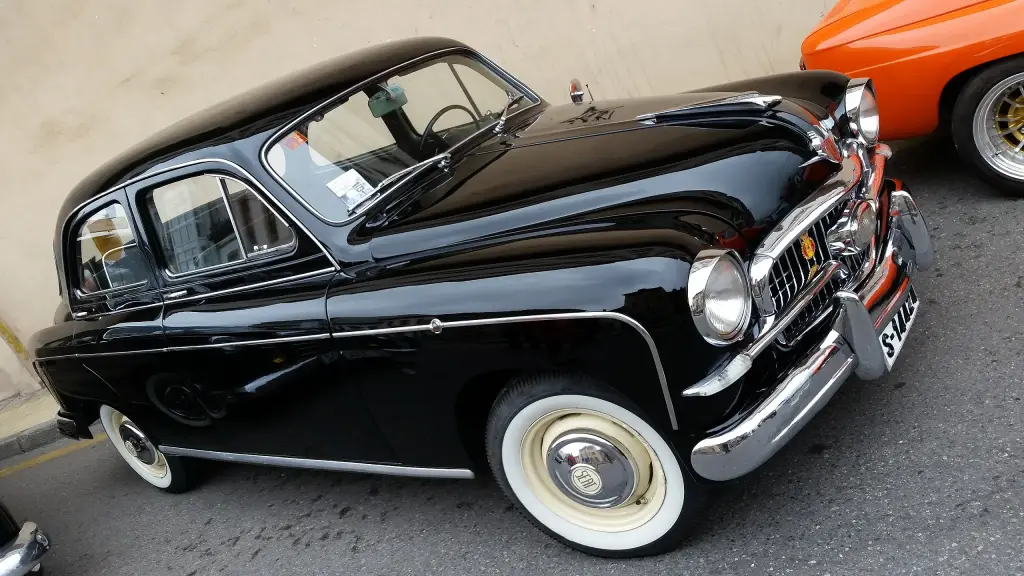
The SEAT 1400 was the first car SEAT ever built. Production began at the new Zona Franca plant in Barcelona on 13 November 1953, using Fiat 1400 parts shipped from Italy, and by the time the model was replaced in 1963 four versions and 82,894 cars had been made.
SEAT 1400 at a glance
| Maker | SEAT, Zona Franca, Barcelona |
|---|---|
| Production | 1953–1963 |
| Basis | Fiat 1400, assembled from CKD kits |
| First car built | 13 November 1953 |
| Engine | 1,395 cc four-cylinder, 44 bhp |
| 1400 A (1955) | 50 bhp, 125 km/h |
| 1400 B (1957) | 58 bhp, 135 km/h, plus estate and van |
| 1400 C (1960) | Pininfarina body from the Fiat 1800 |
| Built | 82,894 |
| Replaced by | SEAT 1500 |
This page is based on one source, the English Wikipedia article on the SEAT 1400.
History of the SEAT 1400
The first car
The 1400 was based on the Fiat 1400, Fiat’s first model with an integrated chassis, and it started SEAT’s life as Spain’s national car maker. Production began on 13 November 1953 with a workforce of 925 people capable of building five cars a day; the first car carried the plate B-87.223. At first the cars were assembled from complete knockdown kits shipped from Italy, but by 1954 Spanish-made parts accounted for 93 per cent of the total, a deliberate policy to limit imports and build up a supplier industry that barely existed at the time. Output rose steadily, reaching 10,000 cars a year and 42 cars a day by 1956.
Four versions
The original 1400 was sold from May 1953 to May 1954 with a 1,395 cc four-cylinder engine of 44 bhp and a top speed of 120 km/h. It had little chrome trim, could be ordered with a black, red or white roof, and only about 2,114 were built. The 1400 A of 1955, based on the Fiat 1400 A, raised power to 50 bhp and top speed to 125 km/h. The 1400 B, announced at the end of 1956 for 1957, had a revised grille and two-tone paint, and was offered as a saloon, a five-door estate and a delivery van; from 1958 the saloon claimed 58 bhp and 135 km/h.
The 1400 C
The 1400 C of 1960 used the modern Pininfarina-styled body of the recently introduced Fiat 1800, while the older 1400 B stayed in production alongside it with the same engine. SEAT kept the four-cylinder unit rather than tooling up for Fiat’s new six-cylinder engines because Spanish incomes were far lower than Italian ones and the larger engine would have made the car too expensive. A five-door estate with a two-piece tailgate appeared in 1963, the last year of the model; a diesel version had to wait for the successor.
Design and features
- First SEAT: the model that started the company and the Spanish car industry.
- Rapid localisation: 93 per cent Spanish parts within a year of launch.
- Three body styles: saloon, five-door estate and delivery van in the B range.
- Modern body for 1960: the 1400 C used Pininfarina styling from the Fiat 1800.
SEAT 1400 versions
- 1400 (1953–1954): original version, 44 bhp, about 2,114 built.
- 1400 A (1955): 50 bhp, 125 km/h.
- 1400 B (1957): revised grille, two-tone paint, estate and van versions, 58 bhp from 1958.
- 1400 C (1960): Pininfarina body from the Fiat 1800, estate from 1963.
The 1400 was replaced by the SEAT 1500, and the later SEAT 1800 continued the same line. More Spanish cars are in the SEAT collection.
Sources
- SEAT 1400, English Wikipedia: history, versions, output, production total