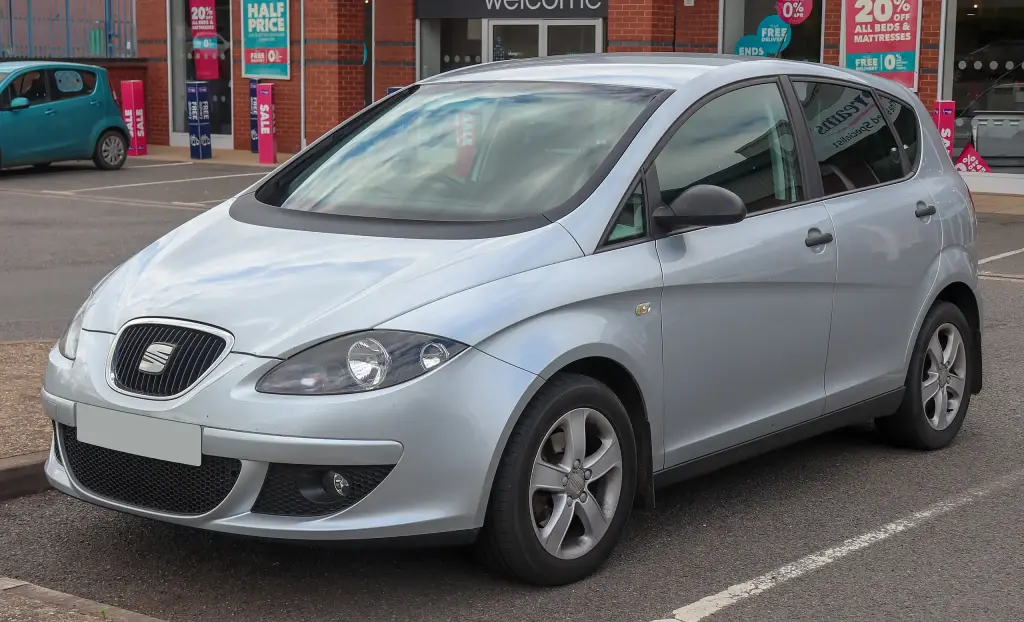
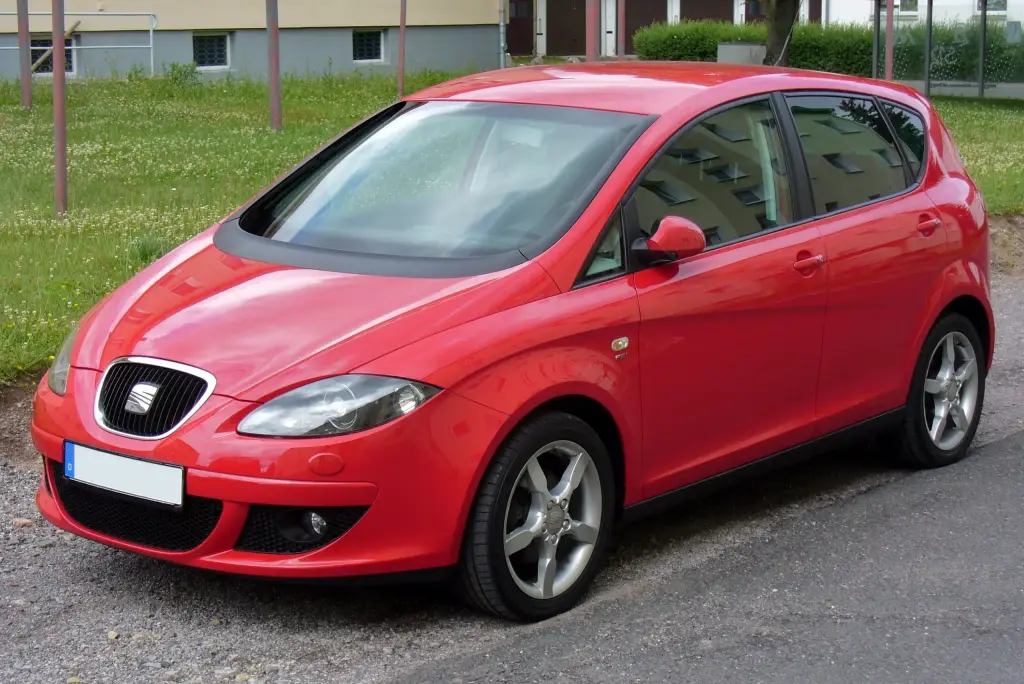
The SEAT Altea was the car that introduced SEAT’s new corporate look. A compact five-seat MPV designed by Walter de Silva, it was launched at the 2004 Geneva Motor Show and built until 2015, when SEAT turned from MPVs to SUVs.
SEAT Altea at a glance
| Maker | SEAT, Martorell, Spain |
|---|---|
| Production | 2004–2015 |
| Designer | Walter de Silva |
| Platform | Volkswagen Group A5 (PQ35) |
| Unveiled | March 2004, Geneva Motor Show |
| Preview | SEAT Salsa Emoción concept |
| First-year sales | 31,223 |
| Body | five-door, five-seat compact MPV |
| Long version | Altea XL, 18.7 cm longer, from 2006 |
| All-wheel drive | Altea Freetrack, from 2007 |
| Built in total | about half a million |
| Replaced by | SEAT Ateca (2016) |
This page is based on one source, the English Wikipedia article on the SEAT Altea.
History of the SEAT Altea
A new face for SEAT
The Altea was previewed by the Salsa Emoción concept and launched in March 2004 as the first example of SEAT’s new corporate look. It arrived a few years after most of its rivals, but it beat expectations: 31,223 were sold in the first year. The car was a family-oriented five-seater that tried to look sportier than the competition and used the Volkswagen Group’s A5, or PQ35, platform. Its most unusual design feature was a pair of vertically parked windscreen wipers, which hid in the window surround on either side and left a completely cleanly swept screen; the price was wide A-pillars and a blind spot. There were six trim levels, from Essence to FR, and the range-topping 2.0 TDI FR of 170 PS arrived in April 2006. The car was named after the Spanish town of Altea.
Design awards
Few SEAT models have collected as many design prizes. The Altea won the Red Dot “Best of the Best” award from the Design Centre of North Rhine-Westphalia, was named “The World’s Most Beautiful Automobile 2004” in Milan and took the Autonis award from the German magazines Auto-Strassenverkehr and MOT; the Altea Prototipo had already been voted Best Concept Car of 2003 by Designers (Europe). It also took the Auto Trophy in 2004 and 2005, a Towncar of the Year title from the Caravan Club and What Car?, and several Spanish awards. In 2004 Euro NCAP gave the car five stars for overall safety.
XL and Freetrack
The Altea XL, presented at the Paris Motor Show in September 2006 and on sale from November, was 18.7 cm longer than the standard car, with more luggage space. The Altea Freetrack of 2007 was dimensionally similar but designed as a compact SUV, with raised suspension for more ground clearance, larger plastic bumpers and plastic extensions around the wheel arches and sills. All Freetrack versions except the front-wheel-drive 2.0 TDI had Haldex-based on-demand four-wheel drive, and the four-wheel-drive cars were also called SEAT Altea 4; in Mexico and Russia the model was sold simply as the SEAT Freetrack. It was launched in an uncommon intense yellow that lasted until August 2010. On 21 August 2015 SEAT announced that the Altea and Altea XL had been discontinued, and the Ateca SUV of February 2016 took its place; chief executive Luca de Meo called the Ateca “the replacement of the Altea”.
Design and features
- New SEAT design: the first production car of Walter de Silva’s corporate look.
- Vertical wipers: hidden in the window surround, a rare solution for pedestrian safety.
- Group platform: the Volkswagen PQ35 base shared with the Golf and the Toledo.
- Two spin-offs: the longer Altea XL and the raised, four-wheel-drive Freetrack.
SEAT Altea versions
- Altea (2004–2015): the standard five-seat MPV.
- Altea FR (2006): 2.0 TDI of 170 PS at the top of the range.
- Altea XL (2006): 18.7 cm longer, with a bigger boot.
- Altea Freetrack (2007): raised suspension, plastic cladding and Haldex four-wheel drive.
- Altea MultiFuel: 1.6 MPI engine running on E85.
The Altea shared its platform with the SEAT Toledo, and it was replaced by the Ateca. The SEAT Alhambra was the larger MPV in the range. More Spanish cars are in the SEAT collection.
Sources
- SEAT Altea, English Wikipedia: design, sales, variants, awards, end of production