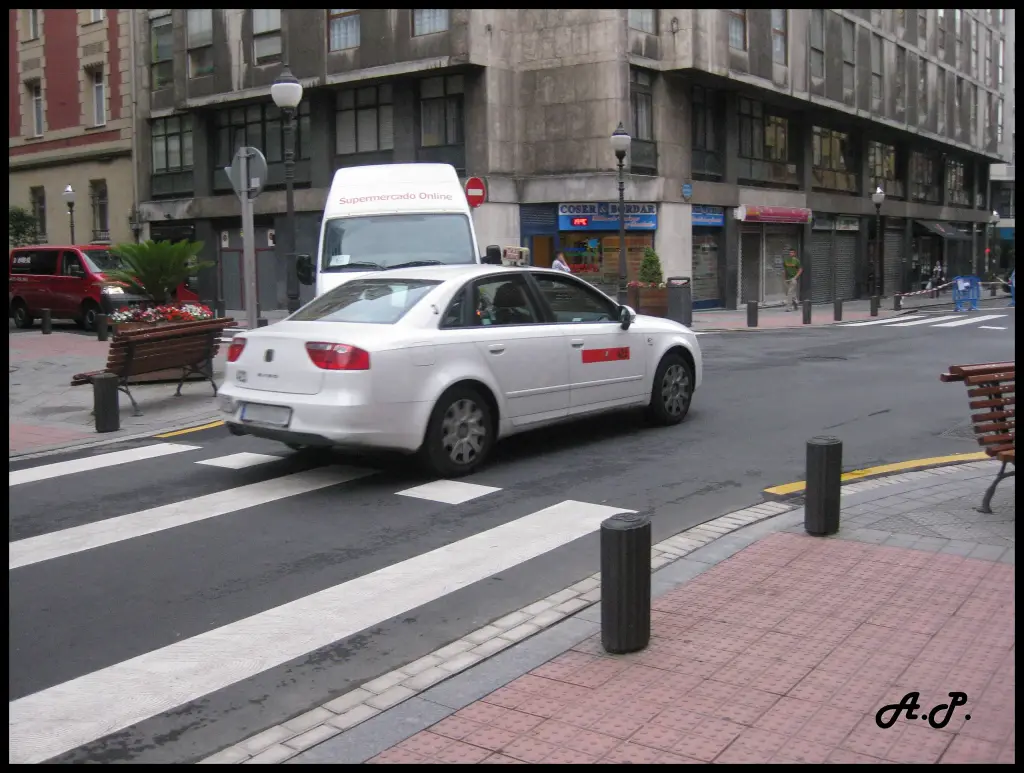
The SEAT Exeo was SEAT’s large family car and flagship from 2009 to 2014. It was a rebadged Audi A4 of the B7 generation with a redesigned front and rear, built at Martorell on the very production line that had made the A4 in Ingolstadt.
SEAT Exeo at a glance
| Maker | SEAT, Martorell, Spain |
|---|---|
| Production | 2009–2014 |
| Basis | Audi A4 B7, rebadged |
| Internal code | Typ 3R |
| Bodies | four-door saloon (3R5), five-door ST estate (3R9) |
| Revealed | 2008 Paris Motor Show |
| On sale | March 2009 in Western Europe |
| Platform | Volkswagen Group B7 (PL46) |
| Engines | petrol and common-rail diesel four-cylinders, Euro 5 |
| Drive | front-wheel drive only |
| Facelift | 2011, bi-xenon LED headlamps and new grille |
| Built | 81,572 |
This page is based on one source, the English Wikipedia article on the SEAT Exeo.
History of the SEAT Exeo
An Audi with a SEAT badge
The Exeo began life as a project codenamed Bolero, later designated Typ 3R internally, and its name comes from the Latin exire, to go beyond, breaking SEAT’s habit of naming cars after Spanish cities. It was built on the Volkswagen Group B7, or PL46, platform and was essentially the Audi A4 B7 with a unique bonnet, front wings, boot lid, doors and door mirrors. Inside it used trim from the A4 Cabriolet and a great deal of A4 B6 and B7 equipment and electrics. To make it, the entire Audi A4 B7 production and assembly line was dismantled in Ingolstadt and reinstalled at SEAT’s Martorell factory.
Saloon first, estate later
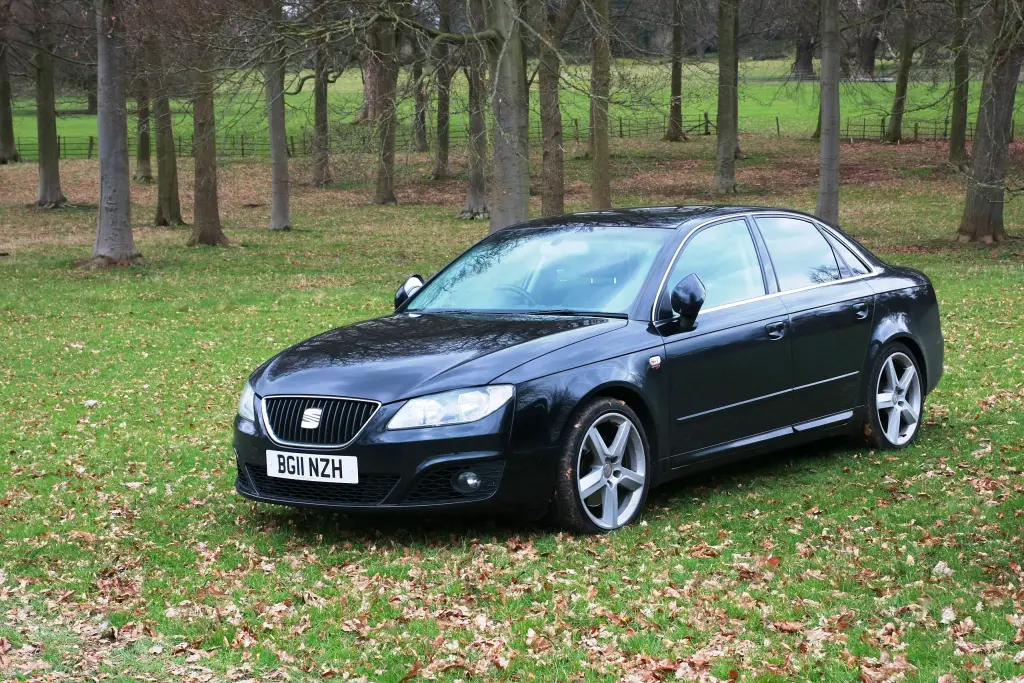
The car was revealed at the 2008 Paris Motor Show with a single body, the four-door five-seat saloon. From August 2009 a five-door five-seat estate joined it, the Exeo ST, short for Sport Tourer. Sales in Western Europe started in March 2009 with three petrol and two diesel engines, and a third, lower-powered 120 PS diesel was added from September 2009. In May 2010 three new petrol units entered production: the 1.8 TFSI in 120 and 160 PS form and the 2.0 TFSI of 211 PS. Trim levels were Reference, Stylance and Sport. A minor facelift in 2011 brought bi-xenon LED headlights, revised engines and a honeycomb grille.
Engineering carried over
Because it came from the Audi, the Exeo kept that car’s layout: engines mounted longitudinally, a transaxle gearbox behind the engine and front-wheel drive only, with no quattro option. All engines were four-cylinder units meeting Euro 5, and the diesels were common-rail TDIs with a catalytic converter and a particulate filter. The suspension was the A4’s fully independent multi-link system with aluminium front arms, and all cars had ZF power steering, disc brakes front and rear and Bosch ESP 8.0 with ABS, EBD, brake assist, traction control and an electronic differential lock. The Exeo won the Golden Steering Wheel in Switzerland in 2009, Company Car 2009 in Germany for the ST, Car of the Year 2010 in Finland and Novelty of the Year 2009 in Catalonia. Production ended in May 2014 after 81,572 cars, with no direct replacement.
Design and features
- Audi bones: the B7 platform, longitudinal engines and multi-link suspension.
- Line moved to Spain: the complete A4 B7 assembly line was reinstalled at Martorell.
- Two bodies: the saloon of 2009 and the ST estate from August 2009.
- No four-wheel drive: front-wheel drive only, unlike the Audi A4 with quattro.
SEAT Exeo versions
- Exeo saloon (3R5): the original four-door car.
- Exeo ST (3R9): five-door Sport Tourer estate from August 2009.
- Reference, Stylance and Sport: the three trim levels.
- 2011 facelift: bi-xenon LED headlamps, revised engines and a honeycomb grille.
The Exeo was the belated successor to the SEAT 132 and sat above the SEAT León. More Spanish cars are in the SEAT collection.
Sources
- SEAT Exeo, English Wikipedia: origin, bodies, engines, engineering, production