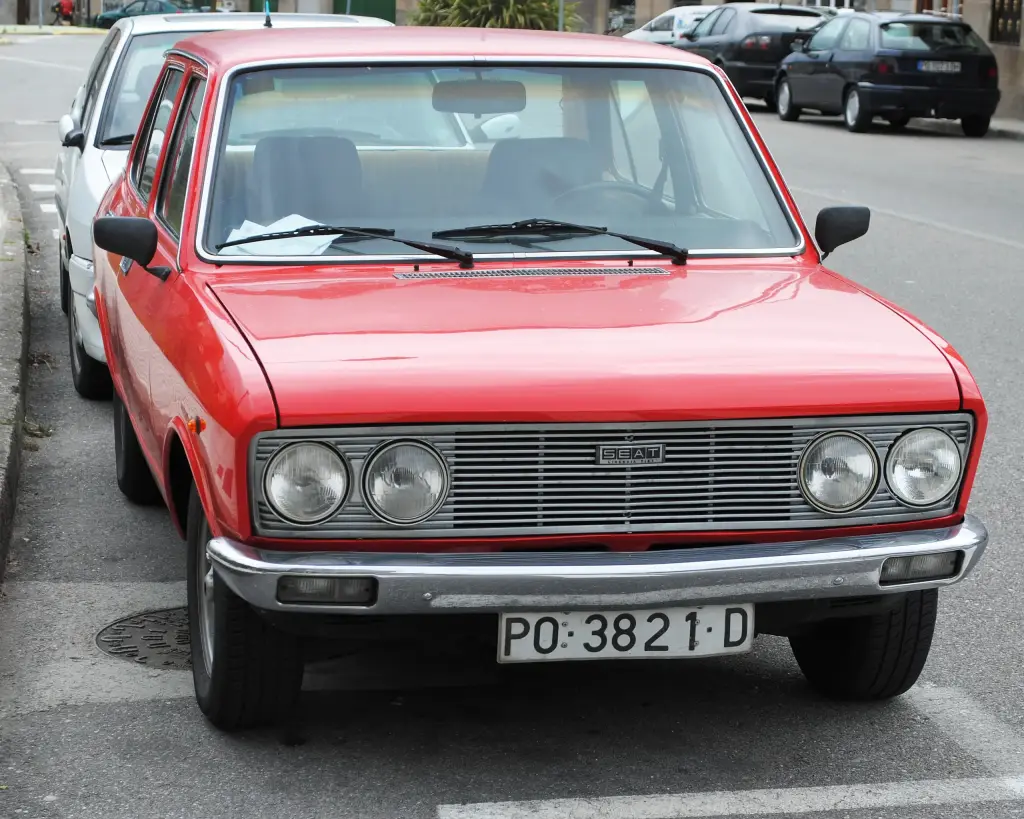
The SEAT 132 was the largest car SEAT offered in the 1970s. A rebadged Fiat 132 shown at the Barcelona Motor Show and built at Zona Franca from 1973 to 1982, it came with engines chosen for Spain, including a Mercedes-Benz diesel for the taxi trade.
SEAT 132 at a glance
| Maker | SEAT, Zona Franca, Barcelona |
|---|---|
| Production | 1973–1982 |
| Basis | Fiat 132 |
| Body | four-door saloon, rear-wheel drive |
| 132 1600 | 1,592 cc, 98 bhp |
| 132 1800 | 1,756 cc, 107 bhp |
| Diesel | 2-litre Mercedes-Benz, 55 bhp |
| 132 2000 (1979) | 1,920 cc, 109 bhp |
| Gearbox | four-speed manual; automatic from 1976 |
| Built | about 100,000 |
| Belated successor | SEAT Exeo (2009) |
This page is based on one source, the English Wikipedia article on the SEAT 132.
History of the SEAT 132
A new flagship
The 132 arrived in May 1973 as SEAT’s new top model, sharing its body with the Fiat 132 but offering its own engine range. Instead of the Italian units, Spanish buyers could choose a 1,592 cc four-cylinder with 98 bhp or a 1,756 cc engine with 107 bhp. A 132 Diesel with a two-litre Mercedes-Benz engine of 55 bhp, the same unit used in the Mercedes-Benz 200D, followed the pattern set by the SEAT 1500, which had also been sold with Mercedes diesels. The diesel mattered: it filled the gap left by the withdrawal of the diesel SEAT 1500 in 1970, and it suited the large Spanish taxi market.
Updates and the end of Fiat
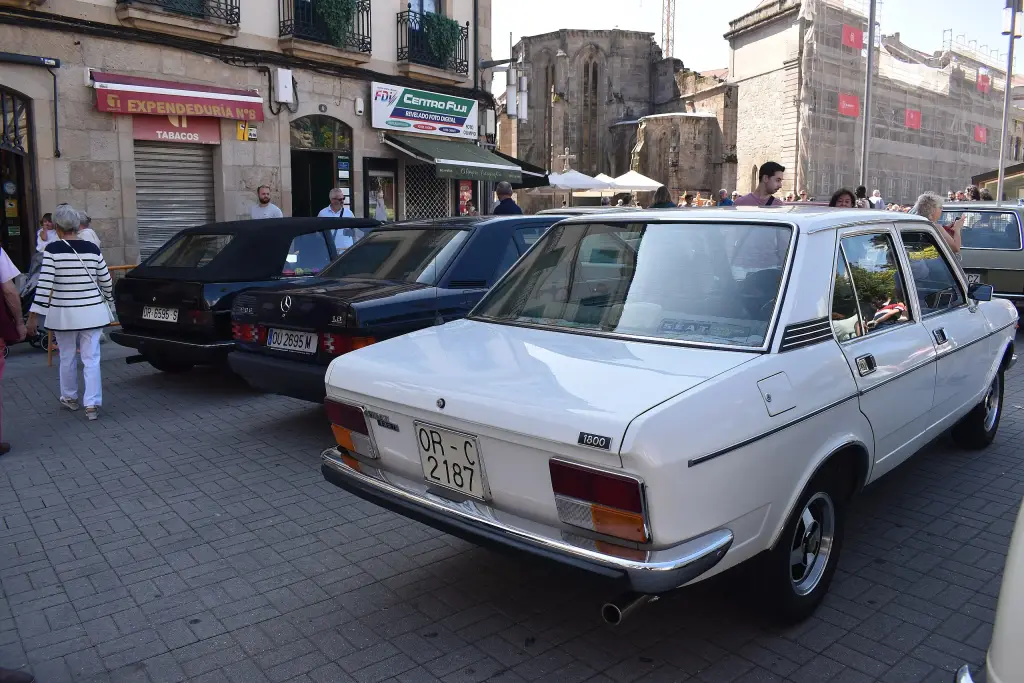
The model was restyled in 1974 to match the second-series Fiat 132, and an automatic gearbox became available in 1976, possibly in response to the success of the locally assembled Chrysler Two Litre. From 1979 the 132 2000 was sold with a 1,920 cc engine of 109 bhp, and a larger 2.2-litre Mercedes diesel was later added. At the start of the 1980s SEAT needed heavy investment; Fiat, the major shareholder alongside the Spanish government, was unwilling to provide it, and by 1982 the partnership that had lasted nearly thirty years was over.
No replacement for a long time
Production stopped in 1981, after about 100,000 cars, when Fiat had already moved to the Argenta. SEAT offered nothing in this class for decades afterwards, and the SEAT Exeo of 2009, based on the previous Audi A4, could be seen as the belated replacement.
Design and features
- Flagship size: the largest and most expensive SEAT of its day, well above the SEAT 124.
- Spanish engine choice: 1.6 and 1.8 petrol units, later a 2.0, not the Italian range.
- Mercedes diesel: a two-litre Mercedes-Benz engine aimed at taxi drivers.
- Automatic option: available from 1976.
SEAT 132 versions
- 132 1600: 1,592 cc, 98 bhp.
- 132 1800: 1,756 cc, 107 bhp.
- 132 Diesel: two-litre Mercedes-Benz engine, 55 bhp.
- 132 2000 (1979): 1,920 cc, 109 bhp.
- 2.2 diesel: larger Mercedes diesel added late in the model’s life.
The 132 was the belated replacement for the SEAT 1500 and the flagship above the SEAT 131; its eventual successor was the SEAT Exeo. More Spanish cars are in the SEAT collection.
Sources
- SEAT 132, English Wikipedia: engines, dates, taxi market, end of production