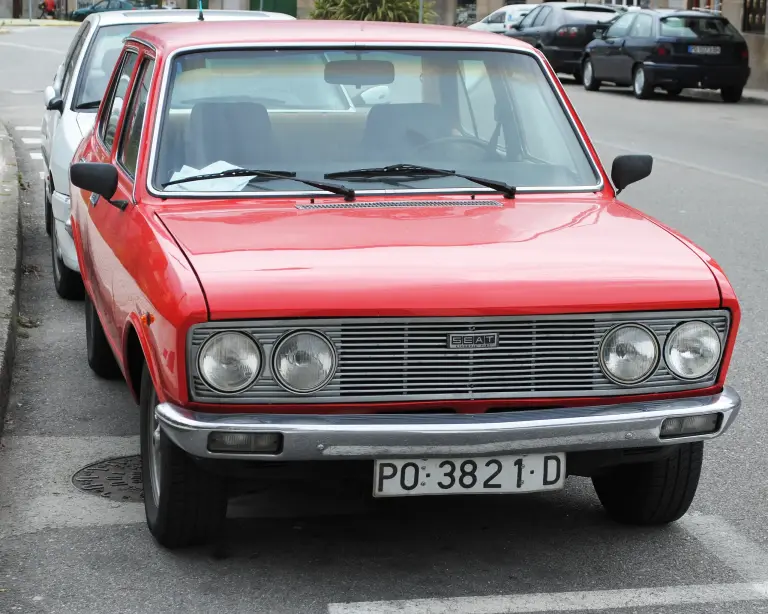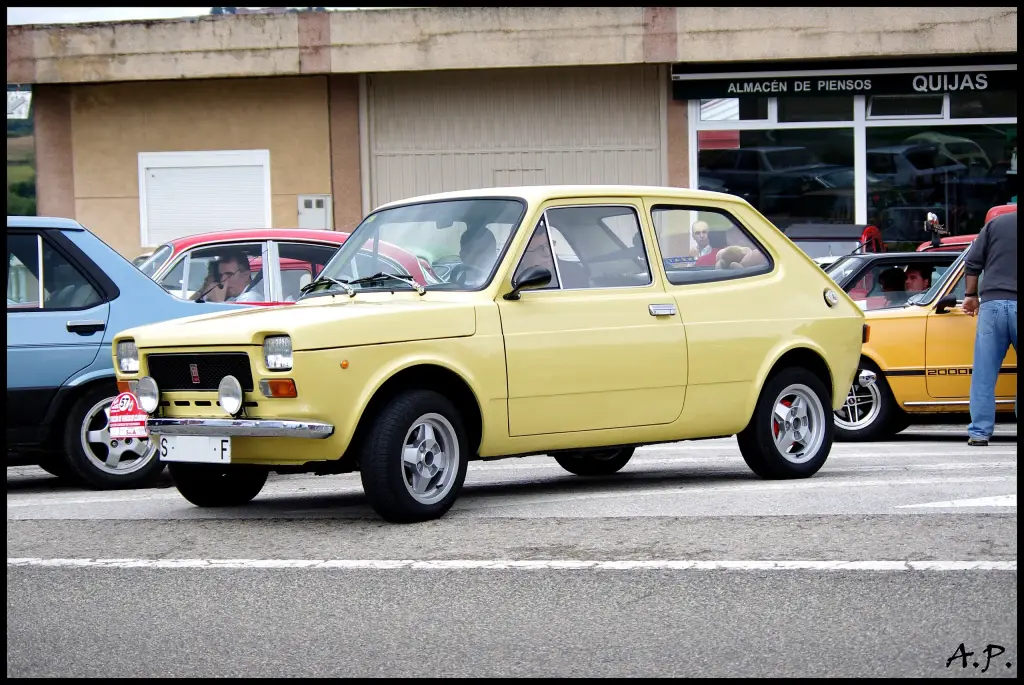
The SEAT 127 brought the hatchback formula to Spanish buyers. A rebadged Fiat 127 built in Spain from 1972 to 1982, it grew a four-door body that Italy never offered and ended its life as the SEAT 127 Fura.
SEAT 127 at a glance
| Maker | SEAT, Spain |
|---|---|
| Production | 1972–1982 |
| Basis | Fiat 127, built under licence |
| Bodies | two-door, three-door, four-door and, from 1980, five-door |
| Italian engine | 903 cc, 43–45 PS |
| Spanish engine | 1,010 cc, 52 PS |
| Gearbox | four-speed manual |
| Series 2 | January 1980, new grille, lights and bumpers |
| Last evolution | 127 Fura, November 1981 |
| Built | 1,238,166 |
This page is based on one source, the English Wikipedia article on the SEAT 127.
History of the SEAT 127
First series, 1972–1977
The 127 arrived in the spring of 1972 as SEAT’s answer to the growing demand for a modern small car. It was the Italian Fiat 127 with Spanish production, and for most of the range it used the same 903 cc engine producing 43 or 45 PS. SEAT’s own engineers, however, developed a unique version of the overhead-valve engine with 1,010 cc and 52 PS, sold alongside the smaller unit. In 1973 a four-door variant was added to the range. It kept the fastback roofline of the hatchback but had no hatchback lid, a body that Fiat never built in Italy.
Second series, 1977–1982
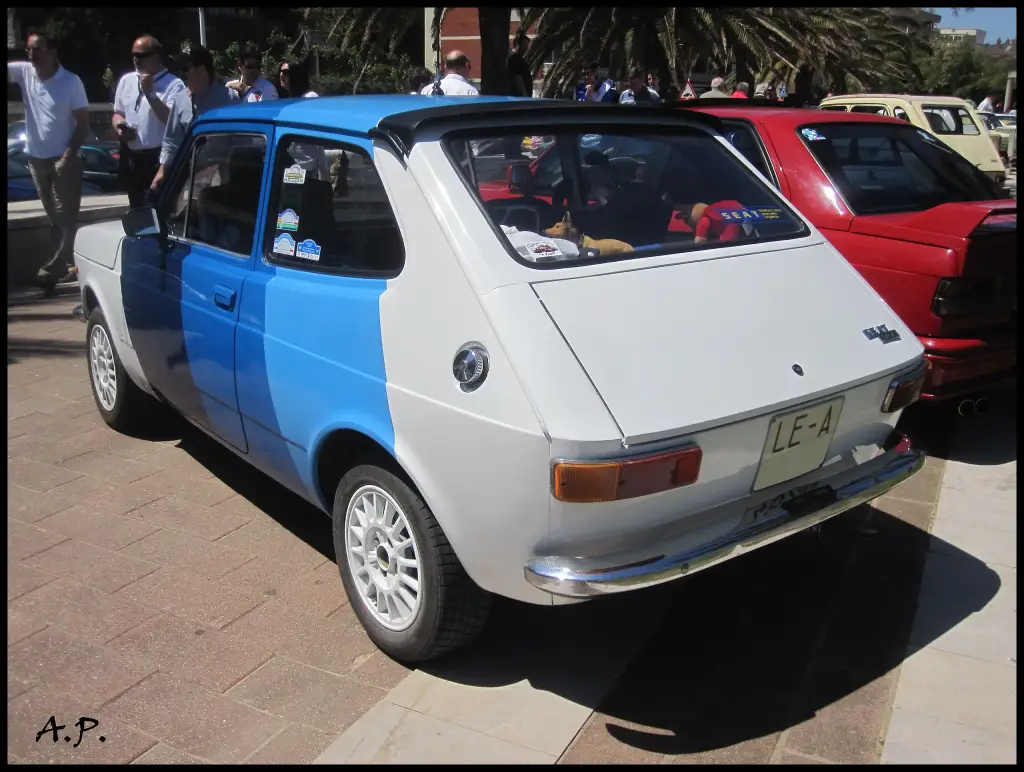
For the Serie 2 of January 1980 the car received the same changes as its Italian twin: a new grille, new tail lights and new bumpers. At the same time a full five-door hatchback body became available, giving the little SEAT the practicality of a family car. The 127 remained one of the most common cars on Spanish roads throughout the late 1970s, and the total of 1,238,166 cars built between 1972 and 1982 made it one of the most produced models in the country’s history.
The 127 Fura
In November 1981 the last evolution of the car appeared as the SEAT 127 Fura, almost identical to the third-series Fiat 127. When SEAT’s licence from Fiat expired, the company redesigned a number of parts and dropped the 127 name altogether, so the same car continued for a few more years simply as the SEAT Fura.
Design and features
- Spanish four-door: a saloon-like four-door body with no hatchback lid, unique to SEAT.
- Own engine: the 1,010 cc overhead-valve unit of 52 PS, developed by SEAT rather than Fiat.
- Five-door option: added with the 1980 update, unusual in the class at the time.
- Huge production: more than 1.2 million cars in ten years.
SEAT 127 versions
- 127 first series (1972–1977): two- and three-door hatchbacks and the Spanish four-door.
- 127 Serie 2 (1980): new front and rear styling and a five-door body.
- 127 Fura (1981): final evolution, later renamed simply SEAT Fura.
The 127 was replaced in the range by the SEAT Fura and sat below the SEAT 128 coupé. More Spanish cars are in the SEAT collection.
Sources
- SEAT 127, English Wikipedia: production years, engines, body styles, totals