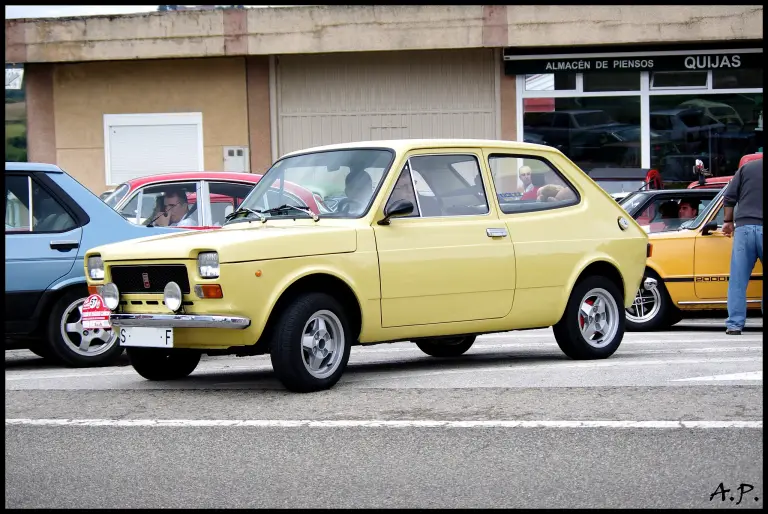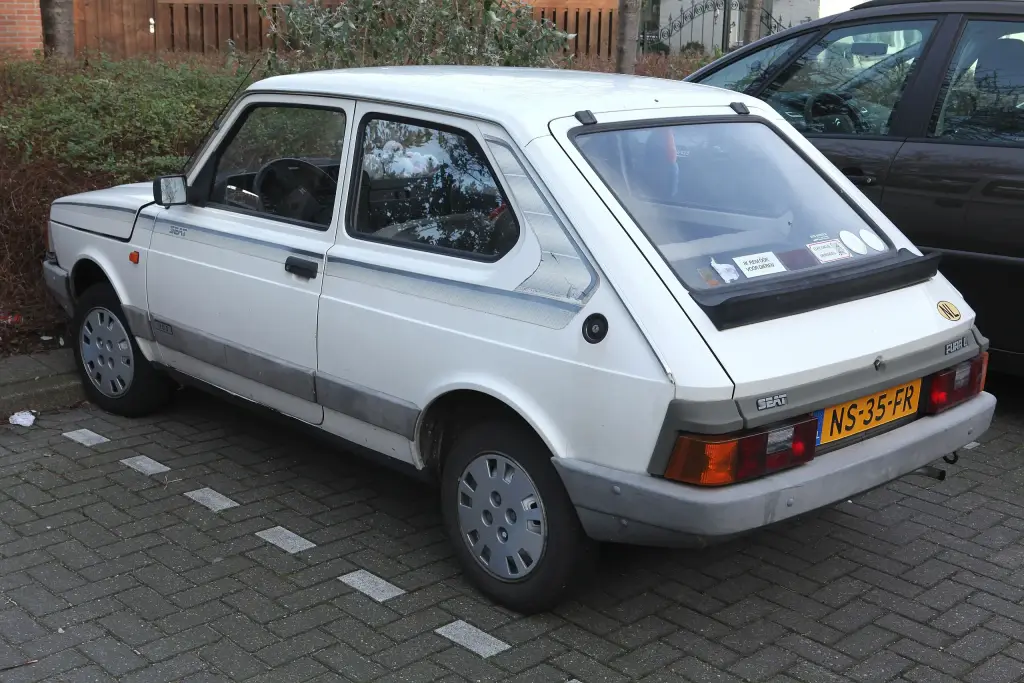
The SEAT Fura was the SEAT 127 under a new name. When the licence from Fiat expired, SEAT redesigned parts of the car and dropped the 127 badge; the Fura was built from the end of 1981 to 1986, and a hotter Fura Crono sat at the top of the range.
SEAT Fura at a glance
| Maker | SEAT, Spain |
|---|---|
| Production | 1981–1986 |
| Basis | SEAT 127, itself a licensed Fiat 127 |
| Bodies | three- and five-door hatchback |
| Gearbox | five-speed manual, standard |
| Engine | 903 cc; the 1,010 cc unit was not offered |
| Facelift | Fura Dos, 1983 |
| Hot hatch | Fura Crono, 1,438 cc, 75 PS |
| One-make series | Copa Fura, 1983–1985, cars tuned by Abarth |
| Licensed abroad | El Nasr Super Fura, Cairo |
This page is based on one source, the English Wikipedia article on the SEAT Fura.
History of the SEAT Fura
From 127 to Fura
In November 1981 the last evolution of the SEAT 127 was presented as the SEAT 127 Fura, nearly identical to the Italian Fiat 127 series 3. Once the licence for the 127 had expired, SEAT was forced to develop a new version, introduced at the end of 1981 for the 1982 model year. The car lost the 127 name and became simply the SEAT Fura. It was sold as a three-door and a five-door hatchback from January 1982, while the two- and four-door saloon versions of the Fiat 127 were dropped. The Fura was never available with the larger 1,010 cc engine used in the SEAT 127, but it did get the five-speed manual gearbox as standard.
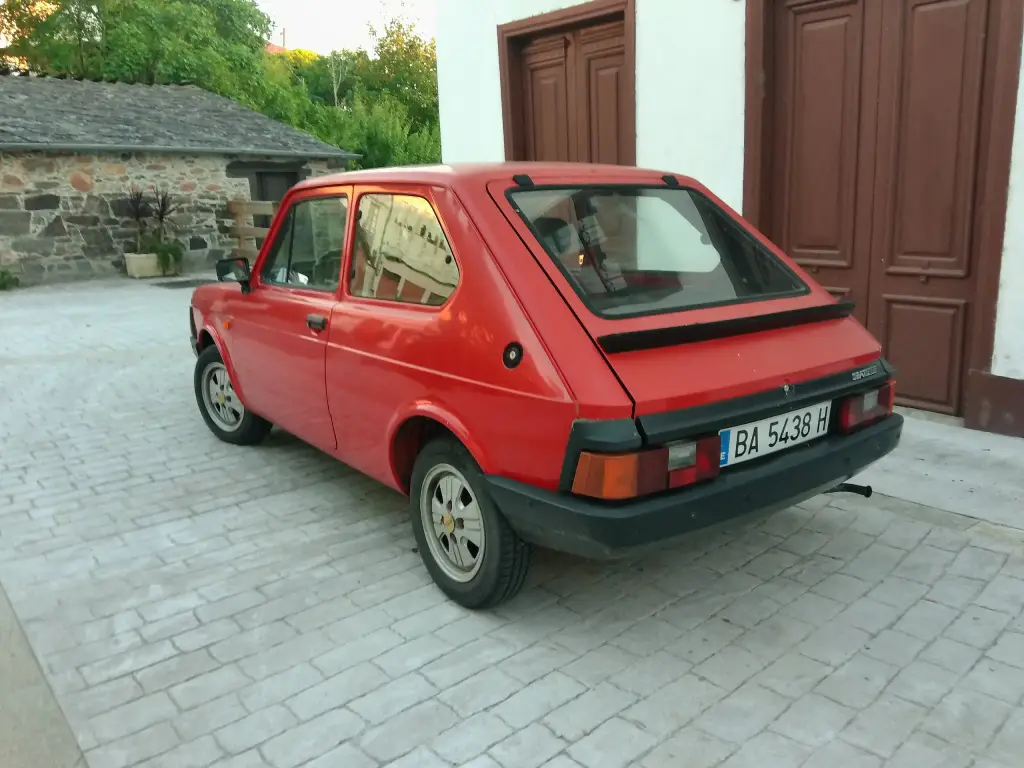
Fura Dos, 1983
After the facelift of 1983 the car became the SEAT Fura Dos, or two. It did not differ much from its predecessor, mainly through smaller headlights and turn signals. The launch of the first-generation SEAT Ibiza in April 1984 made the Fura largely redundant, though it continued as a lower-cost alternative to the new model. For slightly more than a year the two small hatchbacks competed inside the same showrooms, until the outdated Fura was officially discontinued in December 1986. Some of its design parts were also used in the Ibiza Mk1.
Fura Crono and racing
A hot hatch called the Fura Crono appeared at the beginning of 1983, with spoilers front and rear, twin fog lights and unique 13-inch alloy wheels. Its 1,438 cc four-cylinder had twin carburettors, the same engine as the SEAT 124, and gave 75 PS, a top speed of 160 km/h and a 0–100 km/h time of 10.8 seconds. The Crono was used in the one-make Copa Fura rally series, run from 1983 to 1985, where the cars were tuned by Abarth to 90 PS. The model was also assembled in Cairo by NASR as the El Nasr Super Fura.
Design and features
- New name, old car: the SEAT 127 with the Fiat licence removed.
- Five speeds as standard: unlike the 127, every Fura had a five-speed gearbox.
- Fura Crono: a 75 PS twin-carb hot hatch with spoilers and alloy wheels.
- Racing pedigree: the Copa Fura one-make rally series and Abarth-tuned cars.
SEAT Fura versions
- 127 Fura (1981): the transitional version, still nearly a 127.
- Fura (1982–1983): three- and five-door hatchbacks.
- Fura Dos (1983–1986): facelifted car with smaller lights.
- Fura Crono (1983): 1,438 cc, 75 PS, 160 km/h.
The Fura was the renamed SEAT 127 and was replaced in the range by the SEAT Ibiza. More Spanish cars are in the SEAT collection.
Sources
- SEAT Fura, English Wikipedia: history, bodies, engines, Crono, motorsport