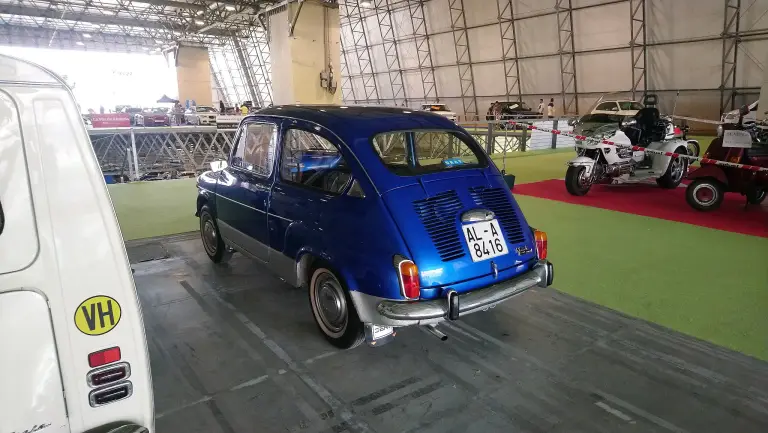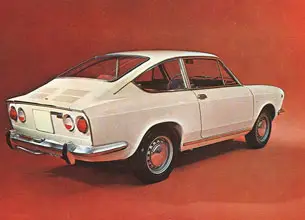
The SEAT 850, known in Spain as the ocho y medio, was the model that filled the gap between the SEAT 600 and the larger SEAT 124. Based on the Fiat 850, it was built from April 1966 to 1974 in four different body styles, two of which were developed especially for Spain.
SEAT 850 at a glance
| Maker | SEAT, Spain |
|---|---|
| Production | April 1966 – 1974 |
| Basis | Fiat 850 |
| Bodies | two-door saloon, four-door corto, four-door largo, coupé and Spider |
| Engine | 843 cc four-cylinder, 37 or 47 hp |
| Sport engine | 903 cc, 51 hp |
| Four-door models | added in 1967 |
| Especial Lujo | presented at Paris in 1971, four-door largo only |
| Replaced by | SEAT 133 |
| Nickname | ocho y medio |
This page is based on one source, the English Wikipedia article on the SEAT 850. Free photographs of the model were not found on Wikimedia Commons, so the page has no photographs.
History of the SEAT 850
A Spanish Fiat 850
The 850 was SEAT’s second small car after the 600, and it was based on the Fiat 850. At first it was offered only with the same two-door saloon body used in Italy, powered by an 843 cc four-cylinder engine in 37 or 47 hp form. The car was built in Spain from April 1966 and quickly became a familiar sight, earning the nickname ocho y medio, or eight and a half.
Four doors, Spanish style
Two different four-door versions appeared in 1967, neither of them an Italian model. The very rare corto, or short, used the bodywork that Francis Lombardi had developed for the Fiat 850 Lucciola. The largo, or long, used a floorpan lengthened by 15 cm and bodywork developed specifically for SEAT by Carrocerías Costa. At the 1971 Paris Motor Show SEAT presented the 850 Especial Lujo, a more luxurious version available only with the four-door largo body.
Sport and the end of the line
The SEAT 850 Sport was based on the Fiat 850 Coupé and Spider and came in two forms, the 850 Sport Spider convertible and the 850 Coupé and 850 Sport Coupé. Both were built in Spain but never exported, and both used the 903 cc engine of 51 hp instead of the 843 cc unit of the standard cars. Production ended in late 1974, the model having been replaced by the SEAT 133, essentially an 850 rebodied in the style of the 127. After Fiat stopped building the 850 in Italy in 1972, the SEAT version was sold in Europe through Fiat dealers for a couple of years, wearing a Fiat badge with “costruzione SEAT” underneath.
Design and features
- Four body styles: two-door saloon, two kinds of four-door, coupé and Spider.
- Spanish four-doors: the Lombardi-based corto and the Costa-built largo.
- Sport versions: 903 cc engine with 51 hp, sold at home but never exported.
- Fiat dealer sales: after 1972 the car was sold abroad as a Fiat costruzione SEAT.
SEAT 850 versions
- 850 two-door saloon: the original Italian body.
- 850 corto (1967): four-door on the Francis Lombardi Lucciola body.
- 850 largo (1967): four-door with a floorpan 15 cm longer and Costa bodywork.
- 850 Especial Lujo (1971): luxurious four-door largo.
- 850 Sport Coupé and Sport Spider: 903 cc, 51 hp.
The 850 sat between the SEAT 600 and the SEAT 124, and it was replaced by the SEAT 133. More Spanish cars are in the SEAT collection.
Sources
- SEAT 850, English Wikipedia: dates, bodies, engines, Sport versions, end of production