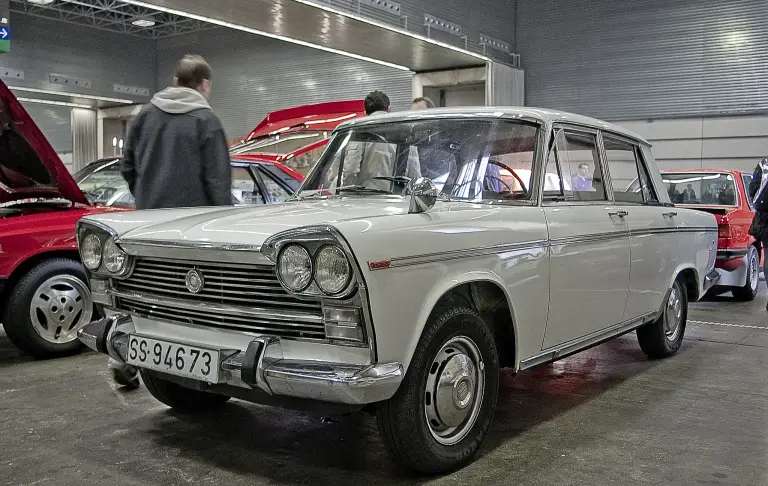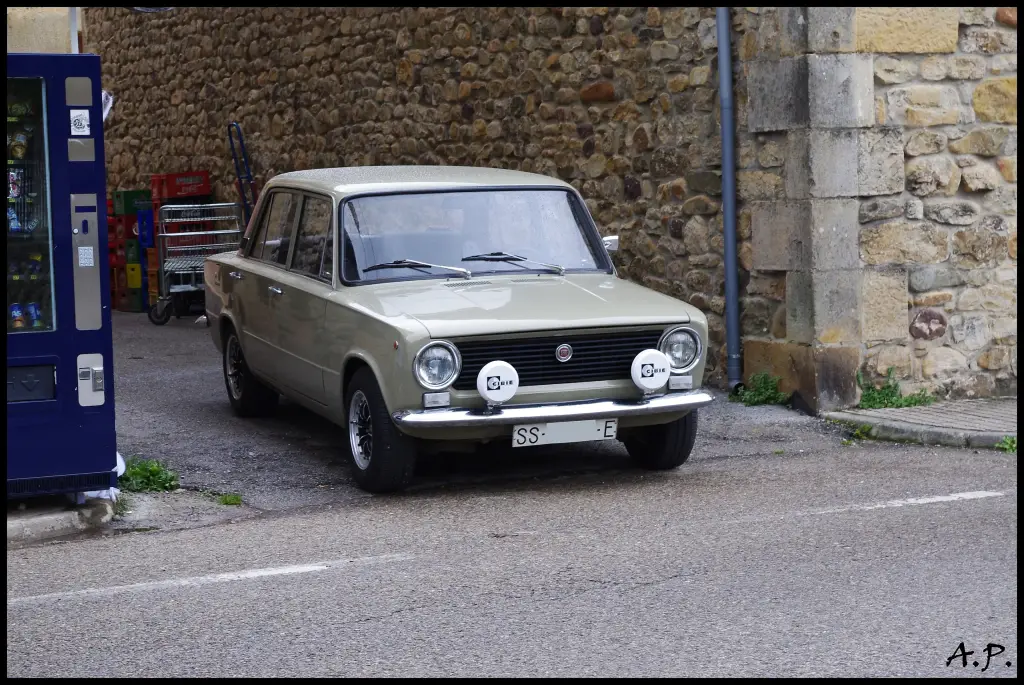
The SEAT 124 was the car with which SEAT moved from small city cars into the family class. A licence-built Fiat 124, it was made at Zona Franca in Barcelona and later at Landaben in Pamplona between 1968 and 1980, and 896,136 examples were sold in Spain.
SEAT 124 at a glance
| Maker | SEAT, Zona Franca (Barcelona) and Landaben (Pamplona) |
|---|---|
| Production | 1968–1980 |
| Basis | Fiat 124, built under licence |
| Bodies | four-door saloon, five-door Familiar estate, two-door Sport coupé |
| Engine | 1,197 cc four-cylinder, 60 hp |
| 1973 addition | 124 LS with 65 hp |
| Gearbox | four-speed manual |
| Facelift | 1975 by Giorgetto Giugiaro, rectangular headlamps |
| Related model | SEAT 1430 |
| Built | 896,136 |
| Replaced by | SEAT Ritmo in 1980 |
| Licence abroad | Premier 118NE, India, 1985–2001 |
This page is based on one source, the English Wikipedia article on the SEAT 124.
History of the SEAT 124
First series, 1968–1974
The 124 was introduced to fill the gap between the SEAT 600 and 850 city cars and the large 1500 saloon, and it was aimed squarely at Spain’s growing middle class. The range copied the Italian car closely: a four-door saloon and a five-door estate called the Familiar, both with the 1,197 cc overhead-valve four-cylinder engine fed by a two-barrel carburettor and driving through a four-speed gearbox. Power was 60 hp at first; the 124 LS of 1973 raised it to 65 hp. Trim and equipment were steadily upgraded with parts borrowed from the SEAT 1430 and from the Fiat 124 Special and 125, so Spanish cars differed in detail from the Italian original.
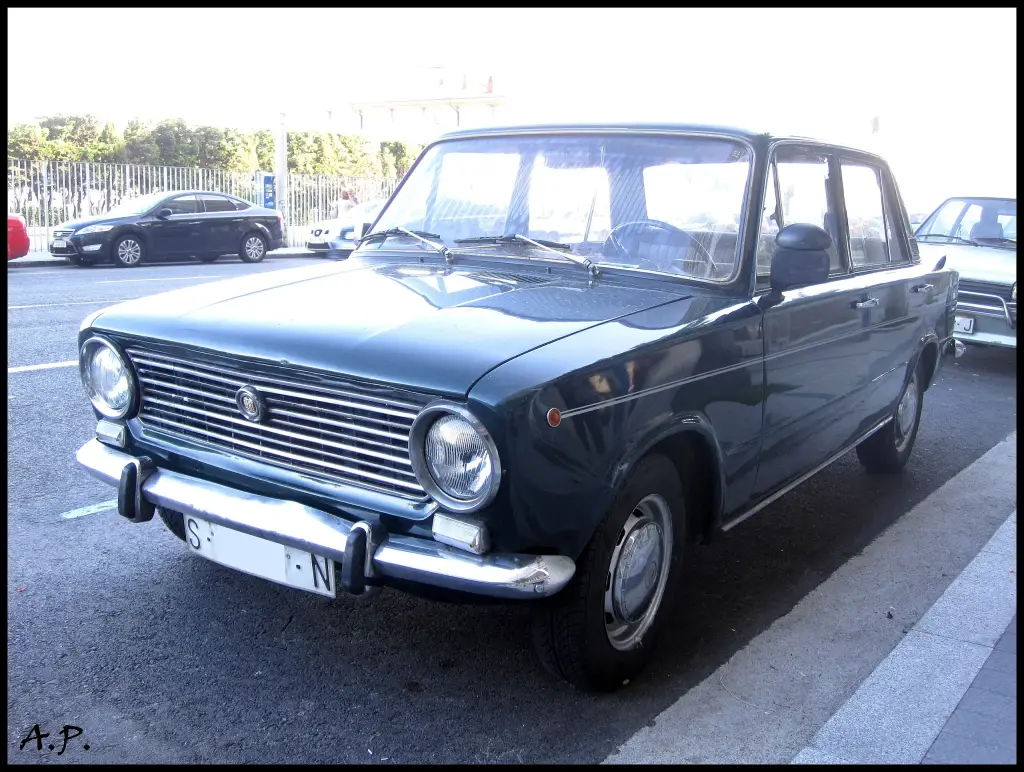
Second series, 1975–1980
In 1975 Giorgetto Giugiaro restyled the car: round headlamps gave way to rectangular ones, the tail was altered and the 124 and 1430 ranges were merged under the name SEAT 124D versión 75. Production moved in 1976 from Zona Franca to the Landaben plant in Pamplona, which SEAT had just bought from Authi, and the five-door Familiar was dropped. The twin-cam cars built on the 124 were known internally as FL and became the basis of SEAT’s competition programme. The 124 was finally replaced by the SEAT Ritmo in 1980, six years after the Fiat 131 had taken over from the 124 in Italy.
Rallying and the Indian connection
SEAT’s first serious World Rally Championship campaign came in 1977 with the 1430/124D Especial 1800. On its debut, the Monte Carlo Rally, the team finished third and fourth with Antonio Zanini and Salvador Cañellas. For the 1977 Monte the cars used the same 1.8-litre 16-valve engine as the Fiat 131 Abarth, and rally versions of the engine grew to as much as 2,090 cc. The same body also travelled further: from 1985 to 2001 Premier Automobiles of India built a licensed version of the facelifted 124 D as the Premier 118NE, though with a Nissan 1,171 cc engine and gearbox.
Design and features
- Fiat engineering, Spanish production: the same basic car as the Fiat 124, assembled and progressively localised in Spain.
- Three body styles: saloon, Familiar estate and the two-door Sport coupé with twin-cam engines.
- Strong engine family: the 1,197 cc unit and its twin-cam relatives powered taxis, police cars, ambulances and rally cars.
- Long life: the 124 stayed in production alongside the 131 and outlived its Italian equivalent by six years.
SEAT 124 versions
- 124 (FA, 1968–1971): the original saloon with round headlamps.
- 124 LS (1973–1974): 65 hp version of the 1,197 cc engine.
- 124D versión 75: the Giugiaro facelift that united the 124 and 1430 ranges.
- 124 Sport Coupé: two-door model with 1,600, 1,800 and later 2,000 cc twin-cam engines.
- 124 Familiar: five-door estate, built until 1976.
The more luxurious relative of the 124 was the SEAT 1430, and its replacement in the range was the SEAT 131. More Spanish cars are in the SEAT collection.
Sources
- SEAT 124, English Wikipedia: history, versions, rallying, licence production