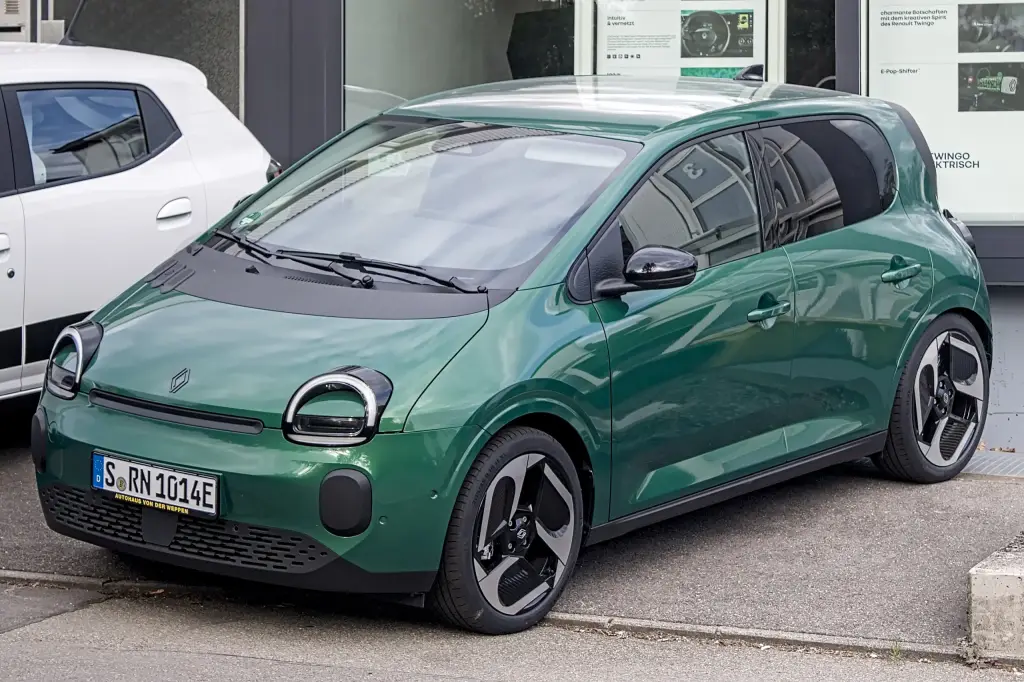
Renault has put a price on its new electric Twingo for Britain: £14,745 after the government grant, with order books due to open in early 2027. It is one of the cheapest new electric cars on sale here — and the first Twingo to be offered in the UK since 2019.
The short version
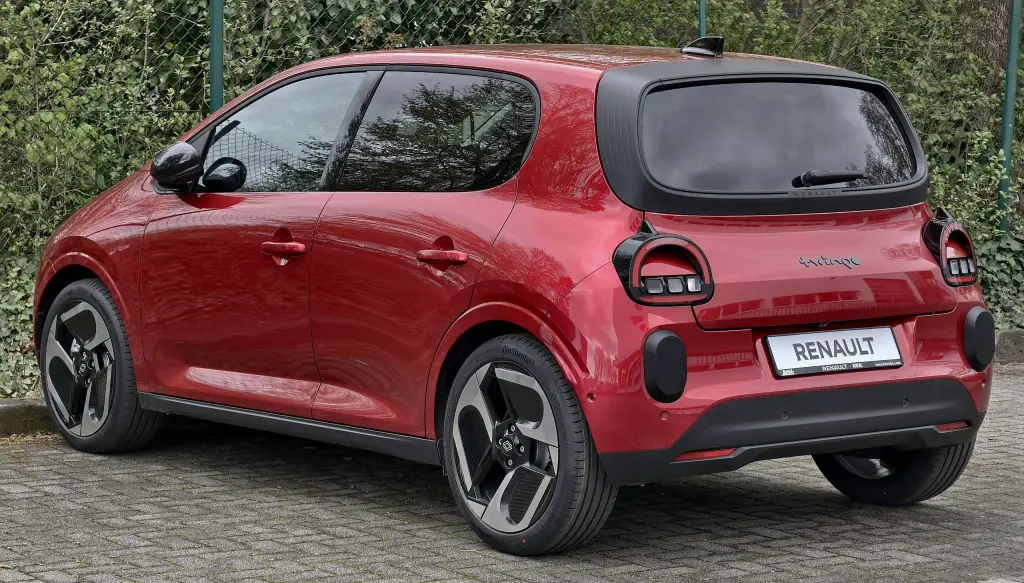
The fourth-generation Twingo is an electric city car built in Slovenia. Its UK list price is £18,495, which falls to £14,745 once the £3,750 Electric Car Grant is applied. First deliveries are expected in March 2027.
What Renault announced
Renault confirmed UK prices for the Twingo E-Tech on 20 November 2026. All three launch versions qualify for the maximum £3,750 Electric Car Grant: the entry-level Evolution at £14,745, the Techno at £16,245 and the Launch Edition at £17,645.
| Model | Renault Twingo E-Tech, fourth generation |
|---|---|
| Market | United Kingdom, order books from early 2027 |
| Price after grant | £14,745 (Evolution), £16,245 (Techno), £17,645 (Launch Edition) |
| List price | £18,495 for the Evolution, before the £3,750 grant |
| Motor | 80 hp, front axle |
| Battery | 27.5 kWh, LFP chemistry |
| Range | Up to 163 miles |
| Charging | Up to 50 kW |
| Built in | Slovenia |
| First deliveries | March 2027 |
Every version shares the same hardware. An 80 hp electric motor drives the front wheels, fed by a 27.5 kWh lithium-iron-phosphate battery that Renault says is good for up to 163 miles. Charging is quoted at up to 50 kW. The equipment list includes a 10-inch central touchscreen, a digital instrument display, smartphone mirroring, Google mapping, bi-directional charging and parking sensors.
Order books are due to open at the start of 2027, with deliveries from March. Renault UK is also offering a £100 “R Pass” that brings priority ordering and two years of free servicing, and it has nicknamed the car “Le Frog”.
A city car with a long memory
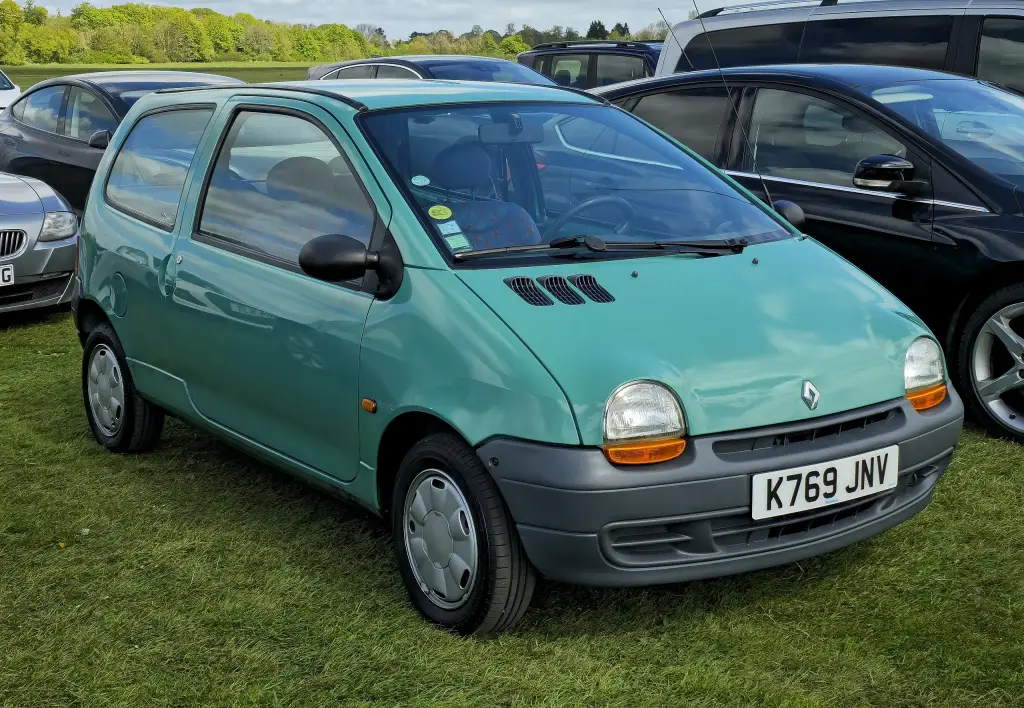
The Twingo is not a new name. The original was shown at the Paris Motor Show in October 1992 and went on sale in continental Europe in April 1993. Designed under Patrick Le Quément, it was conceived as a small, van-like successor to the Renault 4, and it arrived with a single trim level and one engine. The first generation stayed in production in Europe until 2007; in total, 2.6 million were built.
Two more generations followed: the second in 2007, whose production later moved to Renault’s Revoz plant in Novo Mesto, Slovenia, and the rear-engined third in 2014. Britain lost the model after the 2019 facelift, when Renault withdrew the Twingo from the UK range.
The electric chapter began in November 2023, when Renault promised a Twingo EV for less than €20,000. The production version was revealed in the final quarter of 2025, and series production began in Slovenia in 2026 — at the same factory that built the second-generation car.
Why it can be cheap
Renault credits three things for the low price: cost-effective LFP batteries, low weight and a sharp reduction in parts. Where a Clio is made from around 2,000 individual components, the Twingo uses about 600. That simplicity, together with its small size and modest battery, is what keeps the list price below £20,000 even before the grant.
At £14,745 it undercuts the Fiat 500e, the Citroën ë-C3 and the BYD Dolphin Surf. Only the Dacia Spring and the Leapmotor T03 are cheaper. Renault says the car has already outsold the larger Renault 5 to become France’s most popular EV last month, and that it has taken more than 9,000 orders in Germany.
What it means for British buyers
The obvious attraction is the price. After the grant, the Twingo costs about the same as a petrol Dacia Sandero. For a household that does mostly short trips and can charge at home, 163 miles covers a week of commuting, and a 50 kW charger adds useful range at a motorway stop.
The limits are just as clear. This is a small city car with a small battery, not a long-distance machine, and the grant has conditions. The cheapest Evolution version rides on 16-inch steel wheels and makes do with air conditioning rather than climate control; the Techno adds alloys, a reversing camera, heated seats and one-pedal driving.
There is a historical yardstick, too. Renault UK managing director Adam Wood compared the Twingo with the Zoe, which cost £23,500 when it launched in 2016 — about £37,750 in today’s money, as Autocar reported. “Le Frog has landed, and we think it’s going to make quite a splash,” he said.
For the full story of the model, see our article on the Renault Twingo. Its ancestor was the Renault 4, its electric lineage includes the Renault Zoe, and the cheaper budget alternative is the Dacia Spring. More models are in the Renault archive.
Sources
- Official: Renault Twingo starts under £15k with £3750 ECG discount, Autocar, 20 November 2026.
- New Renault Twingo EV to cost from just £14,745, Motoring Research, 20 November 2026.
- Renault Twingo, English Wikipedia.