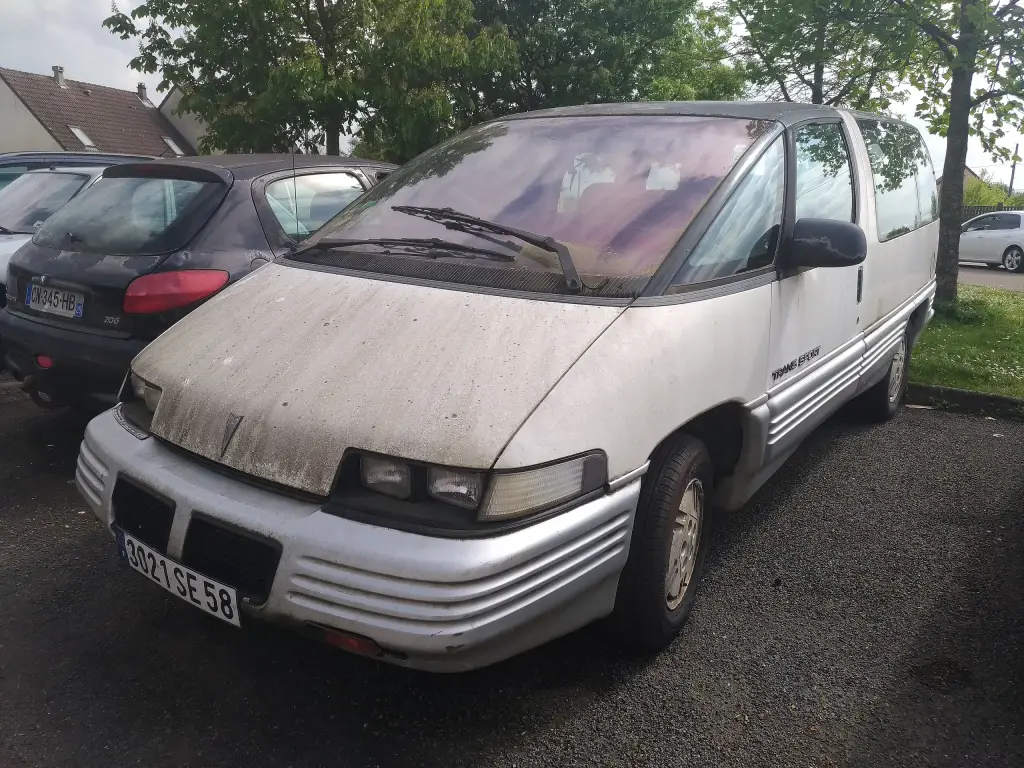
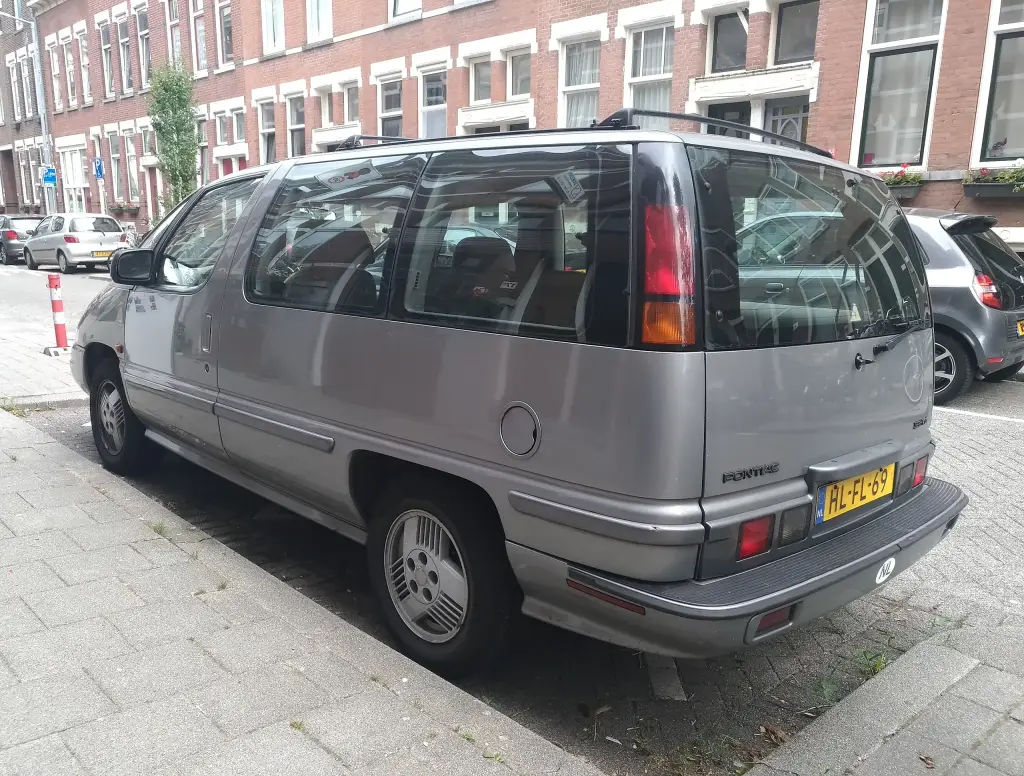
The Pontiac Trans Sport was a minivan sold from the 1990 to 1999 model years, and the first minivan from the division. Its first generation, with a long front overhang, was nicknamed the Dustbuster; the second generation adopted a more conventional shape and the name changed to Montana.
Pontiac Trans Sport at a glance
| Maker | Pontiac, General Motors |
|---|---|
| Years | 1990–1999 |
| Class | minivan |
| Platform | GM U-platform |
| Sister cars | Chevrolet Lumina APV, Oldsmobile Silhouette |
| First assembly | North Tarrytown, New York |
| Second assembly | Doraville, Georgia |
| Concept | shown at the 1986 Chicago Auto Show |
| Nickname | Dustbuster |
| Renamed | Pontiac Montana for 1998 |
| Name origin | loosely from the Trans Am Firebird |
Based on one source: the English Wikipedia article on the Trans Sport.
History of the Pontiac Trans Sport
Why Pontiac built a minivan
After Chrysler launched its minivans for 1984, GM answered with the Chevrolet Astro and GMC Safari for 1985. Those were heavier-duty vehicles sharing parts with compact pickups and full-size cars, and they did not take as much market share as the Chrysler vans. GM therefore began developing a front-wheel-drive minivan for the 1990s. The Trans Sport targeted sporty, style-conscious buyers, while the Chevrolet Lumina APV was the value version and the Oldsmobile Silhouette the premium one. The Trans Sport took its name, loosely, from the Trans Am Firebird.
The 1986 concept
At the 1986 Chicago Auto Show GM showed a Trans Sport concept derived from the chassis of the mid-size Pontiac 6000 and almost six inches lower than the Plymouth Voyager of the time. It had blacked-out A-pillars and upswept B-pillars for a wraparound windscreen look, a right-side gull-wing door instead of a sliding door, wrap-around glass from the B-pillar to the tailgate and a largely glass roof whose headlining was only 36 inches wide at its widest point. Its multifunction tail lamps added amber for deceleration alongside the usual red brake and white reverse lights.
Production cars
The first-generation production Trans Sport was officially a U-platform vehicle sharing mechanical parts with the W-platform Grand Prix, and its controversial front body styling with a long front overhang earned it the Dustbuster nickname. It was built at North Tarrytown in New York, with production moving to Doraville, Georgia for the second generation, which followed the Chrysler minivans towards a more conventional form. For 1998 Pontiac renamed the van the Montana, after an exterior trim package introduced in 1997. Together with the Lumina APV and Silhouette it marked the point where family transport at GM began to move away from sedans and station wagons.
Design and features
- First Pontiac minivan: the division’s entry into the people-carrier market.
- Dustbuster nose: a long front overhang that divided opinion.
- U-platform: shared with the Lumina APV and Silhouette.
- Concept gull-wing door: the 1986 show car had one on the right side.
- Montana name: adopted for 1998 from a trim package.
Pontiac Trans Sport versions
- First generation (1990–96): the Dustbuster-shaped van.
- Second generation (1997–99): the more conventional shape.
- Montana (1998–99): the renamed version.
The Trans Sport replaced the Safari wagon as Pontiac’s family car and shared its platform with the Grand Prix. More Pontiacs are in the Pontiac collection.
Sources
- Pontiac Trans Sport, English Wikipedia: origins, concept, generations