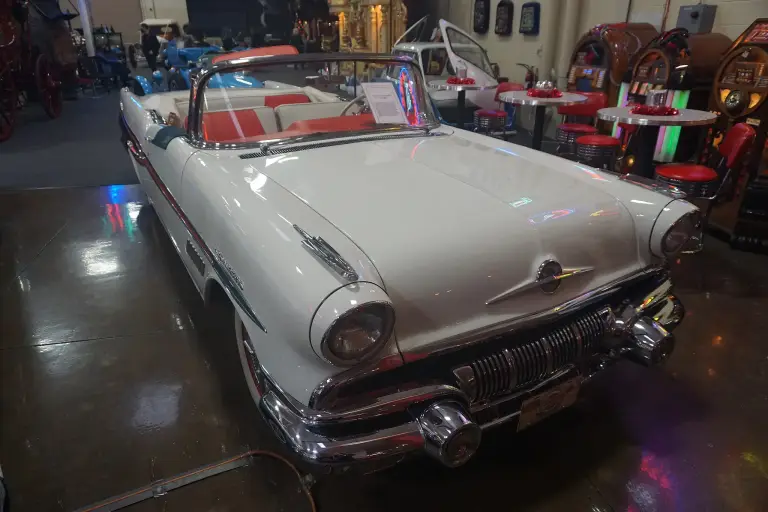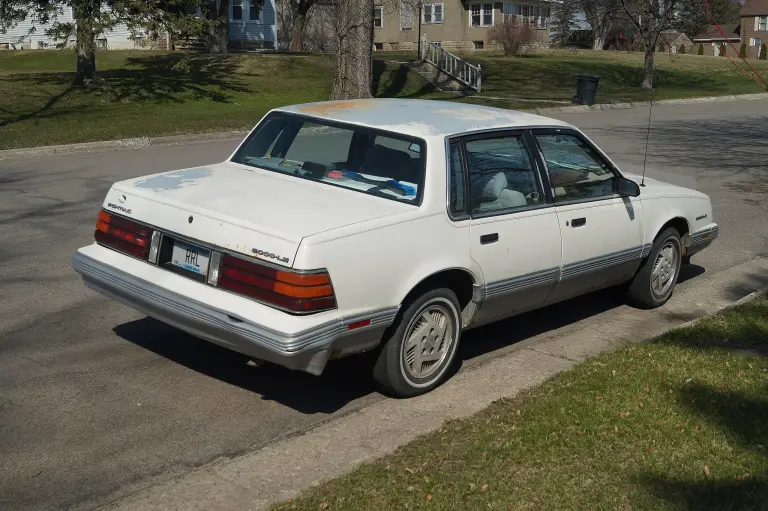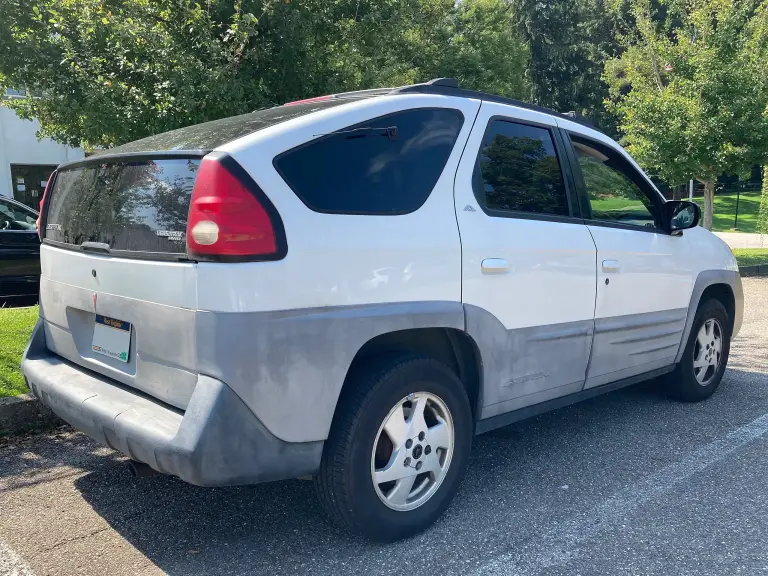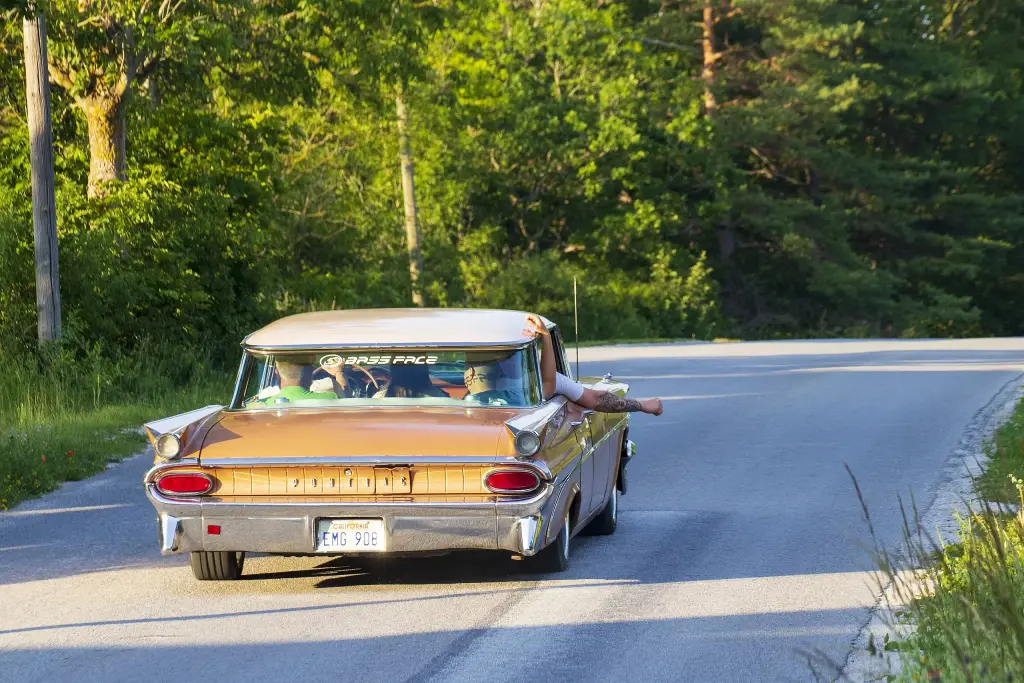
The Pontiac Catalina was a full-size car built by Pontiac from 1950 to 1981. For its first nine years the name meant a pillarless hardtop body, and from 1959 it was the entry-level full-size Pontiac, the division’s most popular model.
Pontiac Catalina at a glance
| Maker | Pontiac, General Motors |
|---|---|
| Production | 1950–1981 |
| First use | 1950 Chieftain Eight and DeLuxe Eight hardtops |
| Separate model | from 1959 |
| Class | full-size car |
| Body styles | two- and four-door hardtops, sedans, convertible, Safari wagon |
| Engine, 1959 | 389 cu in (6.4 L) Tempest V8 |
| Wheelbase, 1959 | 122 in (3,099 mm) |
| Length, 1959 | 213.7 in (5,430 mm) |
| Also the basis for | Grand Prix, 2+2, Ventura, Safari |
| Successor in the range | Bonneville |
Based on one source: the English Wikipedia article on the Catalina.
History of the Pontiac Catalina
A name for hardtops (1950–1958)
The Catalina name appeared in 1950 on the Chieftain Series 25/27 hardtop, Pontiac’s top trim level, and was added to the Star Chief in 1954. These were “hard-top convertibles”: pillarless cars with the equipment of a convertible but a fixed roof. With the exception of the 1958 Bonneville, every Pontiac hardtop from 1950 to 1958 was called a Catalina. The first cars had a flathead straight-eight; Pontiac’s new overhead-valve 287 V8 arrived in 1954, the same year as a one-piece windscreen. A padded safety dashboard became available in 1956.
A model in its own right (1959–1960)
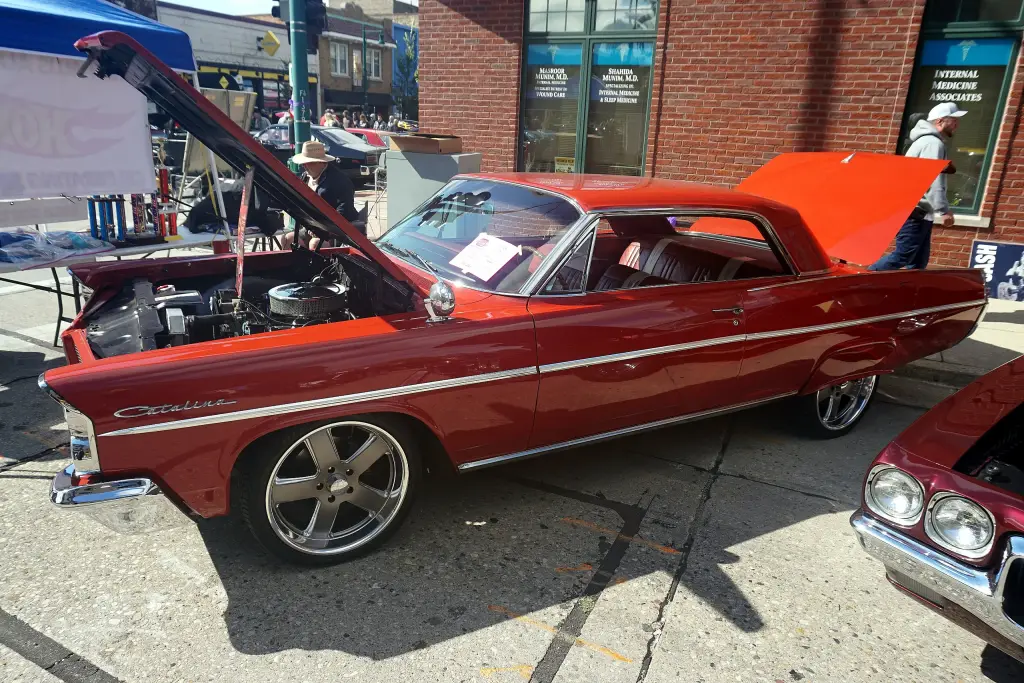
For 1959 Pontiac dropped the Chieftain and Super Chief names for its junior series and called it Catalina, demoting the Star Chief to intermediate status. The new cars sat on GM’s B-body, shared from Chevrolet to Cadillac, with thin pillars, more glass and twin tailfins used only that year. The split grille came about by accident when a full-width oval design was cut in two and the halves transposed. The wider body brought a chassis five inches wider with the wheels pushed out to the fenders, the start of Pontiac’s “wide track” advertising. All Pontiacs used versions of the 389 cu in V8. The Catalina was the cheapest full-size Pontiac, trimmed below the Chevrolet Impala but with a larger V8 and the four-speed Hydra-Matic as standard.
Platform for the rest of the range
The Catalina was Pontiac’s most popular model and served as the donor platform for the Grand Prix, the 2+2, the Ventura and the Safari station wagon. The lessons of the Catalina-based Grand Prix led directly to the GTO when the second-generation Tempest arrived in 1964.
Design and features
- Split grille: the 1959 front end that became a Pontiac signature.
- Wide track: a chassis five inches wider than before, with the wheels moved out to the fenders.
- 389 V8: standard power across the 1959 range, with the four-speed Hydra-Matic.
- Comfort details: from 1959 a glovebox door with two cup indents for drive-in restaurants, plus an optional decor group.
- Ventura interior: a plusher cabin offered on most Catalinas from 1962 to 1970.
Pontiac Catalina versions
- Catalina hardtop (1950–1958): the original pillarless trim on Chieftain and Star Chief.
- Catalina (1959–1981): the separate full-size model in sedan, hardtop, convertible and wagon form.
- Safari: the station wagon version of the line.
- Ventura interior: an extra-cost trim package, and a separate model in 1960–1961.
The Catalina shared its platform with the Grand Prix and sat below the Bonneville; more Pontiacs are in the Pontiac collection.
Sources
- Pontiac Catalina, English Wikipedia: history, trim levels, 1959 model