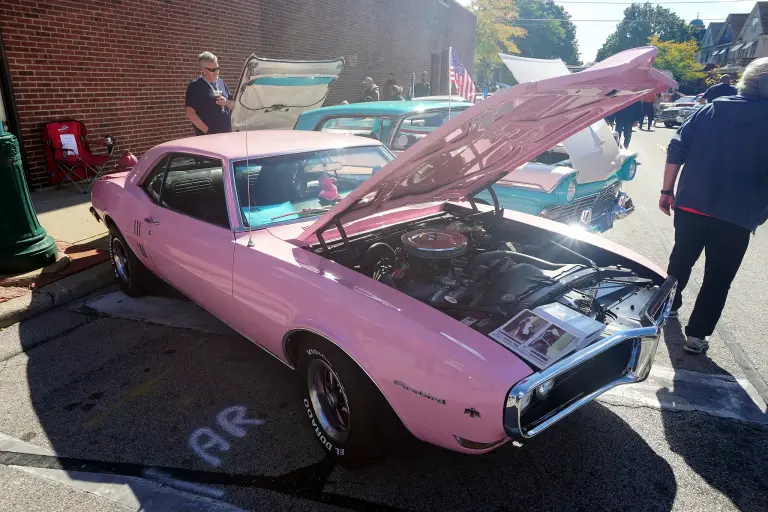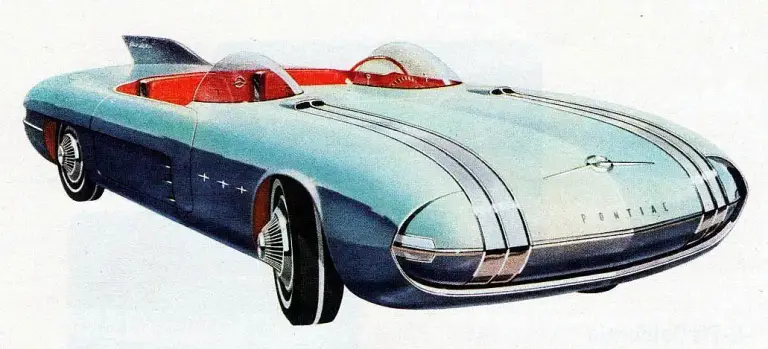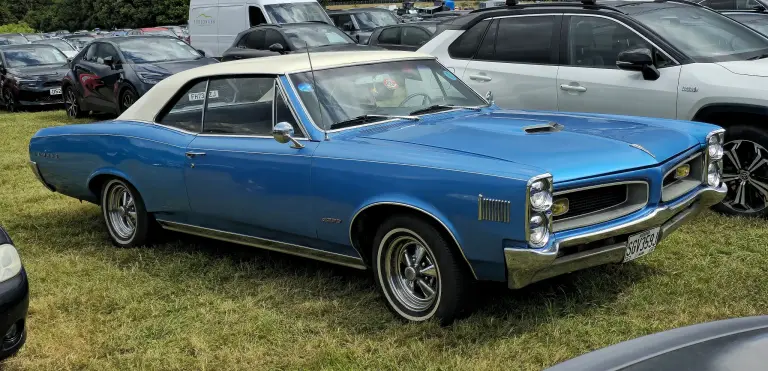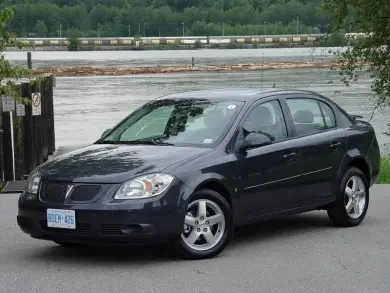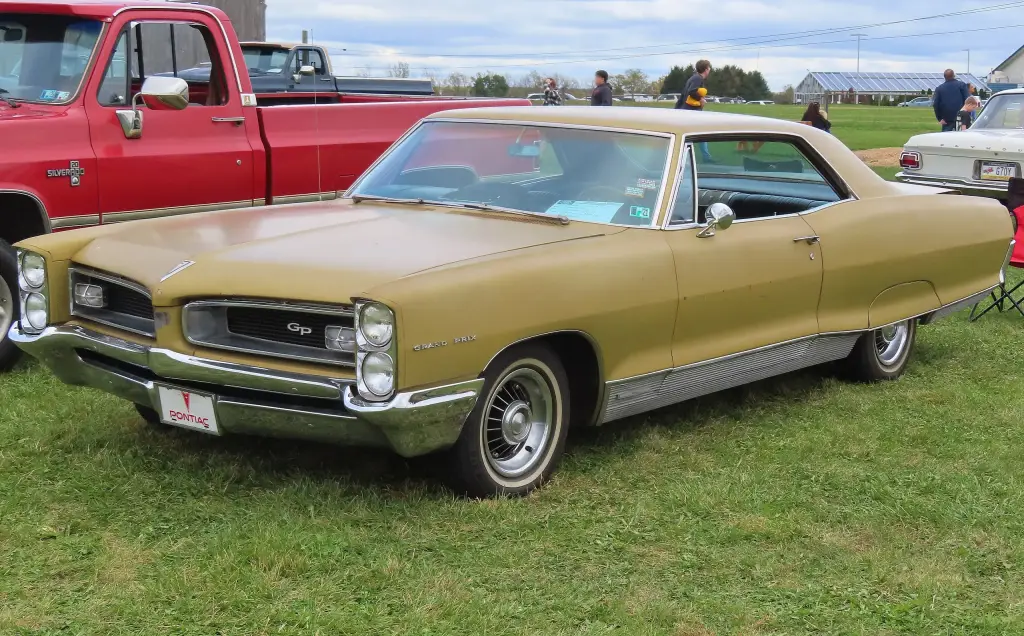
The Grand Prix was a line of cars built by Pontiac from 1962 until 2002 as coupés and from 1989 to 2008 as four-door sedans. The first generation of 1962 was a performance-oriented personal-luxury car based on the Catalina hardtop, and it was Pontiac’s most expensive model when it appeared.
Pontiac Grand Prix at a glance
| Maker | Pontiac, General Motors |
|---|---|
| Production | 1962–2002 coupés; 1989–2008 sedans |
| First model | 1962, based on the Catalina two-door hardtop |
| Price, 1962 | $3,490 before options |
| Standard engine | 389 cu in (6.4 L) V8, 303 hp |
| Top option, 1962 | 421 cu in Super Duty, 405 hp, $2,250 |
| Transmission | three-speed manual; four-speed or Hydra-Matic optional |
| Rear axle | 3.42:1 acceleration ratio |
| Body style, 1962 | pillarless two-door hardtop |
| Convertible | 1967 only |
Based on one source: the English Wikipedia article on the Grand Prix.
History of the Pontiac Grand Prix
1962: a new kind of Pontiac
The Grand Prix was an all-new model for 1962, created as a performance-oriented personal-luxury car on the Catalina two-door hardtop. Pontiac gave it bucket seats and a centre console, Morrokide vinyl upholstery, nylon loop-blend carpeting, a console-mounted gear lever and tachometer, a four-barrel carburettor, dual exhausts and a 3.42:1 acceleration axle. It used the Catalina coupé body with minimal exterior chrome and the 303 hp Trophy version of the 389 V8, with a three-speed manual as standard and a four-speed or Hydra-Matic optional. It replaced the Ventura model, while the Catalina could be ordered with an optional Ventura trim package for 1962. The rear bench had a fold-down centre armrest and a speaker grille that worked with the extra-cost Bi-Phonic rear speaker. At $3,490 before options it was Pontiac’s most expensive car. Tri-Power carburation raised output to 318 hp, and two more 389s offered 333 and 348 hp. Late in the year a street version of the 421 arrived with 320 hp, and the 421 Super Duty with two four-barrels, 405 hp, cost $2,250.
1963–1964
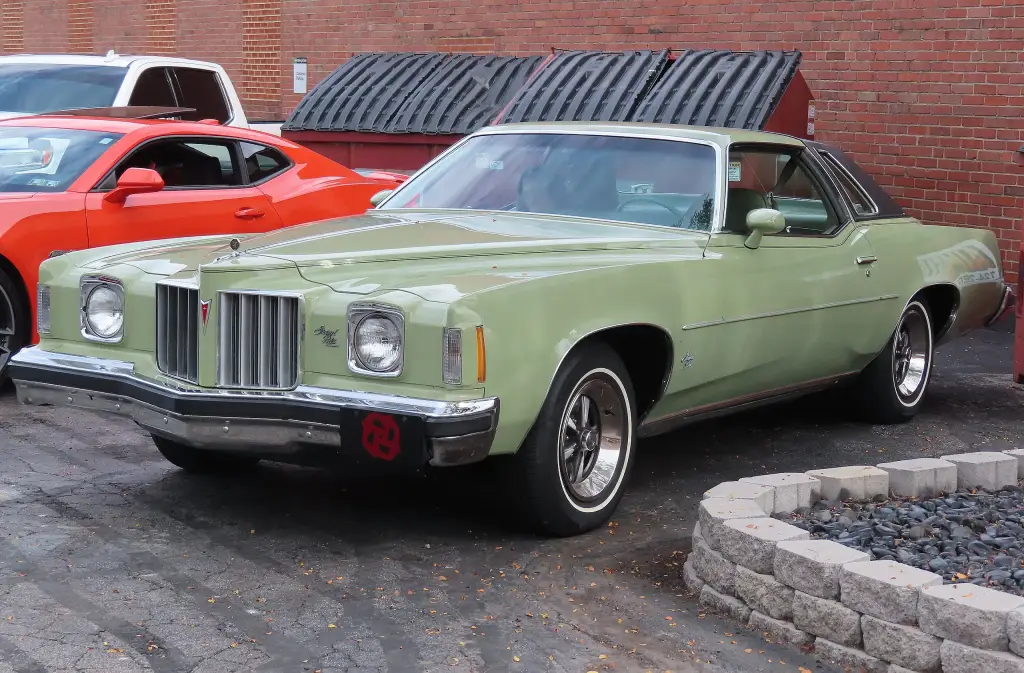
The 1963 Grand Prix took revised sheet metal shared with the other full-size Pontiacs but with a squared-off roofline and a concave rear window. A split grille with vertically stacked headlights, round parking lights and hidden tail lights appeared, and chrome was limited to the rocker panels, wheel arches and roofline. The interior had real walnut trim, and the console was built into the instrument panel with a vacuum gauge and a dash-mounted tachometer for manual cars. New options included an AM/FM radio, cruise control and a tilt steering wheel with seven positions. The 303 hp 389 remained standard, with a 330 hp Tri-Power and three 421s up to a 370 hp HO. The 1964 car brought a revised grille with GP logos and new tail lights, and a GM-built Muncie four-speed replaced the Borg-Warner unit.
The long run
Every Grand Prix from 1962 to 1972 was a pillarless hardtop apart from the 1967 convertible. The model moved from the full-size class into the intermediate personal-luxury segment and later the mid-size market, and in 1989 a four-door sedan joined the range. The coupé ended in 2002 and the sedan in 2008.
Design and features
- Bucket seats and console: the equipment that defined Pontiac’s personal-luxury class.
- 389 V8 range: from the 303 hp four-barrel to the 348 hp Tri-Power.
- 421 Super Duty: 405 hp for $2,250 in 1962.
- Hidden tail lights: a Grand Prix signature from 1963.
- Walnut and gauges: real wood trim and console instruments inside.
Pontiac Grand Prix versions
- 1962 hardtop: the original pillarless coupé.
- 1963 squared-roof car: concave rear window and split grille.
- 1964: revised grille, GP logos and the Muncie four-speed.
- 1967 convertible: the only open Grand Prix of the early generations.
The Grand Prix was built on the Catalina body and shared its V8s with the Bonneville; it was developed alongside the GTO by John DeLorean. More Pontiacs are in the Pontiac collection.
Sources
- Pontiac Grand Prix, English Wikipedia: 1962–1964 models, engines, equipment