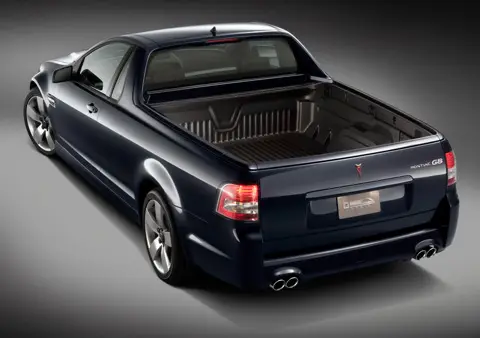
The Pontiac Firefly was Pontiac’s version of the Suzuki Cultus, the supermini developed from a General Motors project and sold around the world under more than a dozen nameplates. It was part of GM’s captive-import strategy with Suzuki and Isuzu from 1981.
Pontiac Firefly at a glance
| Maker | Suzuki, sold by Pontiac |
|---|---|
| Original model | Suzuki Cultus (M-car), from 1983 |
| Class | supermini |
| Project | GM M-car, sold to Suzuki in 1981 |
| Engines | 1.0 L three-cylinder G10; 1.3 L four-cylinder G13 |
| Body styles | three-door and five-door hatchback |
| Suspension, early | leaf springs at the rear |
| Suspension, 1986 | coil springs at the rear |
| Turbo | G10T from May 1984, 80 PS |
| Other names | Suzuki Swift, Geo Metro, Chevrolet Sprint, Holden Barina |
Based on one source: the English Wikipedia article on the Suzuki Cultus, which covers the Firefly as one of its badge-engineered versions.
History of the Pontiac Firefly
A General Motors project finished by Suzuki
The Cultus began as GM’s M-car project. When GM decided it would not be profitable enough, the unfinished design was sold to Suzuki in return for a five percent stake in the company. Suzuki completed the development and put the car on sale in Japan in October 1983 as the Cultus. That history explains why the design fitted the GM range so naturally: it had a clear GM corporate look. Suzuki exported it worldwide and GM franchises assembled and rebadged it, which is how the Pontiac Firefly came about alongside the Suzuki Swift, Geo Metro, Chevrolet Sprint, Holden Barina and Isuzu Geminett.
The first generation
Early export cars were sold simply by their model code, SA310. The car had leaf-spring rear suspension and a 1.0 litre three-cylinder G10 engine, with base GA, GL and GLX trim. Only three-door bodies were available for the first few years. A 1.0 litre turbo (G10T) and a three-speed automatic were added in Japan at the end of May 1984, lifting output to 80 PS, and in August 1984 came a five-door body ten centimetres longer and a 1.3 litre four-cylinder. A sporting Swift GS used the 1.3 with twin-tone paint, flush headlights and a sports interior. Early cars had a drag coefficient of 0.38.
The 1986 facelift
In June 1986 the car was refreshed: coil springs replaced the leaf springs at the rear, the front end was remodelled with a more forward-swept grille and headlights, the dashboard was redesigned and the windscreen was bonded in place. The 1.0 and 1.3 engines were slightly detuned, the turbo gained fuel injection and 82 PS, and a twin-cam GTi joined the range. The Cultus family stayed in production in various forms for decades, with the name still used in Pakistan from 2017.
Design and features
- Captive import: a Suzuki built and sold through GM dealers under many names.
- M-car roots: designed by GM, completed and engineered by Suzuki.
- Small engines: 1.0 litre three-cylinder and 1.3 litre four-cylinder units.
- Turbo option: the G10T from 1984, with fuel injection from 1986.
- Simple engineering: leaf springs replaced by coil springs in the 1986 facelift.
Pontiac Firefly versions
- SA310 (1983): the early three-door with the 1.0 litre engine.
- GA, GL and GLX: the three trim levels of the original model.
- Turbo (1984): the 80 PS G10T.
- 1.3 five-door (1984): the longer body with the four-cylinder engine.
- GTi (1986): the twin-cam sporting version of the facelift range.
The Firefly sat below the Sunfire and the Sunbird in the range. More Pontiacs are in the Pontiac collection.
Sources
- Suzuki Cultus, English Wikipedia: M-car project, engines, facelift