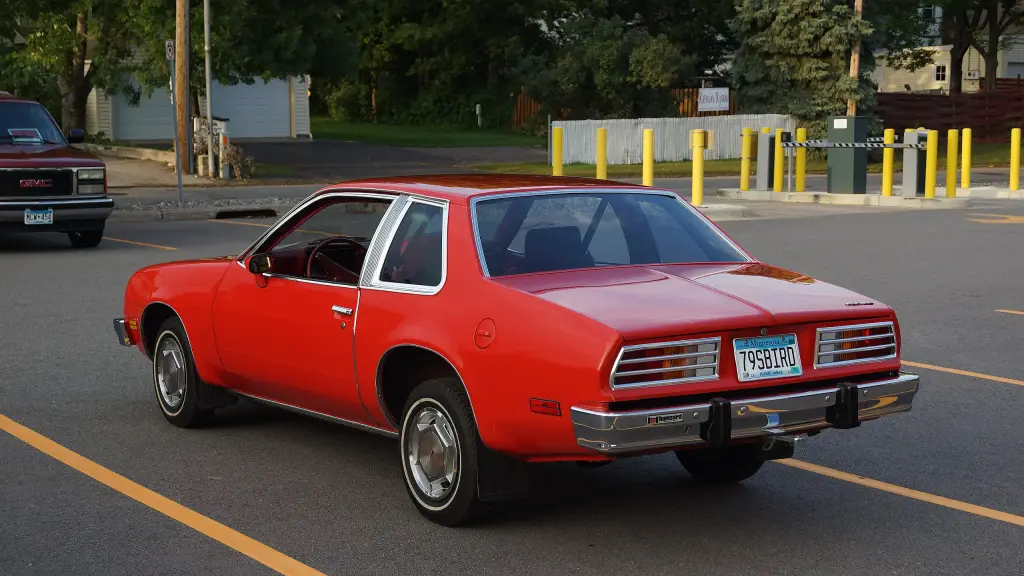
The Pontiac Sunbird was a model line sold from the 1976 to the 1994 model years. Its name came loosely from the Firebird, and the car replaced the Astre as Pontiac’s smallest model, running through two generations before becoming the Sunfire.
Pontiac Sunbird at a glance
| Maker | Pontiac, General Motors |
|---|---|
| Years | 1976–1994 |
| Predecessor | Pontiac Astre |
| Successor | Pontiac Sunfire (1995) |
| First generation | 1976–1980, GM H-body, rear-wheel drive |
| Second generation | 1982–1994, GM J-body, front-wheel drive |
| First-gen production | 479,967 |
| Wheelbase, first | 97 in, shared with Vega and Monza |
| Engines, first | 2.3 four, 151 Iron Duke, 231 V6, 305 V8 |
| Bodies, second | coupé, convertible, hatchback, sedan, wagon |
| Name gap | no 1981 model; J2000 for 1982, Sunbird back in 1984 |
Based on one source: the English Wikipedia article on the Sunbird.
History of the Pontiac Sunbird
First generation (1976–1980)
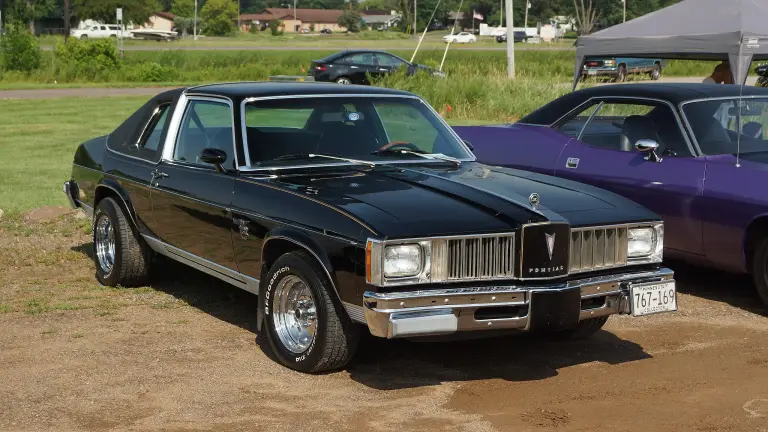
The first Sunbird was introduced in September 1975 for the 1976 model year. It was developed from the Astre, itself a rebadged Chevrolet Vega, and was a direct variant of the Chevrolet Monza, competing with the Ford Mustang II, Mercury Capri, Toyota Celica and Volkswagen Scirocco. It used the subcompact H-body with a 97-inch wheelbase and rear-wheel drive, coil springs at all four corners, short-and-long arm front suspension and a torque-arm live rear axle, with anti-roll bars at both ends and vented front discs. The 1976 car came only as a two-door notchback coupé, with the Chevrolet 2.3 litre four of 78 hp or 87 hp with a two-barrel carburettor and an optional 110 hp Buick 231 V6; a four-speed manual was standard. A three-door hatchback followed for 1977 along with the Pontiac 151 Iron Duke four of 90 hp and a Formula option with spoiler, decals and a T/A steering wheel. For 1978 a two-door wagon joined and a Chevrolet 305 V8 became optional on coupés and hatchbacks; the V8 and the wagon were dropped for 1980. Production for the five model years reached 479,967.
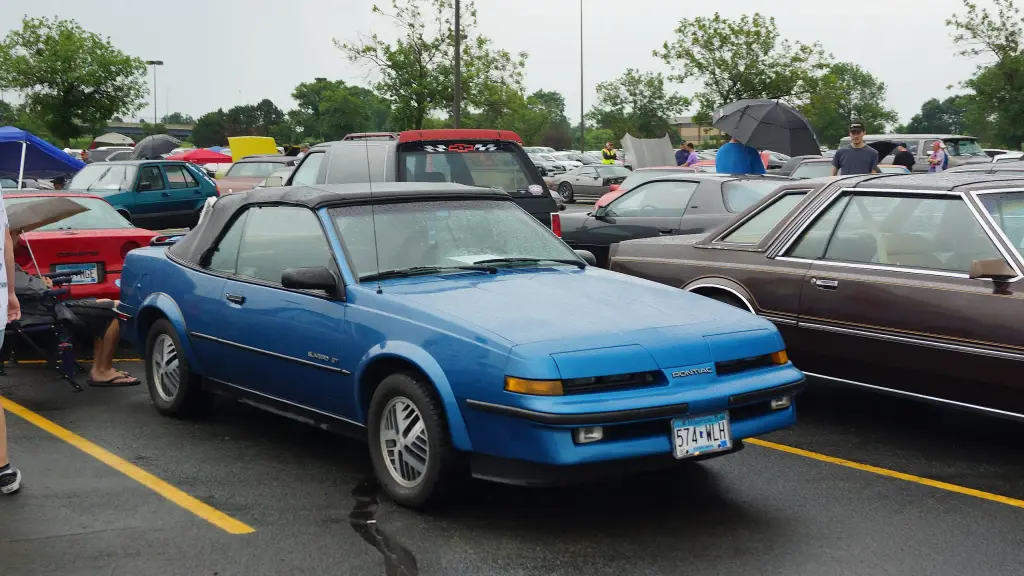
Second generation (1982–1994)
The Sunbird skipped 1981 entirely. The rear-wheel-drive car was replaced for 1982 by a front-wheel-drive compact called the J2000, using the GM J-body shared with the Chevrolet Cavalier, Oldsmobile Firenza, Buick Skyhawk and Cadillac Cimarron. The J prefix was dropped for 1983, and the Sunbird name returned for 1984. Over its life the second generation was sold as a two-door notchback coupé or convertible, a three-door hatchback, a four-door sedan and a five-door station wagon. It was built alongside the Cavalier at Lordstown, Ohio and Ramos Arizpe, Mexico, and with the Skyhawk and Firenza at Leeds in Kansas City for 1982 only. For 1995 the car was substantially updated and renamed the Pontiac Sunfire.
Seventeen model years
Pontiac used the Sunbird name for 17 model years, not as long as the Bonneville, Grand Prix or Firebird, but long enough to span the move from rear-wheel drive to front-wheel drive and from V8 options to small four-cylinders. The name itself was loosely derived from the Firebird.
Design and features
- Two architectures: rear-drive H-body first, front-drive J-body later.
- V8 option: the 305 cu in Chevrolet V8 was available in 1978–79.
- Formula package: spoiler, decals and a T/A steering wheel from 1977.
- Convertible: offered in the second generation.
- Badge cousin: the J-car Sunbird was the Pontiac Cavalier.
Pontiac Sunbird versions
- 1976 coupé: the single body of the first year.
- Hatchback (1977) and wagon (1978): added to the first generation.
- J2000 (1982): the front-wheel-drive replacement.
- Second-generation convertible and sedan: added through the 1980s.
- Sunfire (1995): the renamed successor.
The Sunbird replaced the Astre and became the Sunfire; its J-car generation is covered in the J2000 article. More Pontiacs are in the Pontiac collection.
Sources
- Pontiac Sunbird, English Wikipedia: both generations, engines, production