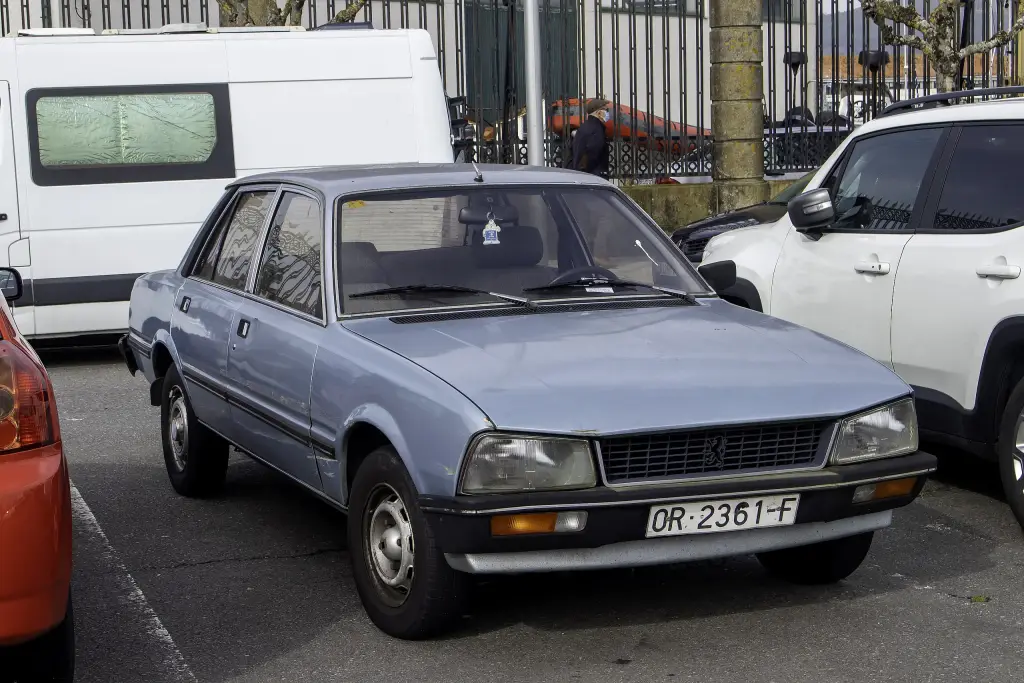
The Peugeot 505 is a large family car that Peugeot produced from 1979 to 1992 at Sochaux, and also in Argentina, China, Thailand, Indonesia and Nigeria. It was Peugeot’s last rear-wheel-drive car.
Peugeot 505 at a glance
| Production | 1979–1992 in France, longer elsewhere |
|---|---|
| Unveiled | 16 May 1979 |
| Replaced | Peugeot 504 |
| Layout | front engine, rear-wheel drive |
| Styling | Pininfarina with Peugeot’s own studio |
| Interior | Paul Bracq |
| Engines | petrol carburettor and injection, 2.2 turbo, 2.8 V6, diesel |
| Estate | Break and eight-seat Familiale from 1982 |
| Turbo Injection | 150 hp in 1982, 160 with intercooler, 180 from 1986 |
| Total built | 1,351,254, of which 1,116,868 saloons |
History of the Peugeot 505
Launch
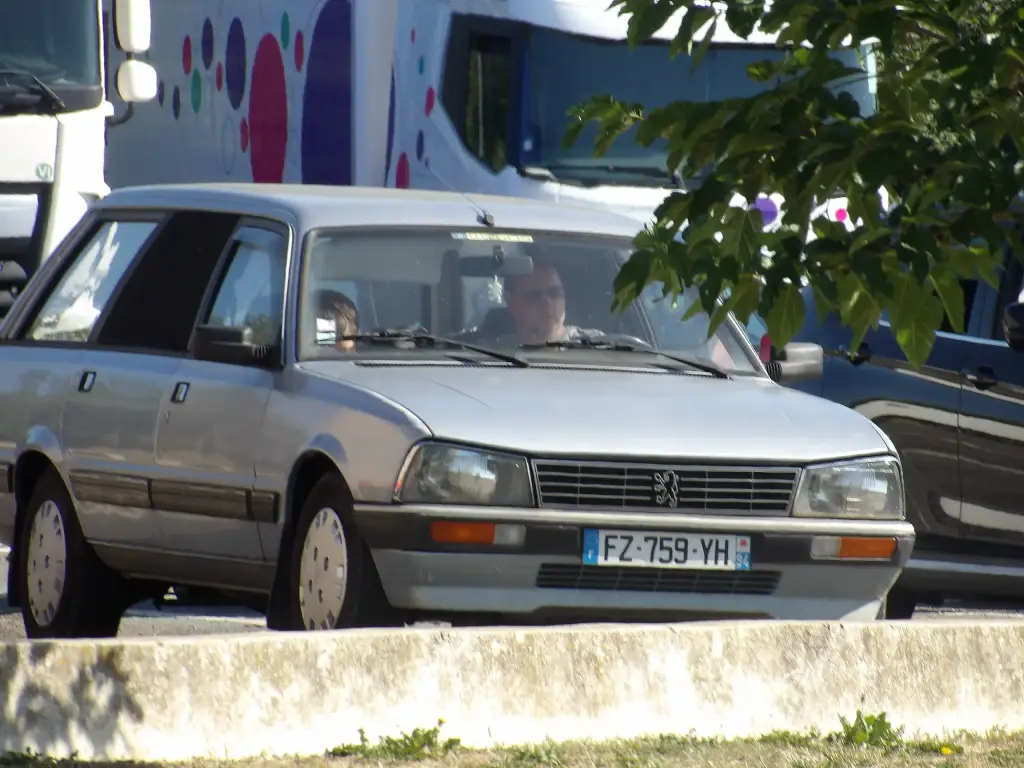
The 505 was unveiled on 16 May 1979 as the replacement for the 504, with which it shared much of its underpinnings. It was at first a saloon only; an estate, including an eight-passenger Familiale, came at the Geneva show in 1982. The styling was a collaboration between Pininfarina and Peugeot’s own design department and looks very similar to the smaller 305, and the original interior was designed by Paul Bracq, better known for his work at Mercedes-Benz and BMW. The front-engine, rear-wheel-drive layout set the 505 apart from most rivals, and the car is known today as the workhorse of Africa.
Right-hand drive became available from October 1979, a few months after the left-hand-drive launch. Its best-selling British rival was the Ford Granada. Contemporary journalists praised the ride and handling, especially on rough and unmade roads, which helped its popularity in less developed countries, and the car had good ground clearance; for those who needed more, Dangel offered a taller four-wheel-drive conversion of the Break and Familiale with either the intercooled turbodiesel of 110 hp or the 2.2-litre petrol of 130 hp and shorter gear ratios.
Engines
Higher petrol models used a fuel-injected alloy engine while cheaper ones had a carburettor, and a diesel was sold as well. In 1982 the fully equipped 505 STI arrived with the new 2,165 cc Douvrin four developed with Renault. In October 1982 came the 505 Turbo Injection, using a 2.2-litre version of the Simca Type 180 engine developed by Chrysler Europe, whose block was stronger than the Douvrin unit. It began at 150 hp, reached 160 hp with an intercooler in early 1984, and in 1985 a dealer-installed 200 hp Kit PTS by the tuner Danielson appeared. At the 1986 facelift power rose to 180 hp and the Turbo received ABS. A V6 using the 2.8-litre PRV unit was added during 1986 at the same price as the Turbo, aimed at buyers who would once have chosen a 604.
Estate and the end
The Break and Familiale of spring 1982 differed from the saloons, with a wheelbase extended to 2,900 mm, the same as the 504 estates, to make them among the most spacious cars on the market; the Familiale had a third row of bench seats for eight people. Saloon production ended in 1989 when the 605 arrived, while the estate continued until 1992 even though a 605 estate never materialised. In France and Germany the 505 estate was used as an ambulance, a funeral car, a police car, a military vehicle and a road maintenance vehicle. It was one of the last Peugeots sold in the United States, with saloon sales ending in 1990 and estates in 1991, and diesel saloons were briefly used as taxicabs in New York. The 505 was assembled in Australia from 1980, and built in Argentina from 1981 to 1995, Chile, China and New Zealand.
Design and features
- Last rear-wheel drive: the final Peugeot of the classic layout.
- Turbo Injection: 150 to 180 hp from the Simca-derived 2.2.
- PRV V6: added in 1986 to fill the gap left by the 604.
- Long-wheelbase estate: 2,900 mm and eight seats in the Familiale.
- Dangel 4×4: a raised four-wheel-drive conversion of the estate.
Peugeot 505 versions
- Saloon: the original body, petrol and diesel.
- STI (1982): 2,165 cc Douvrin engine.
- Turbo Injection (1982): 150, 160 and later 180 hp.
- V6 (1986): 2.8-litre PRV engine.
- Break and Familiale (1982): estates, the Familiale with eight seats.
- Dangel 4×4: four-wheel-drive estate conversion.
The 505 replaced the Peugeot 504 and gave way to the 605 in the saloon range, while the 405 took over below it. More in the Peugeot collection.
Video: Peugeot 505 GTD (1986) – Peugeot 508 HDi (2011) : la version
Video by on YouTube.
Sources
- Peugeot 505, English Wikipedia: launch, engines, estate, facelift, worldwide assembly