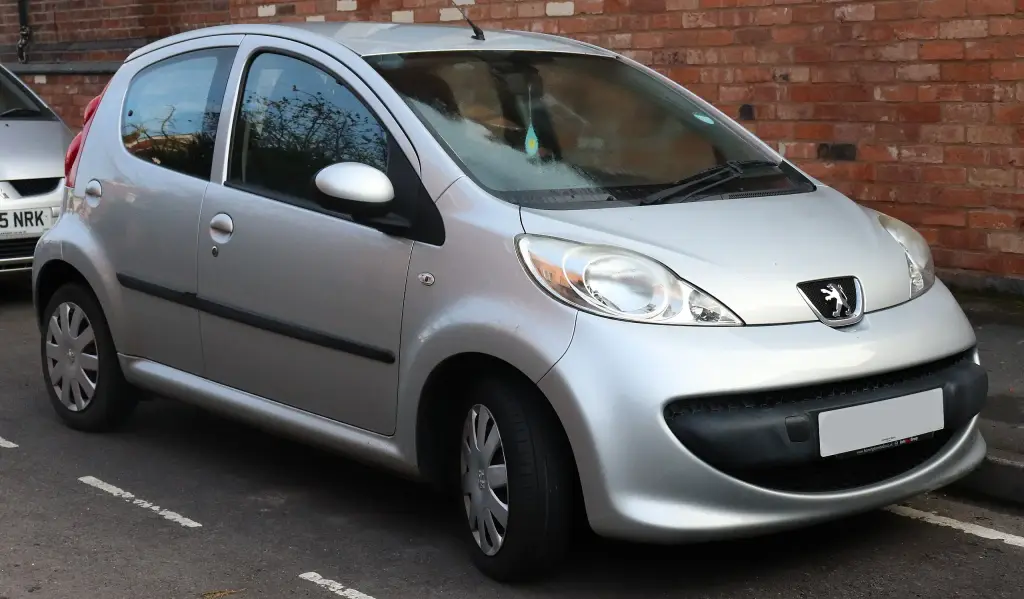
The Peugeot 107 is a city car that Peugeot launched in June 2005 and built until 2014. It was developed in the B-Zero project with Toyota and shared its body with the Citroën C1 and the Toyota Aygo.
Peugeot 107 at a glance
| Production | June 2005 to 2014 |
|---|---|
| Class | city car |
| Bodies | three-door and five-door hatchback |
| Seats | four |
| Project | B-Zero, PSA Peugeot Citroën and Toyota |
| Sister cars | Citroën C1, Toyota Aygo |
| Plant | TPCA, Kolín, Czech Republic |
| Replaced | the 106, ended in July 2003 |
| Facelifts | February 2009 and early 2012 |
| Replaced by | Peugeot 108, launched in July 2014 |
| Trim levels | 15 in total, from Access to Allure |
History of the Peugeot 107
A three-brand city car
The 107 was developed under the B-Zero project of PSA Peugeot Citroën in a joint venture with Toyota. The Citroën C1 and Toyota Aygo were badge-engineered versions of the same car, the Aygo having more detail differences from the C1 and 107, and all three were built at the TPCA assembly joint venture in Kolín in the Czech Republic. The 107 replaced the 106, whose production had ended in July 2003.
The car is a four-seater, sold as a three or five-door hatchback. It shares its rear light clusters with the Citroën C1 apart from a different red lens.
Facelifts
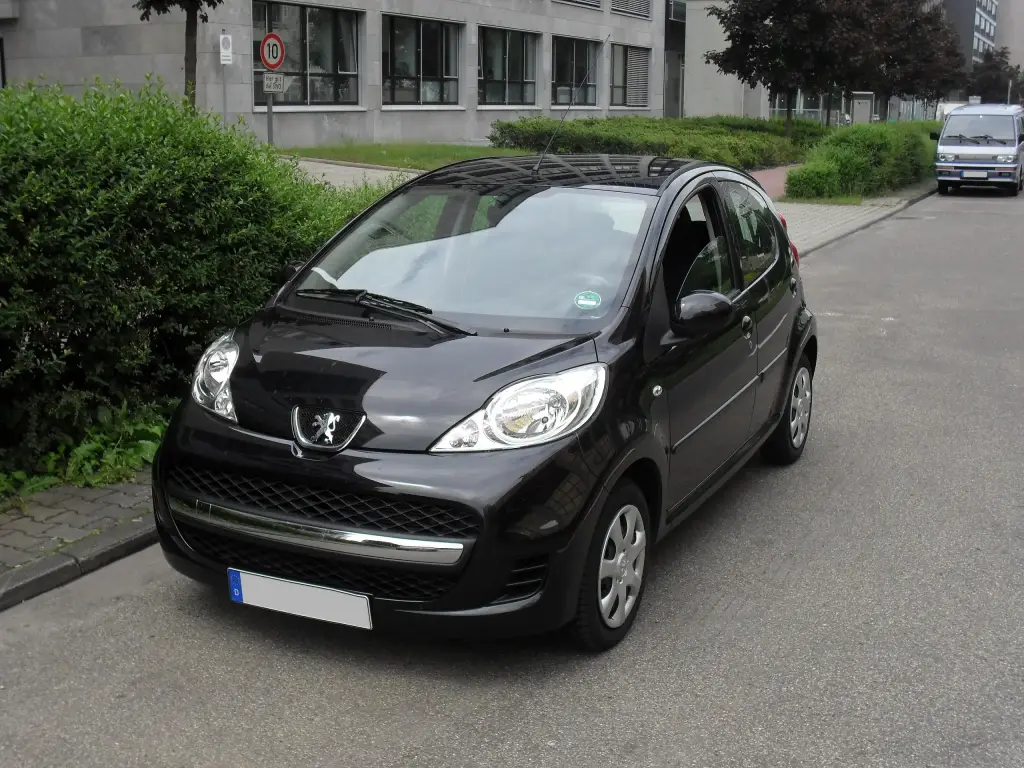
In February 2009 the 107 received a facelift aligned with revisions to the C1 and Aygo. The front bumper, interior and wheel trims were changed and the grille became wider; the number plate moved from the black stripe in the middle of the grille, which now had a chrome-style strip, to below the grille, and two side vents were added. Inside there were more seat fabrics and revised centre console graphics. Carbon dioxide fell from 109 to 106 g/km and the combined cycle figure improved from 4.6 to 4.50 l/100 km. A revised clutch was fitted from this model on.
At the beginning of 2012 there was a further facelift with a revised bonnet and a front bumper and grille with integrated daytime running lights. Higher trims received a leather steering wheel and a new gearshift, and the car was shown to the public at the Brussels Motor Show.
Trims and reputation
There were fifteen trim levels in all, from the basic Access through Active and Allure to the Envy, plus special editions such as the Kiss, launched with the radio station of that name, the Millesim, the Sport XS, Sportium, Urban Move and Verve. In May 2010 breakdown statistics from the German Automobile Club put the 107, grouped with the C1 and Aygo, at the top of the sub-small class for cars one to four years old. In January 2010 PSA recalled under 100,000 units of the 107 and the C1 after Toyota’s worldwide recall for a sticking accelerator pedal, which could stay partly depressed or return slowly.
The 107 was replaced by the 108, launched in July 2014.
Design and features
- Joint venture: one body and one plant for Peugeot, Citroën and Toyota.
- Small footprint: a four-seat city car in three and five-door form.
- Shared lamps: the rear clusters came from the C1 with a different red lens.
- Frugal engines: 106 g/km of CO2 after the 2009 changes.
- Long trim list: fifteen levels, many of them special editions.
Peugeot 107 versions
- Access: the basic entry model.
- Active and Allure: the main mid and top trims.
- Envy: leather trim on the seats and steering wheel.
- Kiss: special edition with its own paint and sound system.
- Sportium and Sport XS: cosmetic sport versions.
- Urban, Urban Move, Urban Plus: the town-oriented trims.
The 107 replaced the Peugeot 106 and sat below the 208. Its Citroën sister was the C1. More in the Peugeot collection.
Video: Vergleich: VW up! – Ford Ka – Peugeot 107
Video by on YouTube.
Sources
- Peugeot 107, English Wikipedia: production, joint venture, facelifts, trims, recall