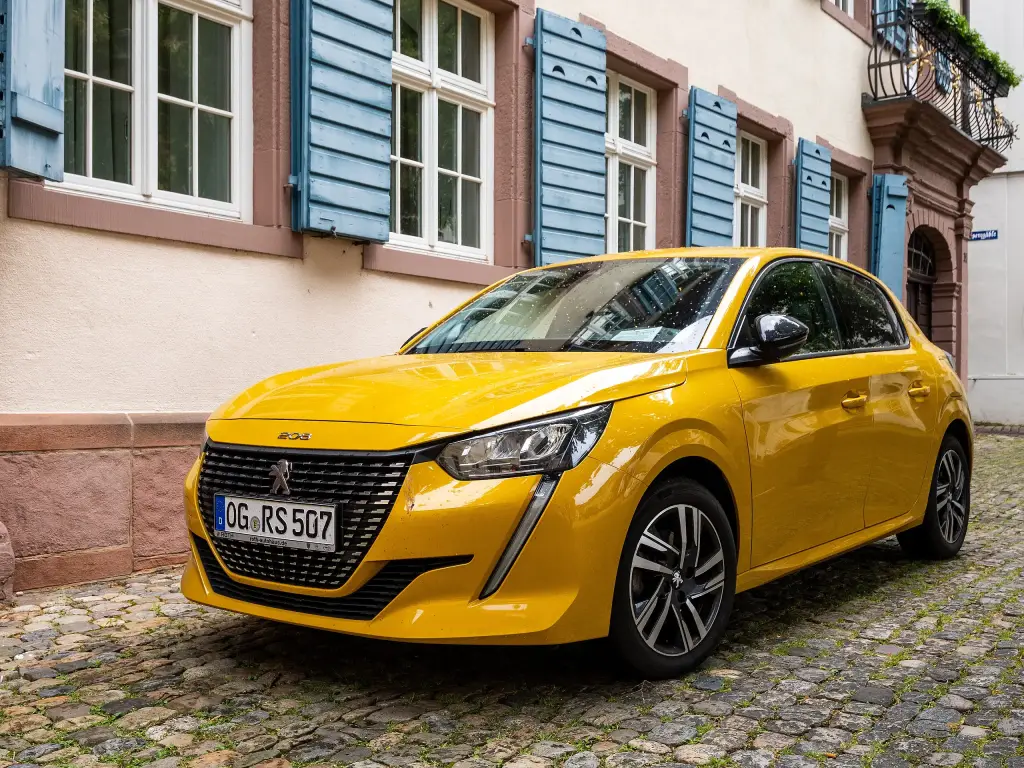
The Peugeot 208 is a supermini that Peugeot unveiled at the Geneva Motor Show in March 2012. Positioned below the 308, it replaced the 207, and a second generation followed in 2019.
Peugeot 208 at a glance
| First generation | 2012–2019, code A9 |
|---|---|
| Unveiled | Geneva Motor Show, March 2012 |
| Platform | PSA PF1 |
| Design | Pierre Authier, exterior by Sylvain Henry |
| Weight | up to 173 kg lighter than the 207 |
| Boot | 285 litres, 15 more than the 207 |
| Drag coefficient | 0.29 |
| Engines | 1.0 and 1.2 VTi three-cylinder, four-cylinder petrol, diesel |
| GTi | 1.6 turbo, 200 PS, from February 2013 |
| Facelift | June 2015, GT-Line added |
History of the Peugeot 208
Design and packaging
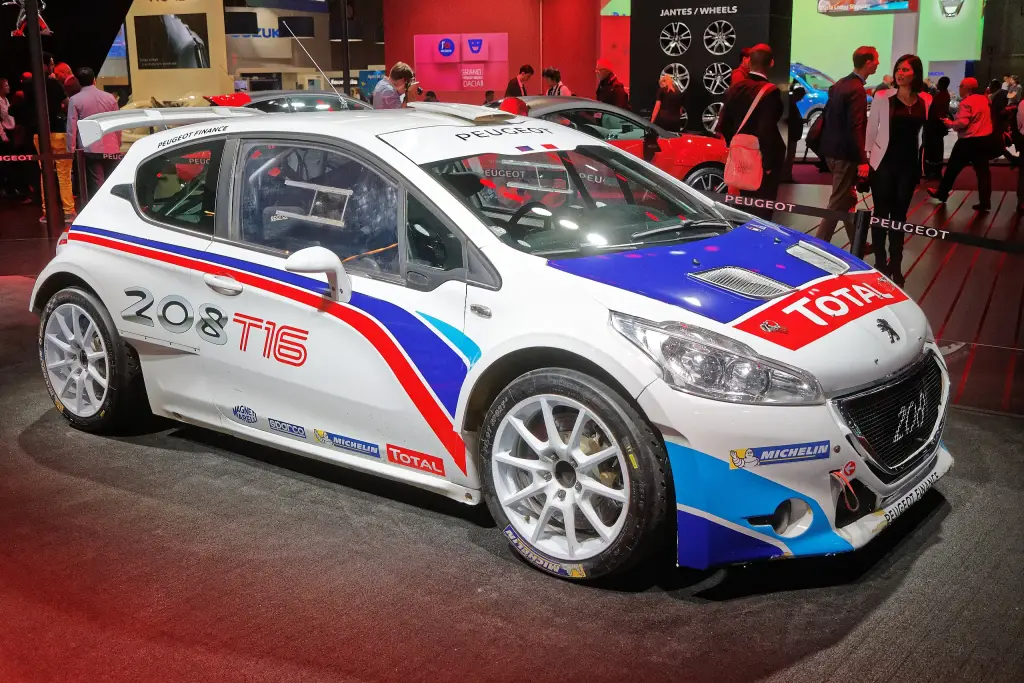
The first-generation 208, developed under the code name A9, was built on the PSA PF1 platform and shown at Geneva in March 2012. It was 173 kg lighter than the 207 in its lightest form, or 110 kg lighter on average, while offering more room: the boot held 285 litres, 15 more than before, and rear legroom grew by 5 cm. The design was led by Pierre Authier with Sylvain Henry as exterior designer, Adam Bazydlo responsible for the interior and Marie Sanou for colour and trim. The cabin had a tablet-style display and a panoramic glass roof surrounded by LEDs, and the drag coefficient was 0.29.
Weight saving came from an aluminium front beam-absorber, a smaller front subframe, laser welding of the roof and extensive use of very high and ultra high strength steel panels, together with engine soundproofing. Production began in November 2011 with three-door hatchbacks at Trnava in Slovakia; when the five-door arrived in June 2012, production also started at Mulhouse and Poissy in France.
Engines and trims
Five petrol and three diesel engines were offered at launch. From September 2012 the 208 gained two three-cylinder units with variable valve timing: a 1.0 VTi of 68 PS and a 1.2 VTi of 82 PS, the former quoted at 4.3 l/100 km and 99 g/km of CO2. A turbocharged 1.2 was sold as the PureTech 110 in GT Line and Allure trim, and the naturally aspirated version as the PureTech 82. The diesel range returned 99 g/km or less, and shrank to a 1.5-litre line-up by 2018. The Peugeot Connect Apps system appeared for the first time on this car.
GTi
The 208 GTi was introduced in September 2012, after a concept shown in March, and went into production in February 2013. Based on the three-door, it weighed 1,160 kg, 90 kg less than the 207 GTi, with tracks widened by 10 mm at the front and 20 mm at the rear, 17-inch wheels on 205/45 tyres, 302 mm front discs and revised suspension and steering. Its 1,598 cc turbocharged Prince engine produced 200 PS at 5,800 rpm and 275 Nm at 1,700 rpm through a six-speed manual, the same engine family used in the RCZ, several Minis and Citroëns.
A limited 30th by Peugeot Sport edition marked thirty years since the 205 GTi, with 208 PS, a Torsen differential from the RCZ R, uprated suspension and 323 mm front discs with four-piston Brembo calipers; it was shown at the Goodwood Festival of Speed in 2014 and went on sale that November. A more powerful 208 R was planned but never released. In June 2015 the range was facelifted, adding equipment and the GT-Line trim with a touchscreen and Apple CarPlay and Android Auto on most models. The three-door was dropped in mid-2018 and European production of the first generation ended in 2019; cars for Brazil were built from January 2013 to March 2020.
Design and features
- Weight loss: up to 173 kg less than the 207 thanks to aluminium and high-strength steel.
- Small three-cylinders: 1.0 and 1.2 VTi engines from September 2012.
- Tablet interior: a touchscreen display instead of a conventional dashboard.
- GTi: 200 PS from the 1.6 Prince turbo, shared with the RCZ and Mini.
- 30th by Peugeot Sport: 208 PS, Torsen differential, Brembo brakes.
Peugeot 208 versions
- 208 (2012): three and five-door hatchback on the PF1 platform.
- GTi (2013): 1.6 turbo, 200 PS, six-speed manual.
- XY: trim between the standard car and the GTi.
- GT-Line (2015): added with the facelift, with touchscreen and phone integration.
- 30th by Peugeot Sport (2014): limited edition of 208 PS.
The 208 replaced the Peugeot 207 and sits below the 308, with the RCZ sharing its Prince engine. More in the Peugeot collection.
Video: Einzeltest Peugeot 208
Video by on YouTube.
Sources
- Peugeot 208, English Wikipedia: design, platform, engines, GTi, facelift