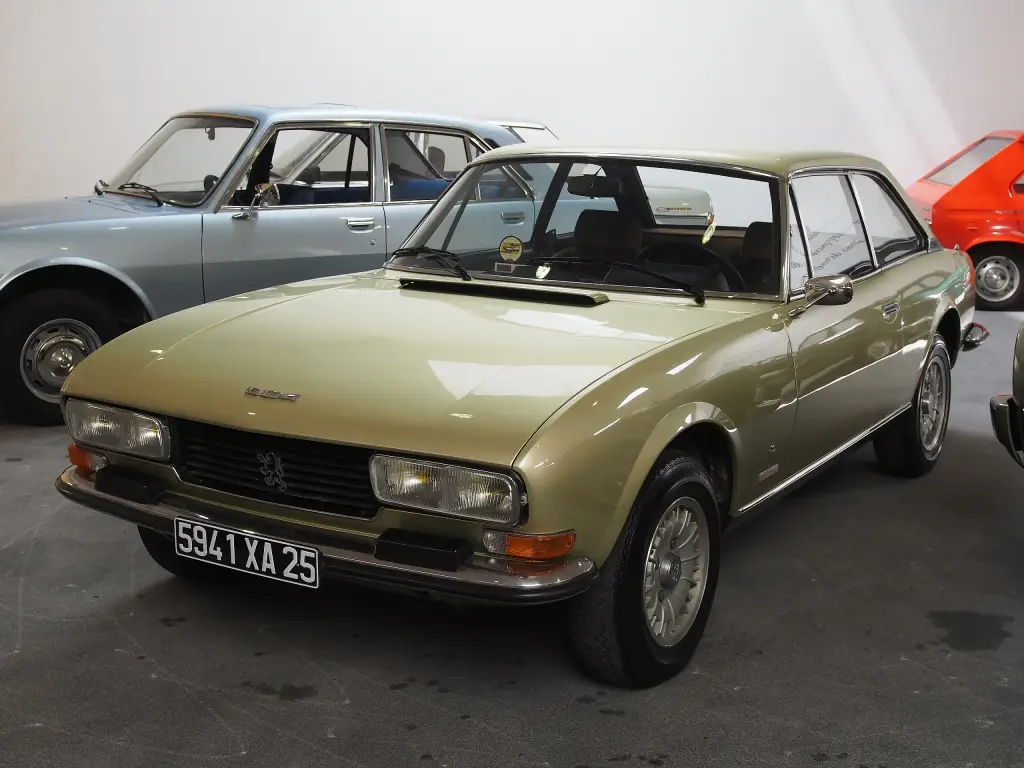
The Peugeot 504 is a mid-size, front-engine, rear-wheel-drive car that Peugeot built from 1968 to 1983 in a single generation, as a four-door saloon and estate but also as a coupé, a cabriolet and a pickup.
Peugeot 504 at a glance
| Production | 1968–1983 in Europe, to 2006 under licence |
|---|---|
| Debut | 12 September 1968, Paris Salon |
| Design | Aldo Brovarone, Pininfarina (saloon); Franco Martinengo (coupé, cabriolet) |
| Launch engine | 1,796 cc four, 82 PS, 97 PS with injection |
| From 1970 | 1,971 cc petrol, 2,112 cc diesel |
| Transmission | four-speed column change; three-speed ZF automatic |
| Suspension | independent rear; disc brakes all round |
| Award | European Car of the Year 1969 |
| Bodies | saloon, Break, Familiale, Commerciale, coupé, cabriolet, pickup |
| Licensed assembly | Kenya 27,000, Nigeria 425,000 |
History of the Peugeot 504
Launch
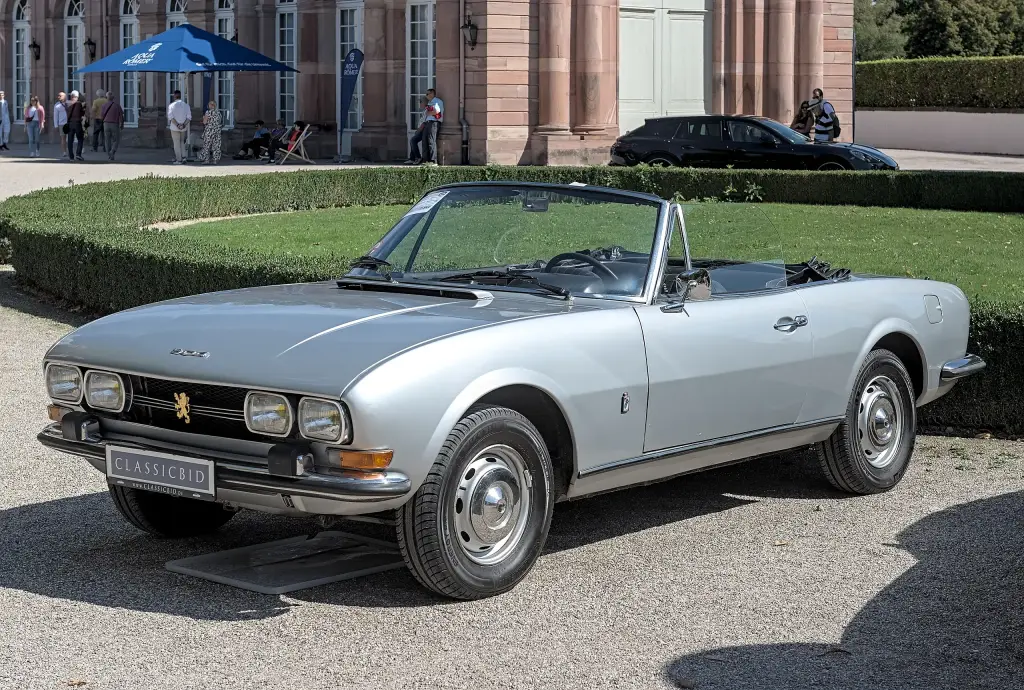
The 504 made its public debut on 12 September 1968 at the Paris Salon, as Peugeot’s flagship saloon. The press launch planned for June 1968 had been postponed by three months and production also started late because of the political and industrial disruption across France in May 1968. The car was a four-door saloon with a sunroof and a carburetted 1,796 cc four-cylinder engine of 82 PS, or 97 PS with the optional fuel injection; Peugeot still quoted SAE figures at the time, 87 and 103 cv. Much of the mechanical layout came from the 404, but the independent rear suspension and four-wheel disc brakes were new. A column-mounted four-speed manual was standard, and a three-speed ZF 3HP12 automatic became available with the carburetted engine from February 1969.
The 504 was elected European Car of the Year in 1969, praised for styling, build quality, chassis, ride, visibility, engine and refinement, and it reached Australia that year. The 504 Injection coupé and cabriolet were shown at Geneva in March 1969 with the same 97 PS, a slightly taller final drive and a floor shifter instead of the saloon’s column change.
Engines and bodies
For 1970 a 1,971 cc four arrived with 93 PS carburetted and 104 PS injected, and at the Paris Salon that year Peugeot added a 2,112 cc diesel of 65 PS; the 1,796 was dropped from the saloon. The estate, called Break, was presented in September 1970 with a higher rear roof, longer wheelbase and a live rear axle on four coil springs instead of the saloon’s independent suspension, and went on sale in April 1971. It was joined by the seven-seat Familiale with three rows facing forward and by the Commerciale utility wagon, which used the 1.8-litre engine detuned to 73 PS, or the 1.95-litre XD88 diesel from the 404 for a top speed of 118 km/h, with a stripped interior, single round headlights and painted instead of chromed trim.
An automatic was offered on the coupé and cabriolet from late 1970 and stayed available until 1983, though only about 2,500 two-door cars received it. The Break SL arrived in 1971 with metallic paint and better equipment, injected saloons moved to a floor shifter in 1972, and in April 1973, after the oil crisis, Peugeot introduced the 504 L with a coil-sprung live rear axle and the smaller 1,796 cc engine.
Why it lasted
The 504 was known for its robust body, long suspension travel, high ground clearance, large wheels and a torque tube driveshaft enclosed in a rigid tube between the gearbox and differential, which relieved the drivetrain of torque reactions. That made it popular in rough-terrain countries in Latin America and much of Africa. More than three million were built during European production, and assembly continued under licence, including 27,000 cars in Kenya and 425,000 in Nigeria from knock-down kits, with production running into 2006. In 2013 the Los Angeles Times called the 504 Africa’s workhorse.
Design and features
- Torque tube drive: a rigid tube between gearbox and differential took the torque reactions.
- Ground clearance: long travel and large wheels for rough roads.
- Independent rear suspension: on saloons, with a live axle on estates.
- Diesel from 1970: a 2,112 cc four of 65 PS.
- Licensed production: built in Africa and Latin America until 2006.
Peugeot 504 versions
- Saloon: the original four-door with sunroof.
- Injection saloon and coupé: 97 PS fuel-injected versions.
- Break and Familiale (1970): estate and seven-seat estate.
- Commerciale: utility wagon with simpler trim.
- 504 L (1973): cheaper model with the 1,796 cc engine and live axle.
The 504 followed the Peugeot 404 and was replaced by the 505, with the 304 below it. More in the Peugeot collection.
Video: Begehrte Youngtimer: Der Peugeot 504
Video by on YouTube.
Sources
- Peugeot 504, English Wikipedia: launch, engines, bodies, chassis, production