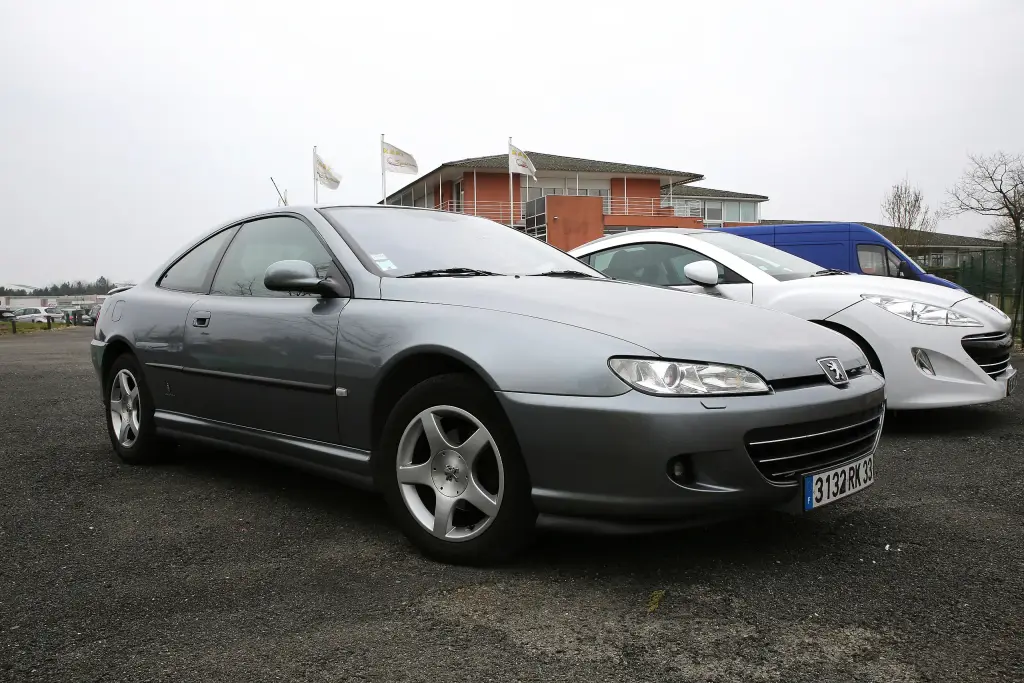
The Peugeot 406 is a large family car that Peugeot produced between 1995 and 2004 as a saloon, an estate and a coupé. It replaced the 405 and was replaced by the 407.
Peugeot 406 at a glance
| Production | 1995–2004 |
|---|---|
| Launched | September 1995, Britain February 1996 |
| Bodies | saloon, estate, coupé |
| Front suspension | inverted MacPherson struts |
| Rear suspension | RS10 multilink, exclusive to the model |
| Petrol engines | 1.6 8v, 1.8 16v, 2.0 16v, 2.0 8v turbo, 3.0 V6 |
| Diesel engines | 1.9 and 2.1 turbodiesel, 2.0 HDi, 2.2 HDi |
| Coupé | 107,633 built by Pininfarina |
| Facelift | February 1999 |
| Awards | What Car? Car of the Year 1997 |
History of the Peugeot 406
Phase 1
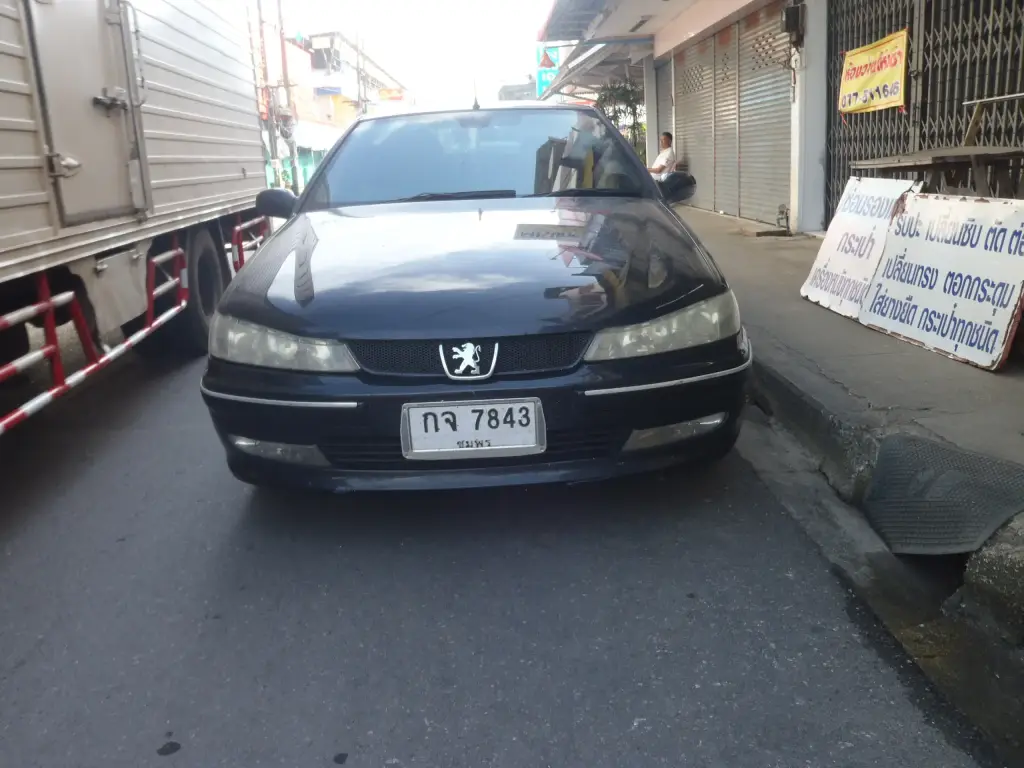
The styling of the 406 was heavily influenced by the 405, which began to be phased out from the 406’s launch in September 1995 and ended European production in 1997 with the last estates. British sales began in February 1996. The car was notably successful in Britain, where it broke into the fleet market and a high proportion of cars became company vehicles and taxis. Knock-down kits were also assembled at the Yontrakit factory in Bangkok.
Initial trim levels were SR, ST and the top SV, with options that included electric seats with memory, a rain sensor, variable electronic suspension control, speed-sensitive power steering and a rear wiper on the saloon. A factory body kit was listed as well. At the front the car used inverted MacPherson struts; at the rear Peugeot developed a new multilink suspension called RS10, with three transverse arms and one longitudinal. It could produce more negative toe on the outer wheel for stability in corners and more negative camber when the rear rose under emergency braking.
The coupé
The two-door coupé was launched at the 1996 Paris Motor Show and was both designed and built by Pininfarina, with a 2.0-litre four, a 3.0-litre V6 and, from the middle of 2001, a 2.2 HDi diesel; 107,633 were made. It used the same platform and suspension as the saloon and estate with some upgrades: a wider track, 16 mm from specific rims and a further 36 mm at the rear from different spindles and lower arms, a ride height 16 mm lower and, on the V6, a 26 mm front strut brace and 305 mm Brembo four-piston front brakes. Inside it had the same dashboard, console and wheel as the other bodies, with a five-gauge instrument panel ringed in chrome.
Engines
Petrol engines were a 1.6 8-valve, a 1.8 16-valve, a 2.0 16-valve, a 2.0 8-valve turbo and a 3.0-litre 24-valve V6 of 2,946 cc. Diesels were a 1.9 8-valve turbodiesel, a 2.1 12-valve turbodiesel and a 2.0 HDi 8-valve.
Phase 2
The facelifted saloon arrived in February 1999 with safety, strength and speed improvements that raised the Euro NCAP result from one star and a struck-off star to three stars. The new EW and DW engine families brought more power, torque and economy, and a direct-injection petrol engine called HPi was added; the 2.0 turbo gave way to a naturally aspirated 2.2 with variable cam timing. Bumpers and lights were new front and rear, some trims received 16-inch wheels, the interior gained better sound insulation, digital climate control on most models, a multi-function display and an automatically dimming mirror.
In the middle of 2001 the 406 received the PSA and Renault VAN bus, recognisable by new column stalks combining radio and cruise control, and a new 2.2 HDi 16-valve diesel with a particulate filter. The top Executive model had a ten-speaker JBL system and electrically adjusted heated leather seats with memory for seats and mirrors. The coupé followed the same updates and gained the 2.2 petrol and 2.2 HDi with Brembo front brakes.
Recognition
The 406 was What Car? Car of the Year 1997 and Caravan Club Towcar of the Year in 1997 and 2001, and Semperit Irish Car of the Year 1997, but lost the 1996 European Car of the Year to the Fiat Bravo and Brava by fifteen points. It raced in Supertouring championships from 1996 to 2004. In August 2002 a 406 HDi set a world record for the longest distance on one tank of fuel, 2,348 km across Australia from Melbourne to Rockhampton.
Design and features
- RS10 suspension: a model-exclusive multilink rear axle with passive toe and camber changes.
- Pininfarina coupé: designed and built in Italy, 107,633 cars.
- HPi engine: direct petrol injection added with the facelift.
- VAN bus (2001): combined radio and cruise control stalks.
- Fuel record: 2,348 km on one tank in 2002.
Peugeot 406 versions
- SR, ST, SV: the original trim levels.
- Coupé (1996): 2.0 and 3.0 V6, then 2.2 HDi.
- Phase 2 (1999): facelifted saloon and estate with new engines.
- Executive: the top trim with JBL audio and memory seats.
The 406 replaced the Peugeot 405 and was replaced by the 407 in 2004, with the 306 below it. More in the Peugeot collection.
Video: Full Dashboard Removal from a Peugeot 406
Video by on YouTube.
Sources
- Peugeot 406, English Wikipedia: phases, suspension, coupé, engines, updates, awards