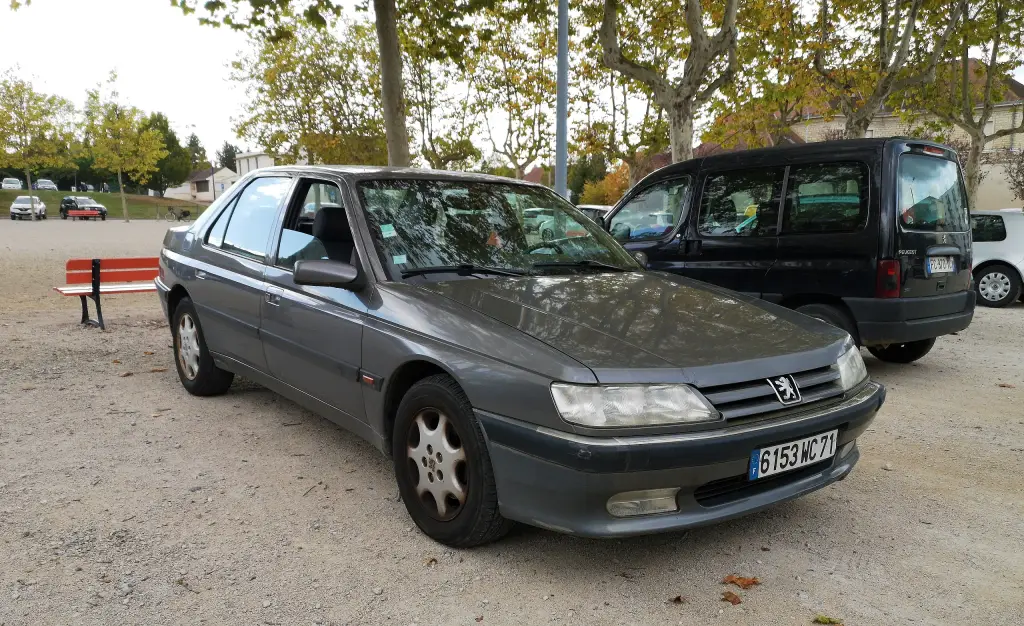
The Peugeot 605 is an executive car that Peugeot produced between 1989 and 1999, with a facelift in 1995. It was built on the same platform as the Citroën XM and replaced the slow-selling 604.
Peugeot 605 at a glance
| Production | 1989–1999 |
|---|---|
| Launched | July 1989, left-hand drive |
| Platform | shared with the Citroën XM |
| Petrol engines | 2.0 8v and 16v, 2.9 V6 24v, 3.0 V6 12v and 24v |
| Diesel engines | 2.1 turbodiesel, 2.1 naturally aspirated, 2.4 turbodiesel |
| Top V6 | 24-valve, 200 PS, 235 km/h |
| Facelift | 1995, Phase 2 |
| Notable | side airbags after the facelift |
| RHD market | Britain from the first half of 1990 |
| Successor | 607, from autumn 1999 |
History of the Peugeot 605
Launch
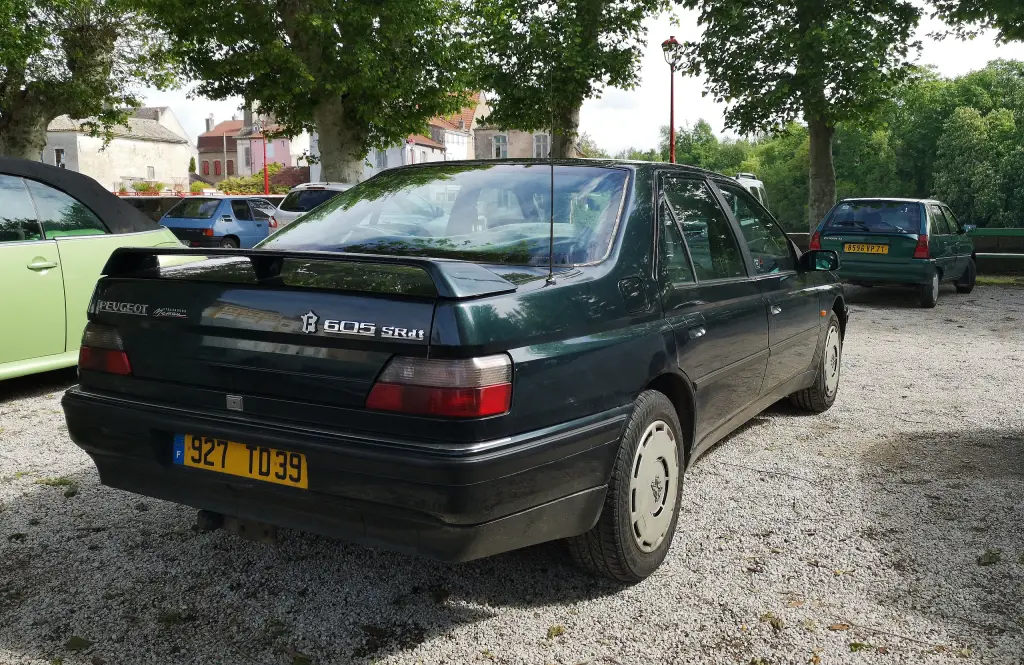
The 605 was launched in July 1989 in left-hand-drive form, and a right-hand-drive version reached Britain during the first half of 1990. At first only petrol engines were offered; a turbodiesel followed in April 1990 and a naturally aspirated diesel in the autumn. The car was built on the same platform as the Citroën XM and succeeded the 604, which had gone out of production four years earlier. The 505 was phased out at the end of the 1980s and beginning of the 1990s in favour of two cars, the 405 and the 605, and although Peugeot kept the 505 estate until 1992 and planned a 605 estate, the project was abandoned.
Engines
Eight petrol engines were offered over the car’s life. The 2.0-litre 1,998 cc eight-valve four came carburetted at 115 PS and fuel injected at 107 and 121 PS, with a non-catalysed version of the last at 128 PS in some markets; there was also a 2.0 eight-valve turbo of 147 PS and a 2.0 16-valve of 132 PS. The sixes were a 2.9-litre 24-valve of 190 PS and two 3.0-litre units, a 12-valve of 167 PS and a 24-valve of 200 PS, both moving from 2,975 to 2,963 cc in 1993 to fit a lower tax class in Switzerland. Diesels were a 2.1 12-valve turbodiesel of 109 PS, a 2.1 naturally aspirated of 82 PS and a 2.4 12-valve turbodiesel of 129 PS. The carburetted petrol and the naturally aspirated diesel were reliable but considered overmatched by the car’s weight, and even the turbodiesel was criticised for its thirst.
Reputation
High equipment, a luxurious interior, a smooth ride and exceptional handling were the 605’s strengths, but Peugeot had always struggled with large cars outside France. The 605 looked too much like the smaller 405 to command a price premium, and its dashboard was criticised as uninspired. Like the XM, the car suffered early quality problems, particularly with its ambitious electrics, leading to an extensive and costly recall in which most of the engine-room wiring and the exhaust system were replaced, but by then the damage to its reputation was done.
Phase 2 and the end
In 1995 Peugeot unveiled the extensively revised Phase 2, with a modern-looking facelift and a much improved interior with more ergonomic controls. The naturally aspirated diesel was dropped at that point, since the new 406 was taking over the lower-specification 605s, and performance, handling and some reliability issues were addressed. Side airbags were among the technical advances, but sales stayed low. After the 406 arrived in 1995, 605 sales fell to almost nothing and the car was quietly dropped in September 1999, replaced by the 607. Its end also marked the end of the “05” generation of Peugeots in Europe after more than twenty years, a line that had begun with the 305 in 1977. A 605 served as a French presidential state car for François Mitterrand.
Design and features
- XM platform: the same base as the Citroën XM, not the Type Four platform.
- V6 24: 200 PS and 235 km/h in the top version.
- Phase 2 (1995): revised interior, better ergonomics, side airbags.
- Wide engine range: eight petrol and three diesel engines.
- Presidential car: used by François Mitterrand.
Peugeot 605 versions
- 2.0 petrol: carburettor, injection, turbo and 16-valve versions.
- V6 models: 2.9 and 3.0 litres in 12 and 24-valve form.
- Diesel models: 2.1 turbo, 2.1 naturally aspirated and 2.4 turbo.
- Phase 2 (1995): the facelifted car with a new interior.
The 605 replaced the Peugeot 604 and was replaced by the 607, with the 405 below it in the range. More in the Peugeot collection.
Video: Top Gear Peugeot 605 Review
Video by on YouTube.
Sources
- Peugeot 605, English Wikipedia: launch, engines, reputation, Phase 2, end of production