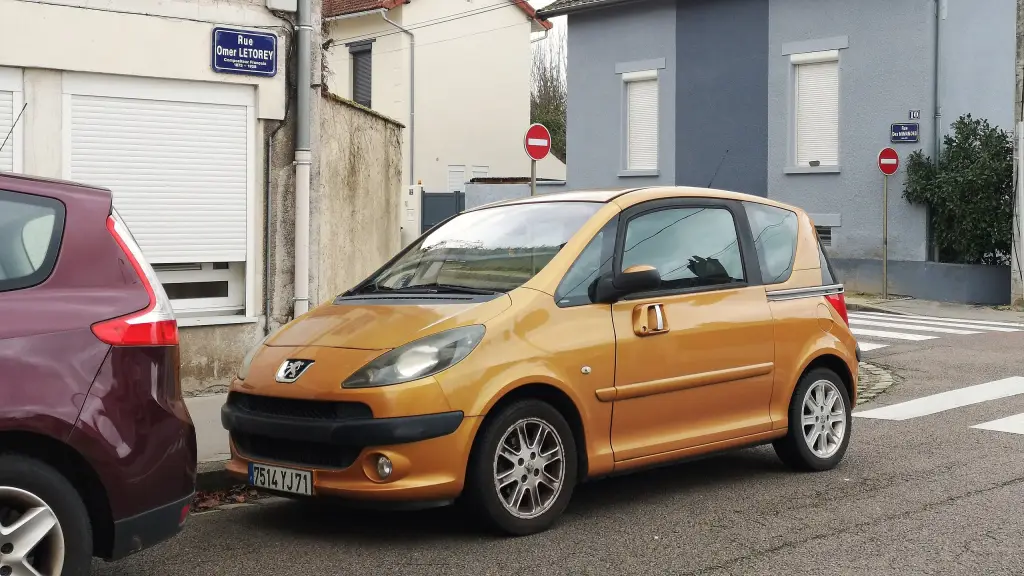
The Peugeot 1007 is a small three-door car that Peugeot built from 2004 to 2009. It was known for two things: interior trim pieces the owner could swap, and a four-pillar body with two power sliding doors instead of hinged ones.
Peugeot 1007 at a glance
| Maker | Peugeot |
|---|---|
| Production | 2004–2009 |
| Class | small car, supermini |
| Body | three-door hatchback |
| Doors | two electric sliding doors, four-pillar body |
| Platform | shared with the 206, Citroën C2 and C3 |
| Petrol engines | 1.4 and 1.6 litres |
| Diesel engines | 1.4 and 1.6 litres |
| Gearbox | manual or 2-Tronic automated manual |
| Concept | Sésame, Paris 2002 |
| Design | Pininfarina |
| European sales | from April 2005 |
based on one source
History of the Peugeot 1007
From the Sésame concept
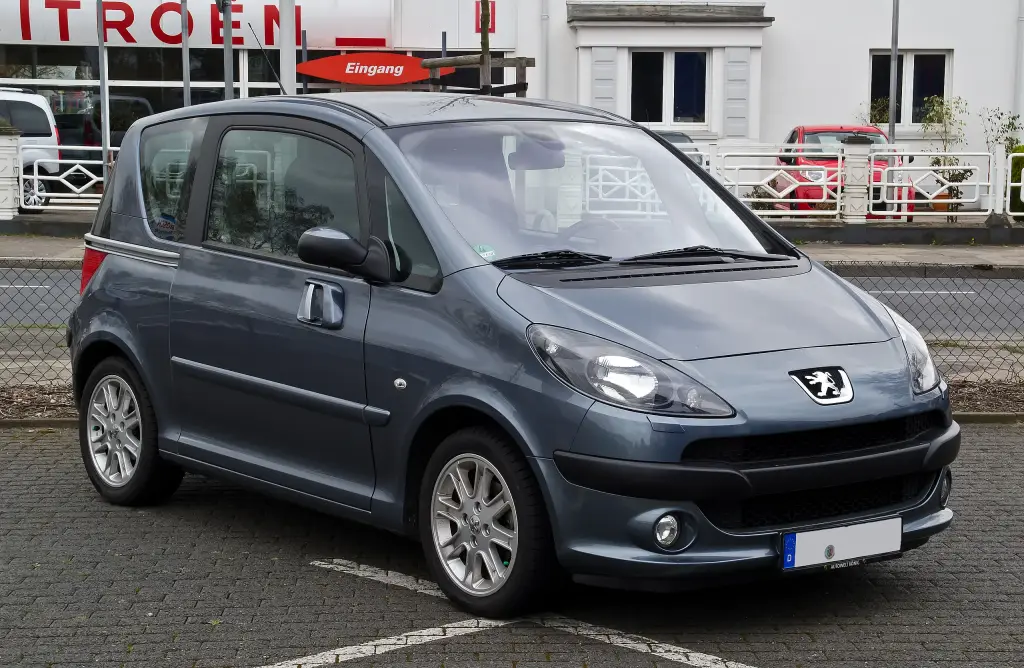
The 1007 is the production version of the Sésame concept shown at the 2002 Paris Motor Show. The car went into production at the end of 2004 and sales in Europe began in April 2005. Its platform was shared with the Peugeot 206 and the Citroën C2 and C3, and so were its engines: 1.4 and 1.6 litre petrol units and 1.4 and 1.6 litre diesels, with the “2-Tronic” automated manual offered as an alternative to the manual gearbox. The same transmission was sold by Citroën as Sensodrive.
The body was designed by Pininfarina, which described the car as an MPV, while Peugeot called it a berline monocorps, a one-box car. French press used the terms petit monospace and minispace. For its size the 1007 was expensive, at around €14,000 or £10,000, and Euro NCAP gave it its second best rating for adult occupant safety at the time.
A name with a problem
The 1007 was the first mainstream Peugeot to carry a “double zero” number. It was launched as the “one double oh seven”, with a James Bond style campaign, but the owners of the Bond films objected and Peugeot changed the pronunciation to “ten oh seven” in English speaking markets. In France the car was sold as the “mille sept”.
Failure and withdrawal
Although the concept was well received, the production car became one of Peugeot’s largest sales failures. Peugeot dropped the 1007 from its range in the United Kingdom in 2008, while production in mainland Europe continued until the end of 2009, and the company was estimated to have lost about €15,380 on every car built.
Design and features
- Sliding doors: two electrically operated doors that run back along the body, with no centre pillar.
- Swappable trim: interior pieces the owner could change without tools, the feature the car was marketed on.
- Four-pillar structure: the door opening is cut into the body side, which is why the doors slide rather than swing.
- Tall, short body: a small footprint with MPV-like packaging and a high roofline.
- Safety result: Euro NCAP’s second best adult occupant score when the car was tested.
Peugeot 1007 versions
- Petrol 1.4 and 1.6: the main European engine range, with manual or 2-Tronic gearboxes.
- Diesel 1.4 and 1.6: the same HDi units used across the PSA small-car range.
- 2-Tronic: automated manual gearbox, sold as Sensodrive by Citroën.
The 1007 shared its platform with the Peugeot 206 and sat below the 3008 in the range. Its successor at the bottom of the range was the 107. More in the Peugeot collection.
Video: Test Peugeot 1007 1.6
Video by on YouTube.
Sources
- Peugeot 1007, English Wikipedia: production dates, platform, engines, design, sales failure