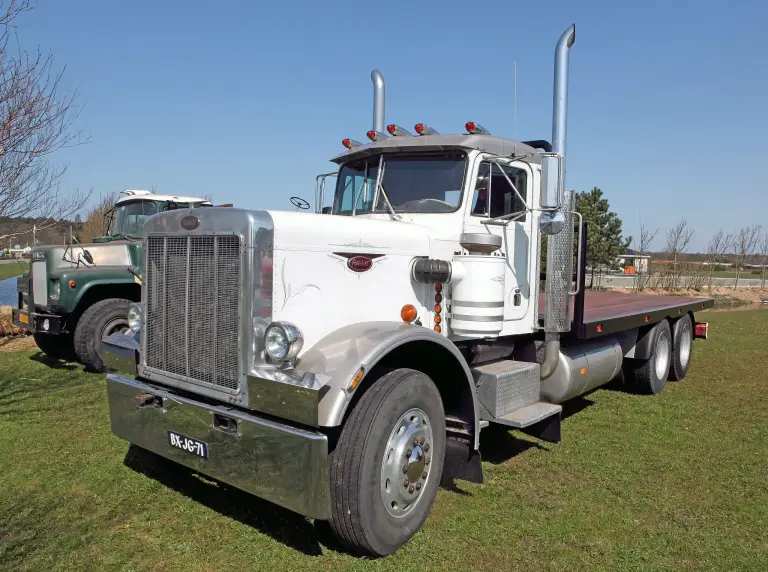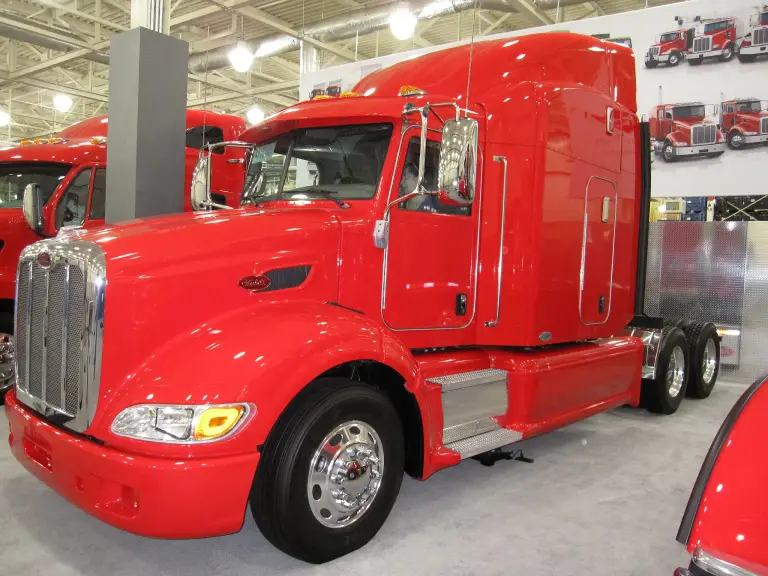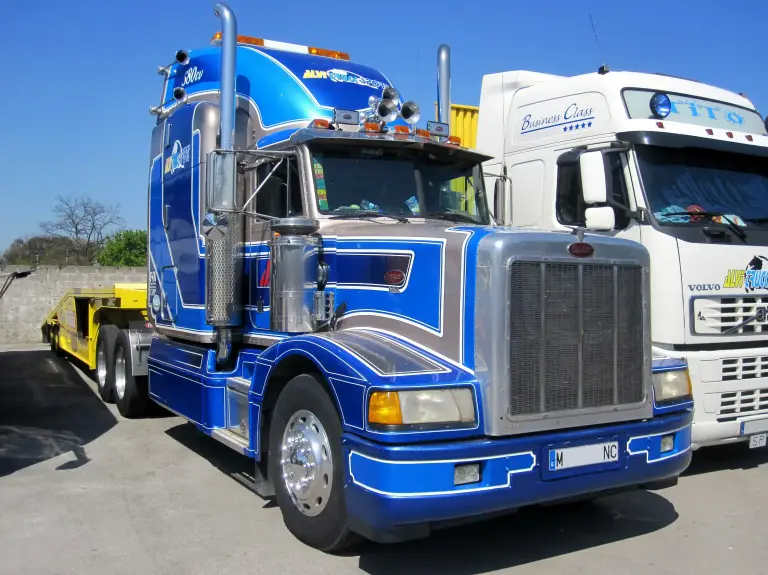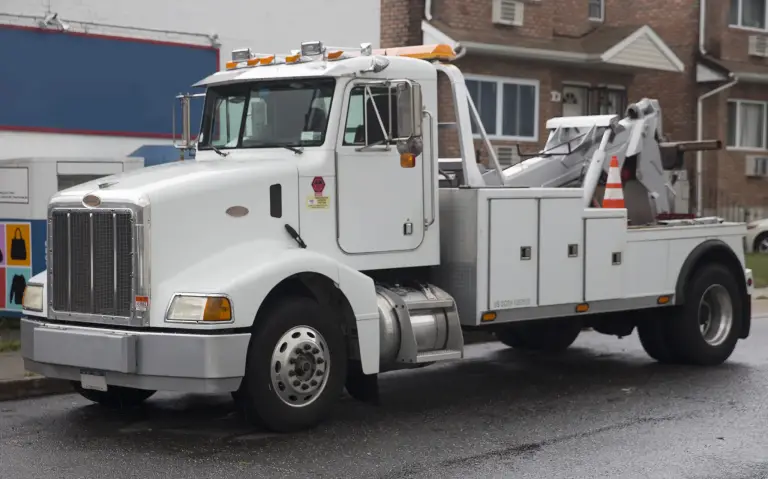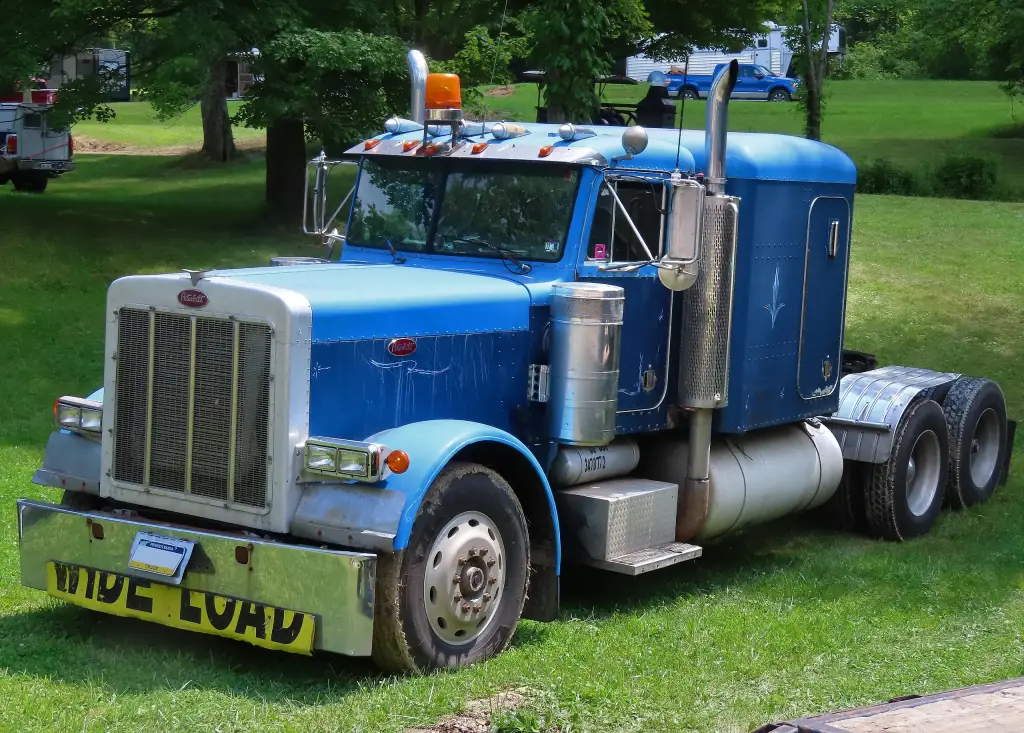
The Peterbilt 379 took over from the 359 as the company’s flagship highway tractor in 1987 and remained in production until 2007. Long-hooded, available with 119-inch or 127-inch bodies, and fitted with the biggest engines Caterpillar and Cummins built, it became the standard against which owner-operators judged a conventional truck.
Peterbilt 379 at a glance
| Maker | Peterbilt Motors Company (PACCAR) |
|---|---|
| Production | 1987–2007 |
| Class | on-highway, Class 8 |
| Layout | conventional cab, long hood |
| Replaced | 359 |
| BBC | 119 inches and 127 inches |
| Windscreen | enlarged, with horizontally mounted wipers |
| Turn signals | moved into the rectangular headlamps |
| Cab | shared with many Peterbilts since 1987, except the 579 and 587 |
| Doors | shared with the 362 and 372 cabovers |
| Replaced by | 389 in 2007 |
| Special editions | 379X 2003–2005, Legacy Class final 1,000 |
History of the Peterbilt 379
The 379 arrived in 1987 as the replacement for the long-running 359. It kept the 1100-series cab of its predecessor but enlarged the windscreen and moved to horizontally mounted wipers, and the turn signals moved from the fenders into rectangular headlamps. Buyers could choose a 119-inch bumper-to-back-of-cab body or the extended 127-inch hood, and the truck was configured primarily for highway work.
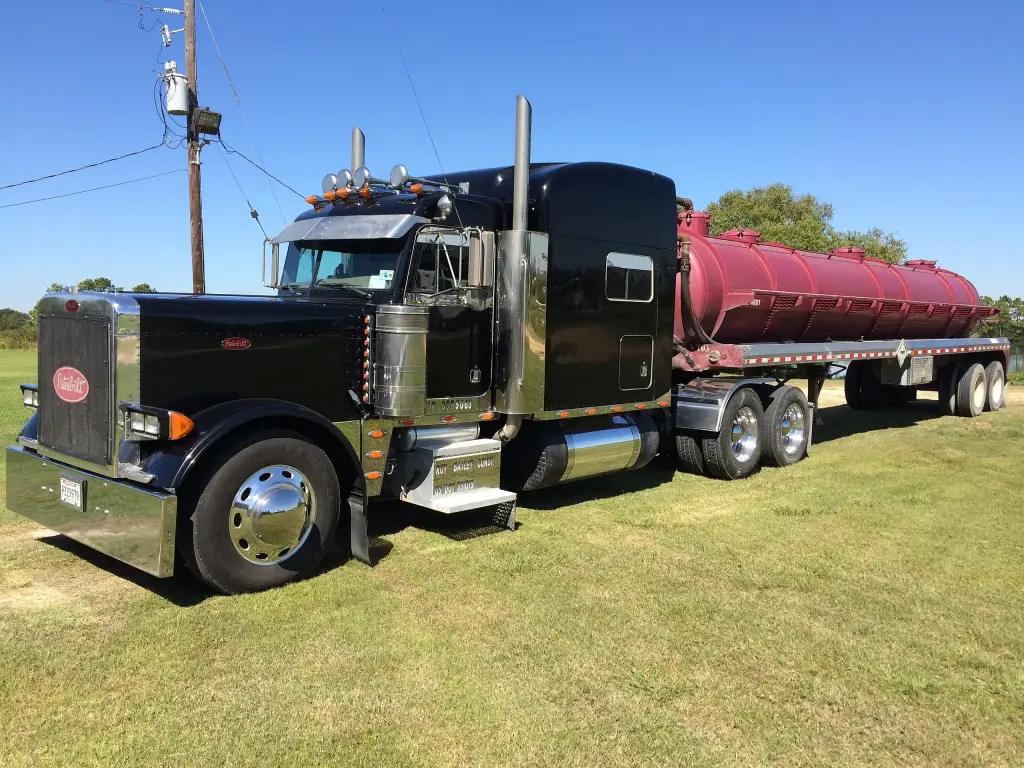
Throughout its life the 379 was offered with the most powerful engines available in Class 8 on-highway trucks. The list runs through Caterpillar’s 3406 in its B, C, E and P forms, the C10, C11, C12, C13, C15 and C16, Cummins’ NTC, N14, Signature 600, ISX and ISM, and the Detroit Diesel 60-series. That choice of power, combined with the long hood, made the model the natural basis for customisation, in the same way as the Kenworth W900.
Its popularity with owner-operators kept the truck in production for twenty years. Peterbilt marked the end with the Legacy Class, the final 1,000 examples built as a commemorative run, and replaced the model with the 389 in 2007. A special edition called the 379X had been offered between 2003 and 2005, of which roughly 1,000 to 2,000 were made. The 127-inch version was sold alongside as the 379-127.
Design and features
- Long hood: 119-inch and 127-inch bodies, the proportions that defined the model.
- Enlarged windscreen: horizontal wipers and more glass than the 359.
- Headlamp turn signals: the lamps moved from the fenders into rectangular headlamp units.
- Big engines: Caterpillar, Cummins and Detroit Diesel power from 340 to the largest Class 8 ratings.
- Customisation: the most modified Peterbilt of its era, particularly among owner-operators.
- Legacy Class: the final 1,000 trucks built as a commemorative edition.
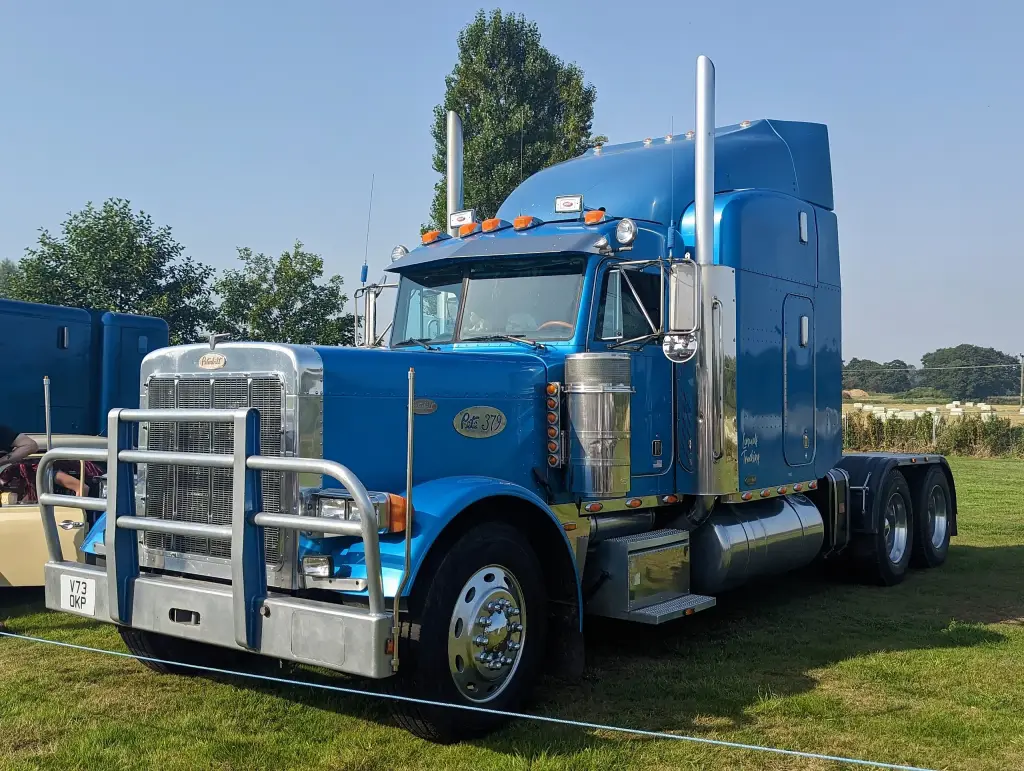
Peterbilt 379 versions
- 379 (1987–2007): the standard 119-inch highway tractor.
- 379-127: the extended 127-inch hood version.
- 379X (2003–2005): special edition, roughly 1,000 to 2,000 built.
- Legacy Class (2007): the final 1,000 examples.
- 379L: long-hood variant listed with the family.
The 379 replaced the Peterbilt 359 and was itself replaced by the 389. Its vocational sister is the 378, and the cabover that shared its doors is the 362. More in the Peterbilt collection.
Video: Peterbilt 379 POWER IS WITH ME
Video by bike1300cc on YouTube.
Sources
- Peterbilt 379, English Wikipedia: overview, windscreen, cab sharing, engines, Legacy Class
- Peterbilt, English Wikipedia: 1987 launch, 389 replacement, owner-operator popularity
- List of Peterbilt vehicles, English Wikipedia: production years, BBC, 379X special edition
- Peterbilt, French Wikipedia: place of the 379 in the range