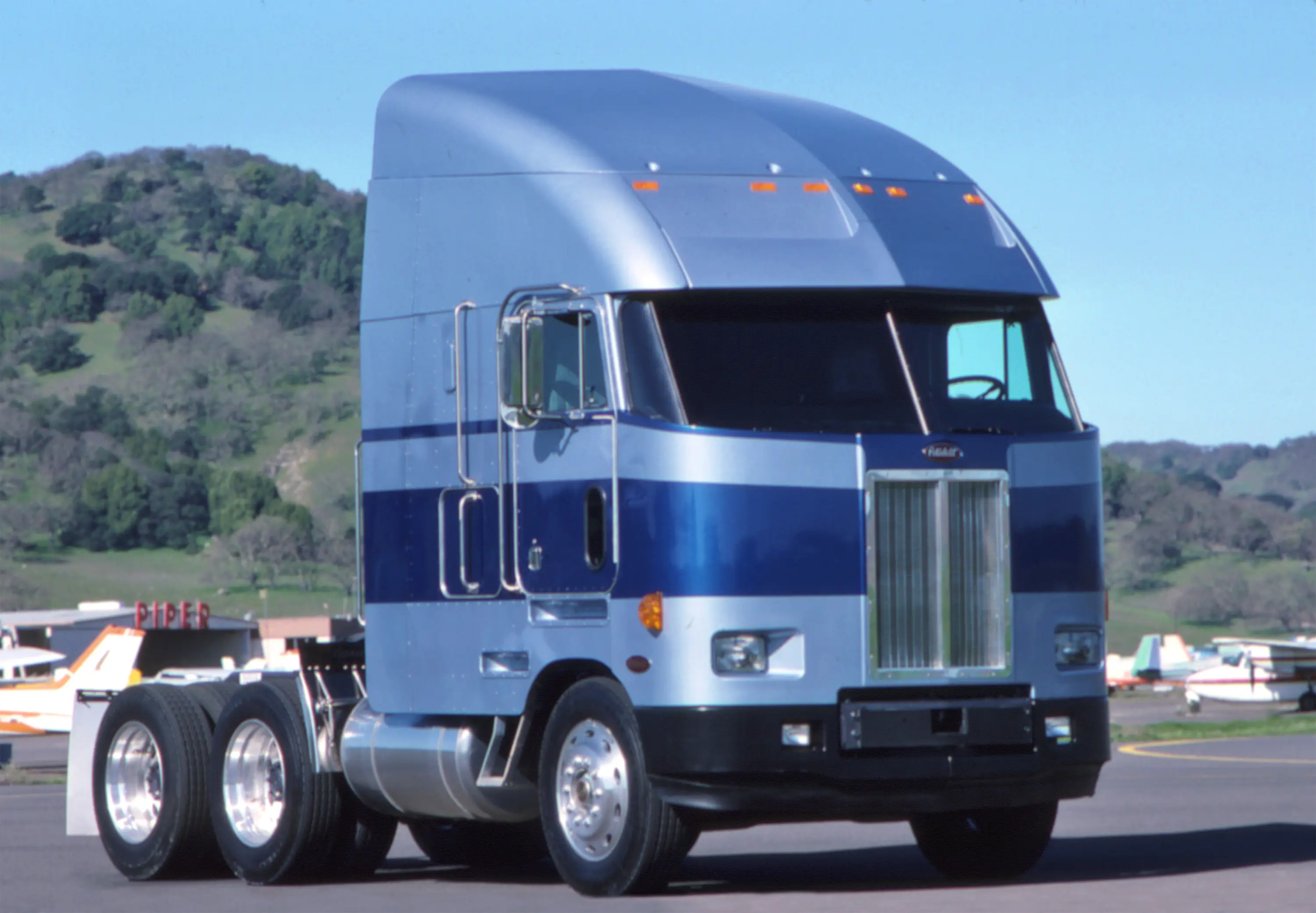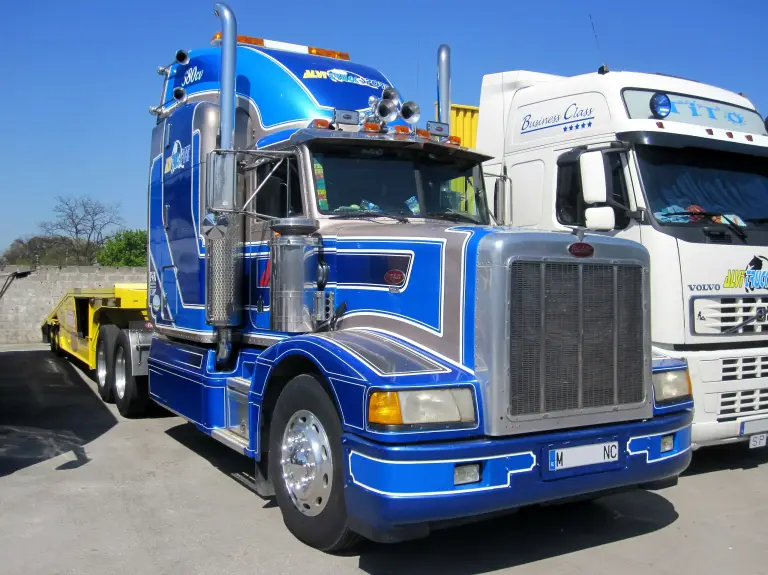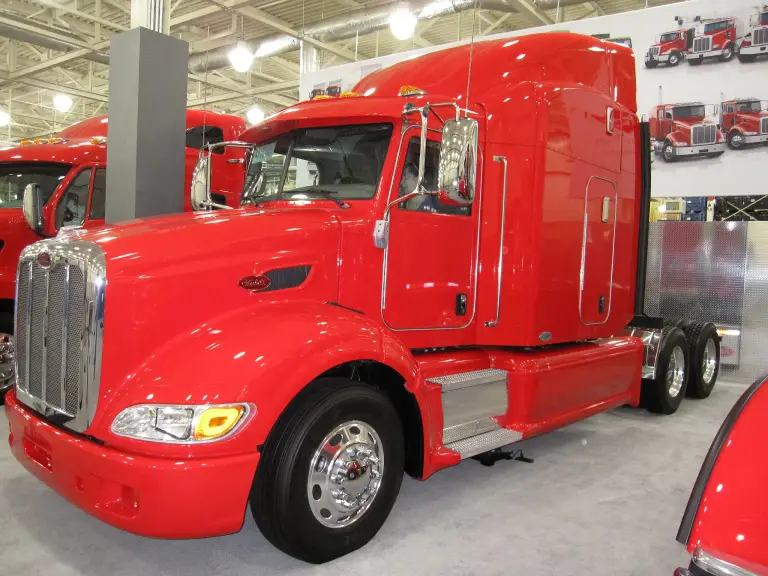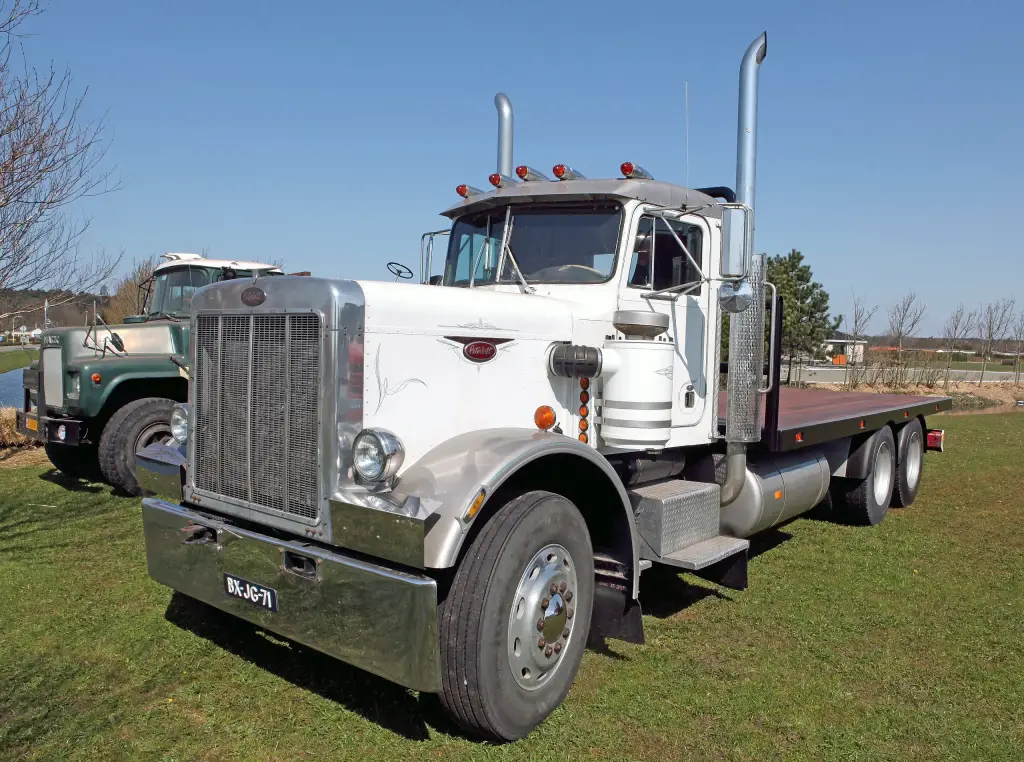
The Peterbilt 359 of 1967 was the truck that made the long-hood conventional the image of an American Class 8 tractor. It replaced the needle-nose 281/351 with a wider grille for the bigger diesel engines of the period, and it stayed in production for twenty years, until the 379 took over in 1987.
Peterbilt 359 at a glance
| Maker | Peterbilt Motors Company |
|---|---|
| Production | 1967–1987 |
| Class | on-highway, Class 8 |
| Layout | conventional cab, long hood |
| Replaced | 281 and 351 |
| Grille | wider than the 358, for a larger radiator |
| Set-back axle | added in 1974 |
| Cab | 1100-series cab from 1972 |
| Sleeper | 63-inch walk-through sleeper from 1977 |
| Replaced by | 379 in 1987 |
| Also | 359X, 289 single-drive sister |
History of the Peterbilt 359
The 359 arrived in 1967 and took over from the 281/351. It was similar in design to the 358, with a tilting hood, but the grille was larger to feed the bigger diesel engines that American fleets were beginning to order. The truck was long-hooded, with the front axle set well forward, and it looked like what it was: a conventional tractor built for long-distance haulage.
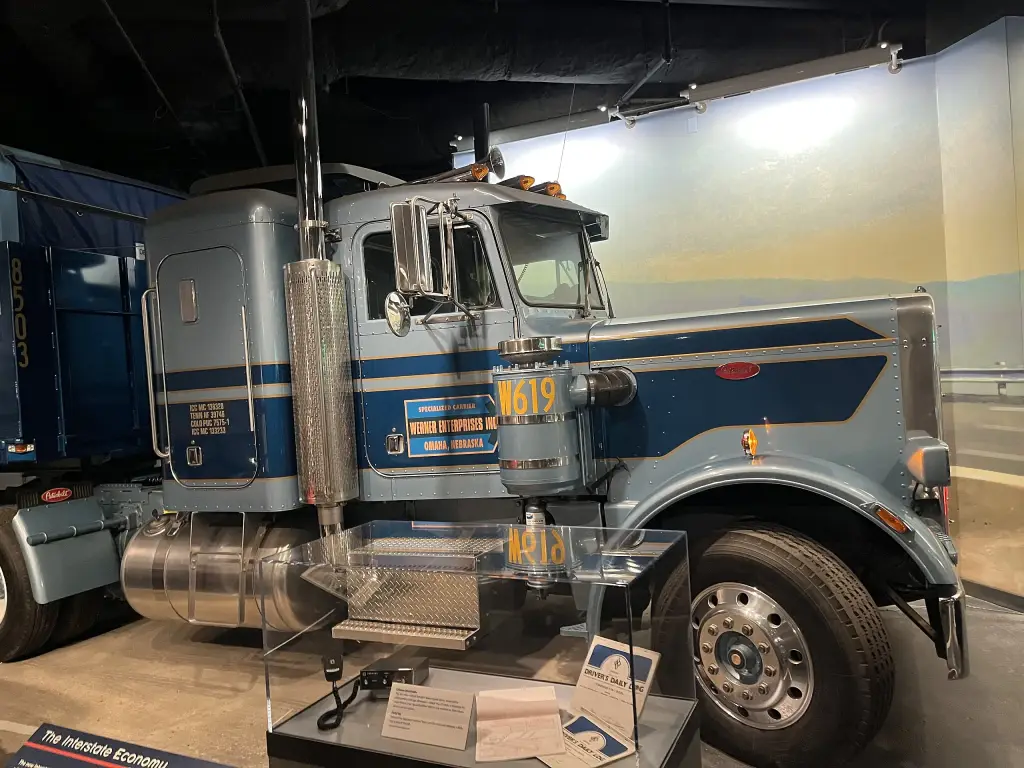
Peterbilt kept developing the model through its life. In 1972 the company replaced the UniLite cab with the 1100-series cab, named for its 1,100 square inches of windscreen glass, and fitted it to the 359. A set-back front axle was added in 1974, and in 1977 the 100,000th vehicle built by the company was a long-hood 359. That year also brought the 63-inch sleeper with walk-through entry, a first for the model line.
The 359 carried the aerodynamic work of the 1980s in an unusual way: the first raised-roof sleeper appeared on a 359 in 1986. Production ended in 1987, when the 379 replaced it with redesigned headlamp clusters and horizontal windscreen wipers. The 289, its single-drive-axle sister, followed the old Peterbilt numbering and was sold alongside it.
Design and features
- Long hood: the proportions that defined the classic American conventional tractor.
- Wider grille: more cooling area than the 358, needed for the larger diesels of the late 1960s.
- 1100-series cab: the taller cab with 1,100 square inches of glass, fitted from 1972.
- Walk-through sleeper: the 63-inch sleeper of 1977 let the driver move between cab and bunk.
- Set-back axle: an option from 1974 for better weight distribution.
Peterbilt 359 versions
- 359 (1967–1987): the standard tandem-drive highway tractor.
- 289: single-drive-axle version under the old numbering.
- 359X: special version listed with the line.
- 359 with 63-inch sleeper (from 1977): the first walk-through bunk.
The 359 was replaced by the Peterbilt 379; its predecessor is the 281 and 351, and the narrow-hood contemporary is the 358. More in the Peterbilt collection.
Video: Test Drive: 1986 359 Peterbilt
Video by TheBostonTrucker on YouTube.
Sources
- Peterbilt, English Wikipedia: 1967 launch, 1100-series cab, 1974 axle, 1977 sleeper, 1986 raised roof, 379 replacement
- List of Peterbilt vehicles, English Wikipedia: production years, wider grille, sleeper history