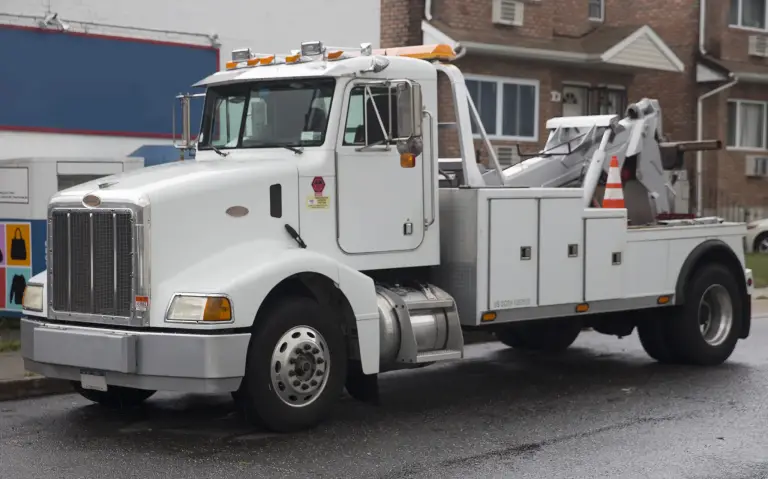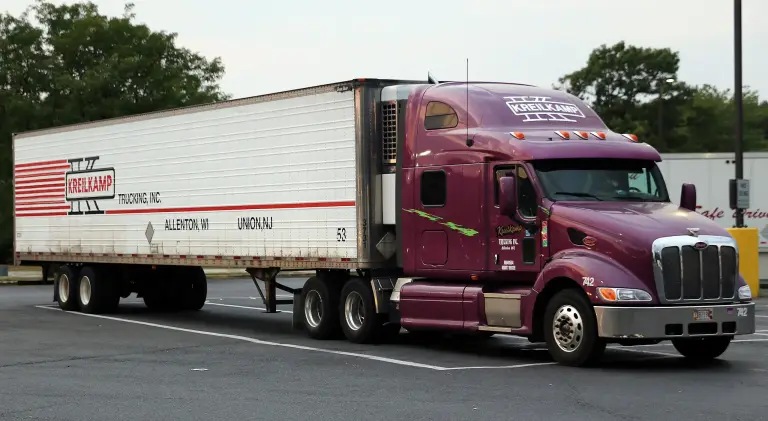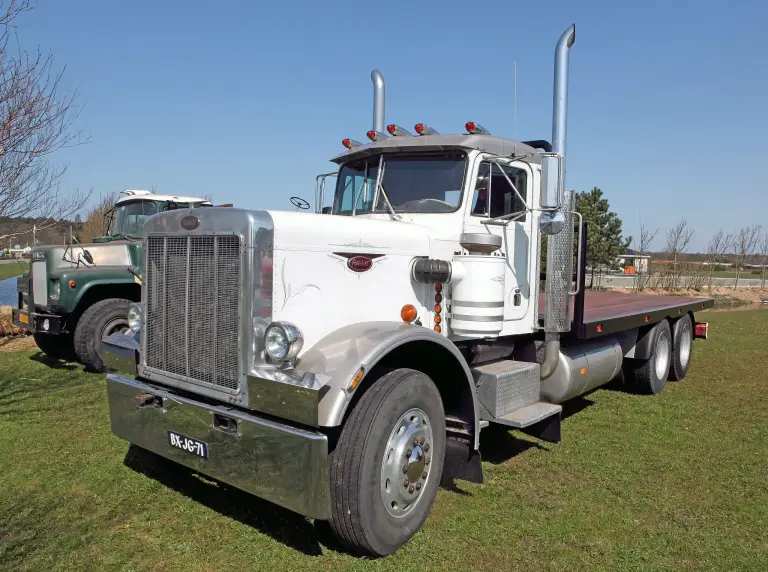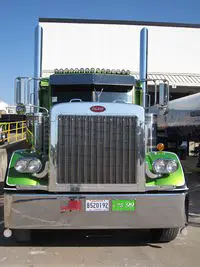
The Peterbilt 378 replaced the 348 and 349 in 1986 and served both vocational and on-highway work. It was closely related to the 379, sharing its 119-inch bumper-to-back-of-cab measurement, but its cab sat higher, which gave the bonnet a sloped line and made room for different axle layouts.
Peterbilt 378 at a glance
| Maker | Peterbilt Motors Company (PACCAR) |
|---|---|
| Production | 1986–2007 |
| Class | on-highway and vocational, Class 8 |
| Replaced | 348 and 349 |
| Relation | closely related to the 379, with the same 119-inch BBC |
| Cab | mounted higher than the 379, giving a sloped hood |
| Axles | multiple configurations, set-forward and set-back |
| Replaced by | 367 in the vocational role |
| Also offered | as a tractor and with vocational bodies |
History of the Peterbilt 378
The 378 arrived in 1986 as part of the largest revision of the Peterbilt range in years. The company replaced the 348 and 349 with a single model that could be ordered for highway or vocational work, mounted its cab higher than on the 379 and gave the bonnet a sloped line as a result. The 119-inch bumper-to-back-of-cab measurement was shared with the 379, so the two trucks looked like relatives even though they were aimed at different buyers.
Because the model covered both roles, Peterbilt offered it with multiple axle configurations, including set-forward and set-back front axles, and with a choice of bodies. A construction operator could order a tipper or a mixer, while a fleet could take the same chassis as a tractor. That flexibility made the 378 one of the more common Peterbilts of the 1990s.
The model continued until 2007, when the 367 took over the vocational work. In 2002 Peterbilt temporarily moved some 378 production to the Sainte-Thérèse plant to meet demand, an indication of how much the truck was in use during the construction boom of that period.
Design and features
- Higher cab: the cab sat above the level of the 379, which produced the sloped bonnet line.
- Shared dimensions: the same 119-inch bumper-to-back-of-cab length as the 379.
- Flexible axles: set-forward and set-back front axles for highway or site work.
- Two roles: sold as a tractor and with vocational bodies from the same chassis.
Peterbilt 378 versions
- 378 (1986–2007): the standard model.
- Set-forward and set-back versions: for different weight distribution and body types.
- 367 (from 2007): the vocational successor.
The highway sister is the Peterbilt 379, and the model that succeeded it is the 367. The trucks it replaced are covered with the 349 and the 348; more in the Peterbilt collection.
Video: N14 Cummins 2001 Peterbilt 378 Hauling Scrap Metal Uphill
Video by Lindro 889 on YouTube.
Sources
- Peterbilt, English Wikipedia: 1986 replacement of the 348 and 349, relationship with the 379, 2002 production
- List of Peterbilt vehicles, English Wikipedia: production years, cab height, axle options, 367 successor