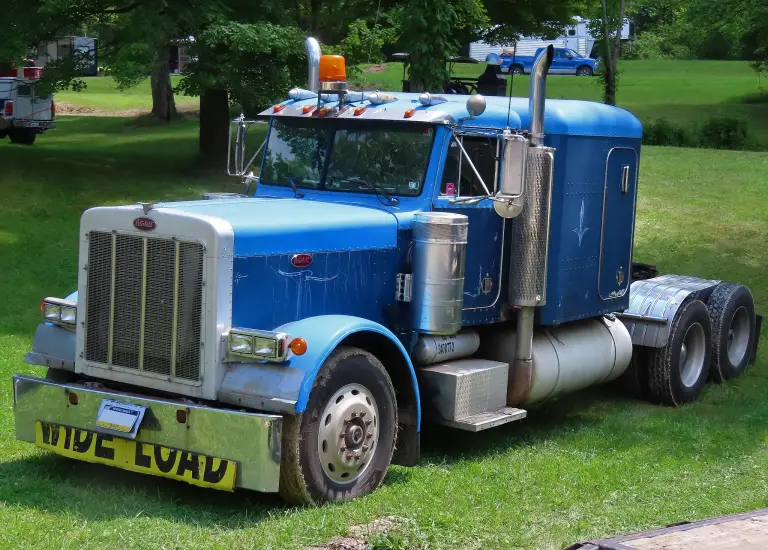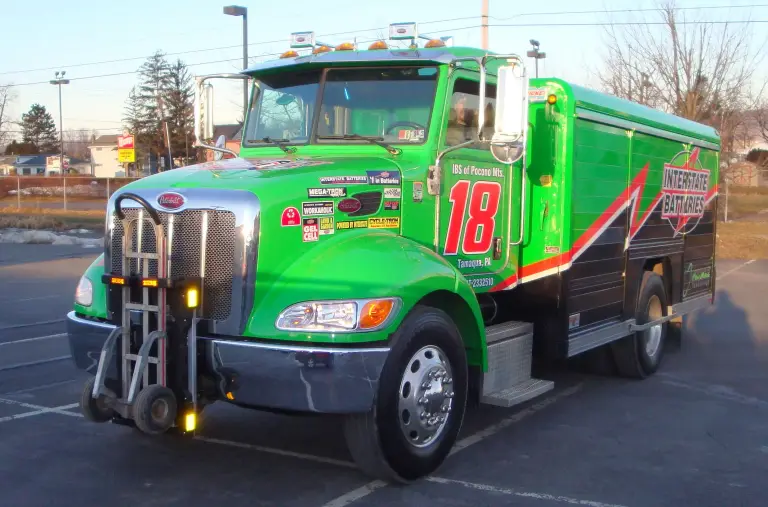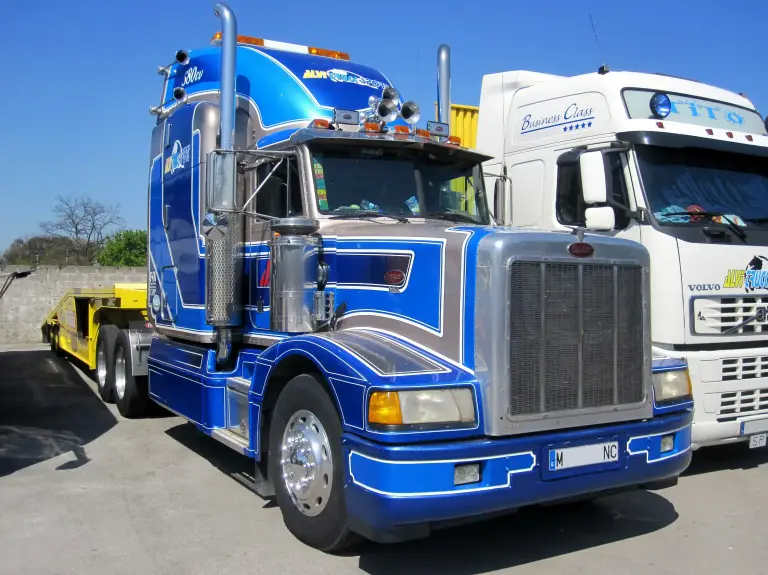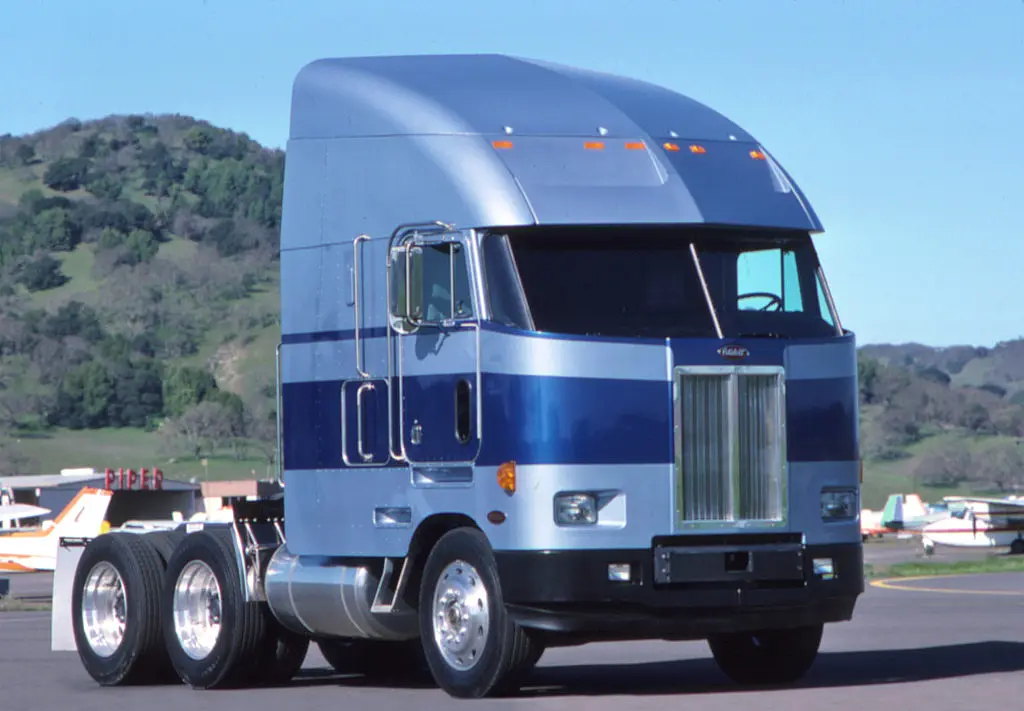
The Peterbilt 372 of 1988 was the company’s last all-new cabover design. Developed to improve on the aerodynamics of the 362, it reached over 11 miles per gallon in development testing, but its unusual shape earned nicknames like football helmet and Darth Vader, and it was dropped in 1994.
Peterbilt 372 at a glance
| Maker | Peterbilt Motors Company (PACCAR) |
|---|---|
| Production | 1988–1994 |
| Class | on-highway, Class 8 |
| Layout | cab-over-engine |
| Relation | shared doors and grille with the 362 |
| Economy | over 11 mpg in development testing |
| Roof fairing | integrated into the cab, extended forward of the windshield |
| Nose | rounded fairing that lifted for engine access |
| Nicknames | Winnebago, football helmet, Darth Vader |
| Doors | shared with the 379 conventional |
History of the Peterbilt 372
The 372 arrived in 1988 as a second Class 8 cabover alongside the 362. It shared its doors and internal structure with the 362, and its doors were also the ones used on the 379 conventional, but the body above the waist was new and shaped for aerodynamic efficiency. The three-piece windshield of the 362 gave way to a pointed-centre design, and a roof fairing was built into the cab, extending forward of the windscreen.
Below the windscreen an upward-tilting shroud contained the grille, so the front could be lifted for engine access. Skirted body sides were available as an option. The truck was intended for team operation, with a raised-roof sleeper integrated into the large roof fairing, and in development testing it returned more than 11 miles per gallon, a strong figure for a cabover of the period.
The look was the problem. The tall, rounded front earned the truck nicknames including Winnebago, football helmet and Darth Vader, and buyers did not take to it. Production ended in 1994, with Peterbilt concentrating on the more conventional 362, and the 372 remained the last all-new cabover the company designed.
Design and features
- Aerodynamic body: a pointed-centre windscreen and a roof fairing built into the cab.
- Fuel economy: over 11 mpg in development testing, despite the large frontal area of a cabover.
- Team sleeper: a raised-roof sleeper integrated into the roof fairing for two drivers.
- Tilting nose: the front shroud lifted upward so mechanics could reach the engine.
- Distinctive shape: the styling that produced the football helmet and Darth Vader nicknames.
Peterbilt 372 versions
- 372 (1988–1994): the standard aerodynamic cabover.
- Skirted version: body sides closed in as an option for extra aerodynamic benefit.
- Team sleeper: raised-roof bunk built into the fairing.
The cabover it was derived from is the Peterbilt 362, and the conventional that shared its doors is the 379. The last Peterbilt cabovers for refuse work are covered with the 320; more in the Peterbilt collection.
Video: Moving the 372 Peterbilt
Video by Alex Clemens on YouTube.
Sources
- Peterbilt, English Wikipedia: 1988 launch, aerodynamics, 11 mpg, team sleeper, end of production
- List of Peterbilt vehicles, English Wikipedia: production years, shared doors, nicknames