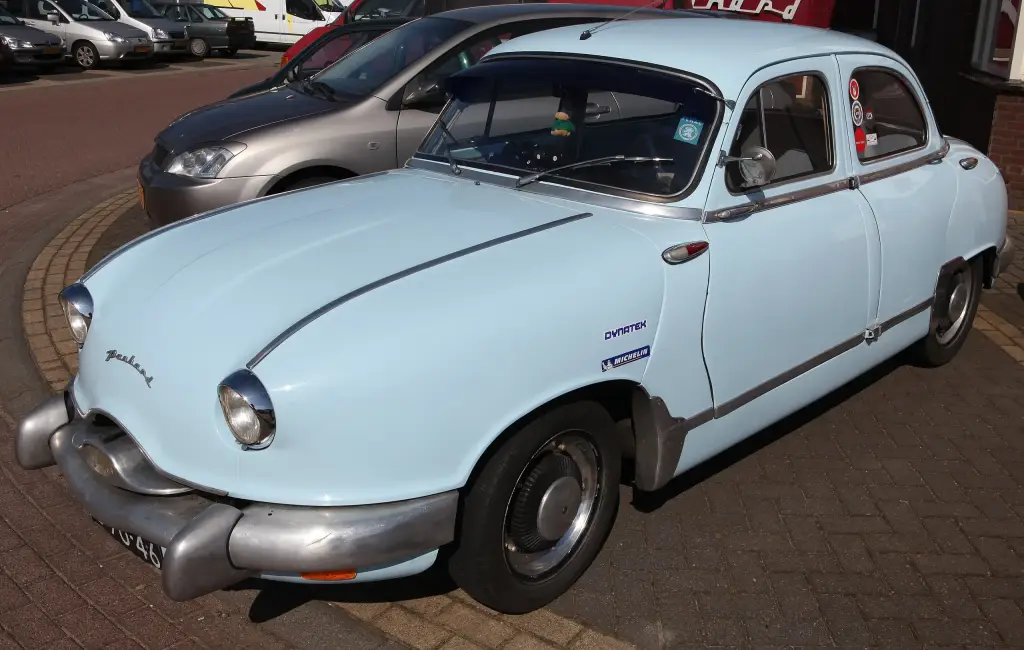
The Panhard Dyna Z is a lightweight motor car produced by Panhard of France from 1954 to 1959. It was first shown to the press at a Paris restaurant, Les Ambassadeurs, on 17 June 1953 and went into production the following year. In 1959 it was replaced by the Panhard PL 17.
Panhard Dyna Z at a glance
| Maker | Panhard, Paris |
|---|---|
| Production | 1954–1959 |
| Presented | 17 June 1953, Paris |
| Predecessor | Panhard Dyna X |
| Successor | Panhard PL 17 |
| Body | aluminium at first, steel from September 1955 |
| Engine | 851 cc air-cooled flat-twin |
| Power | 42 or 50 hp (37 kW) in the Tiger |
| Drive | front-wheel drive |
| Gearbox | four-speed manual transaxle, second and third synchromesh |
| Seats | six |
based on one source
History of the Panhard Dyna Z
Panhard was one of the world’s oldest car makers and since 1945 had become known for economical cars. Like Citroën it saw itself as a leader in design, and the Dyna Z was full of unusual engineering choices. It replaced the Dyna X in 1954 and was later developed into the similar PL 17, launched in 1959.
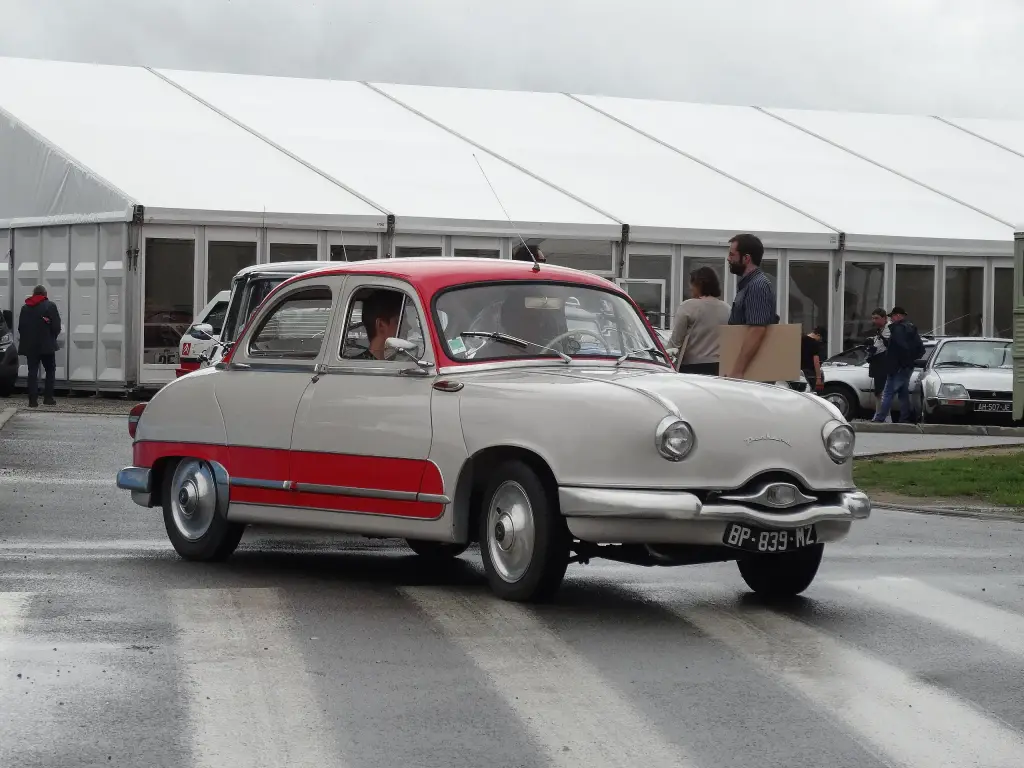
Like its predecessor, the Dyna Z had an aluminium body, at first with steel tube subframes front and rear joined by steel plate reinforcements in the sills. Aluminium had been chosen when a collapse in demand for fighter aircraft left a glut of the metal, but the relative cost advantage of sheet steel rose steadily, and the original costings had ignored the waste left when body panels were cut from aluminium coils. In summer 1954 the cost penalty had become unsustainable, and from September 1955 the Type Z1 cars switched to steel bodywork, although the door shells, boot lid and bonnet were still aluminium at that stage. The change imposed an instant weight penalty of 123 kg and had to be accompanied by a redesign of the front suspension and a change of shock absorbers, but the savings came too late to avoid Panhard’s refinancing agreement with Citroën in April 1955.
In 1955 Citroën took a 25 per cent holding in Panhard’s automobile business, and during the next two years the dealer networks of the two firms were integrated. That gave the Dyna Z, in its final years, a level of market access its predecessor had never enjoyed, and sales benefited.
By 1958 only the bumpers, fuel tank, engine cooling shroud and most of the engine and transaxle cases were still aluminium, yet the car remained light for a comfortable six-seater saloon compared with narrower rivals from Peugeot and Simca. Its unusual and very modern design gave it a combination of space, ride comfort, performance and fuel economy at a competitive price, though reliability suffered and the car was troubled by engine and wind noise. The Tiger version had a racing-inspired engine and a full cooling shroud.
Design and features
- Air-cooled flat-twin: 851 cc, mounted at the front and driving the front wheels.
- Light construction: an aluminium body at first, which kept weight low for a six-seat saloon.
- Four-speed transaxle: cable-operated, with synchromesh on second and third and a column shift.
- Space and economy: room for six, a comfortable ride and low fuel consumption at a competitive price.
- Tiger version: a more highly tuned engine with a full cooling shroud, rated at 50 hp.
Panhard Dyna Z versions
- Dyna Z (1954–1955): the original aluminium-bodied car.
- Type Z1 with steel body: from September 1955, still with aluminium doors, boot and bonnet.
- Dyna Z Tiger: the sporting version with a tuned engine and full cooling shroud.
- Late cars: by 1958 only a handful of components were still made of aluminium.
The Dyna Z was replaced by the Panhard PL 17 and followed the Dyna X; its aerodynamic shape owed something to the Panhard Dynavia. More cars are in the Panhard collection.
Video: Panhard Dyna Z12 1956
Video on YouTube.
Sources
- Panhard Dyna Z, English Wikipedia: development, body material, 1958 Tiger specifications