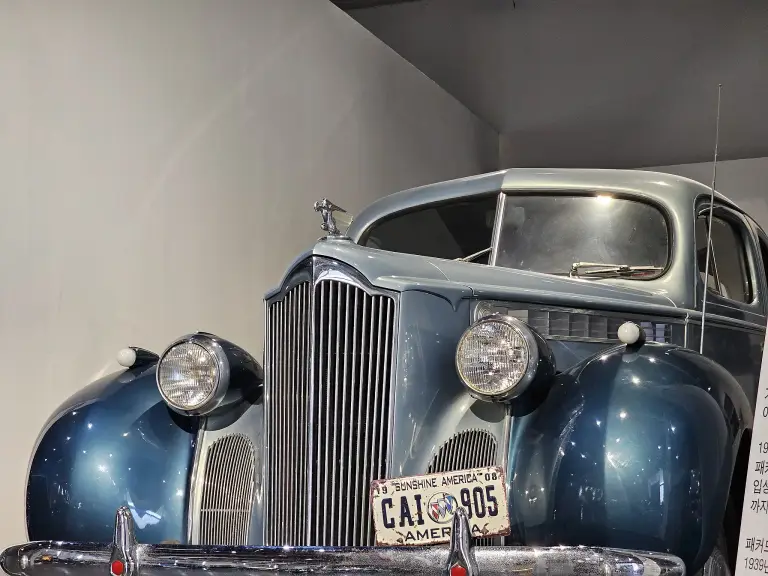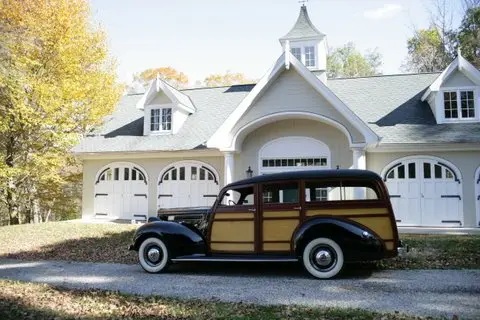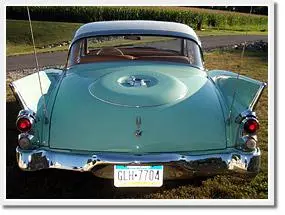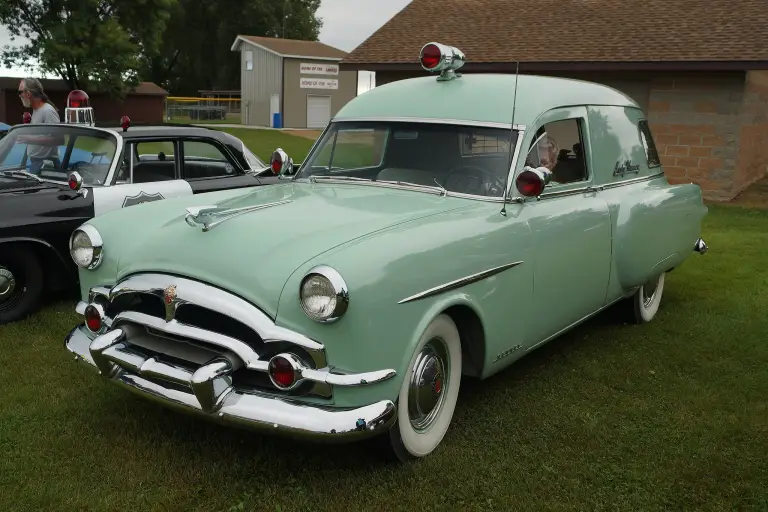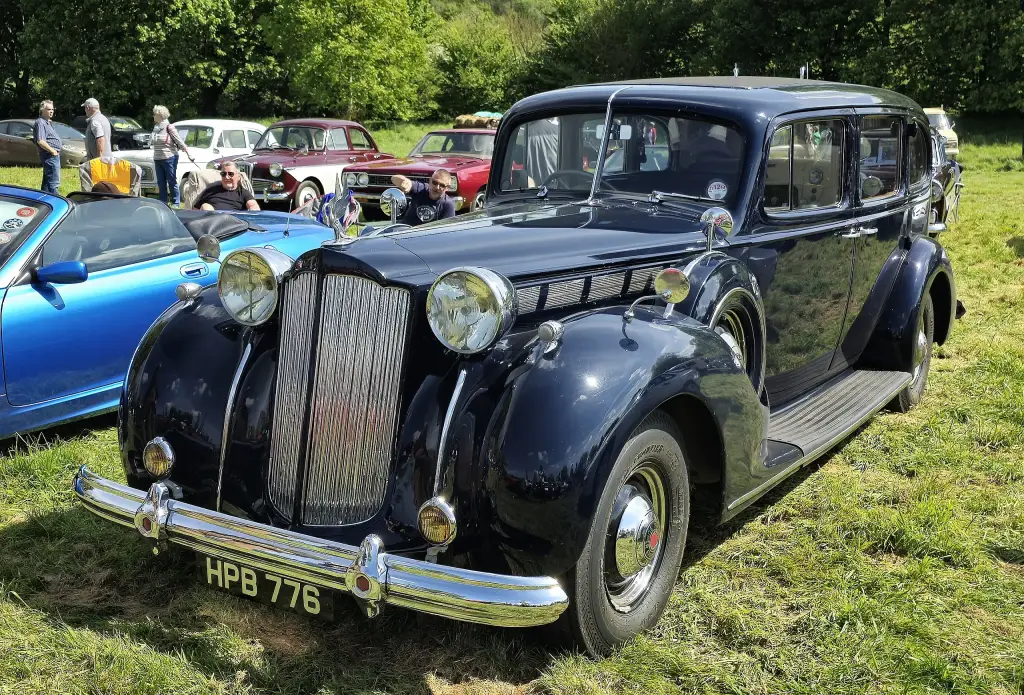
The Packard Super Eight was the bigger of Packard’s two eight-cylinder cars. In 1933–1936 it was a large classic that shared frames and some bodies with the Twelve; in 1937 it became smaller and lighter, and from 1940 it was sold as the Super Eight One-Sixty, the slightly cheaper companion to the Custom Super Eight One-Eighty.
Packard Super Eight at a glance
| Maker | Packard Motor Car Company, Detroit |
|---|---|
| Production | eight-cylinder senior series, 1933–1950 |
| 1933–1936 | large classic sharing frames and bodies with the Twelve |
| 1937 | reduced to a smaller, lighter design |
| 1939 | the Twelve ends; the Custom Super Eight One-Eighty is derived from the Super Eight |
| 1940 | renamed Super Eight One-Sixty |
| Engine 1939–1942 | straight-eight, 160 hp, shared with the One-Eighty |
| 1946–1947 | sold as the Super Clipper |
| 1948–1950 | the Super Eight name returns; a Super Eight Deluxe is added in 1949 |
| 1951 | renamed Packard 300 |
Based on one source, the English Wikipedia article on the Packard Super Eight.
History of the Packard Super Eight
The big classic
From 1933 to 1936 the Super Eight was the larger of Packard’s two eight-cylinder cars, built on frames it shared with the top-model Twelve and available with some of the same body types. It was the car for buyers who wanted the presence of a twelve without the twelve’s running costs, and in those years it was a genuine classic in size and finish.
The 1937 downsizing
For 1937 Packard reduced the Super Eight to a smaller and lighter design. It remained the senior eight-cylinder car, but it no longer shared the Twelve’s chassis. When the Sixteenth Series Twelve was discontinued after the 1939 model year, the top of the range passed to a new Custom Super Eight One-Eighty derived from the Super Eight, and the Super Eight itself was renamed the Super Eight One-Sixty for 1940. The two cars shared most mechanical components, including the 160 hp straight-eight, and were both regarded as senior Packards.
One Sixty, Super Clipper and back again
After 1942 Packard concentrated on the Clipper shape, and until 1947 the senior cars were the Super Clipper and the Custom Super Clipper, carrying on the One-Sixty and One-Eighty tradition. After a heavy facelift the Clipper name was dropped: for 1948 the most senior Custom Super Eight One-Eighty became the Custom Super Eight, while the Super Eight One-Sixty once again became simply the Super Eight. Below it sat a more modestly priced Eight with five body styles, including the wood-panelled Packard Station Sedan.
Badges and grilles
The Clipper Custom Super Eights and Custom Eights were very close relatives of their Super counterparts and were distinguished outside by the absence of the eggcrate grille and by a small chrome moulding under the boot lid on the Supers. For 1949 Packard added a Super Eight Deluxe, which had the Custom Eight’s eggcrate grille but not the rear trim. The whole range was renamed for the 1951 model year, when the Super Eight became the Packard 300.
Design and features
- Shared with the Twelve: the 1933–1936 cars used the twelve-cylinder frame.
- 160 hp straight-eight: the engine shared with the Custom Super Eight One-Eighty.
- Senior status: the Super Eight and One-Sixty were the traditional Packard luxury cars.
- Grille detail: Supers went without the eggcrate grille of the Custom models.
Packard Super Eight versions
- Super Eight (1933–1936): the large classic on the Twelve’s frame.
- Super Eight (1937–1939): the smaller, lighter design.
- Super Eight One-Sixty (1940–1942): the renamed senior eight.
- Super Clipper (1946–1947): the post-war Clipper-bodied car.
- Super Eight and Super Eight Deluxe (1948–1950): the last cars under the name.
- Packard 300 (1951–1952): the renamed successor.
The Super Eight stood below the Custom Super Eight One-Eighty, and for 1951 it turned into the Packard 300. More Packards are in the Packard collection.
Sources
- Packard Super Eight, English Wikipedia: history, 1937 redesign, One-Sixty, post-war naming