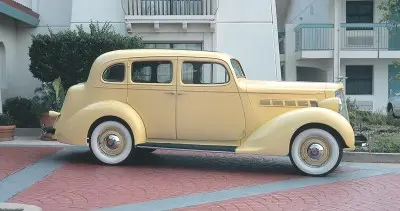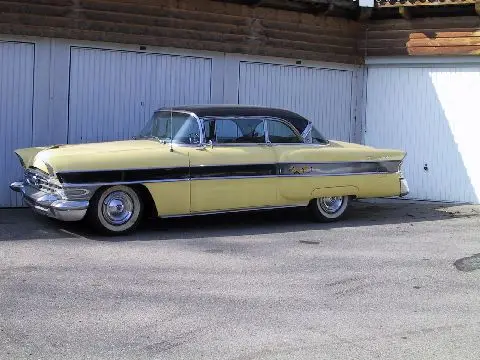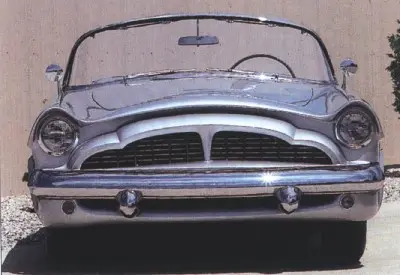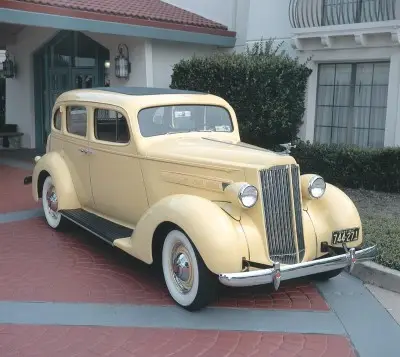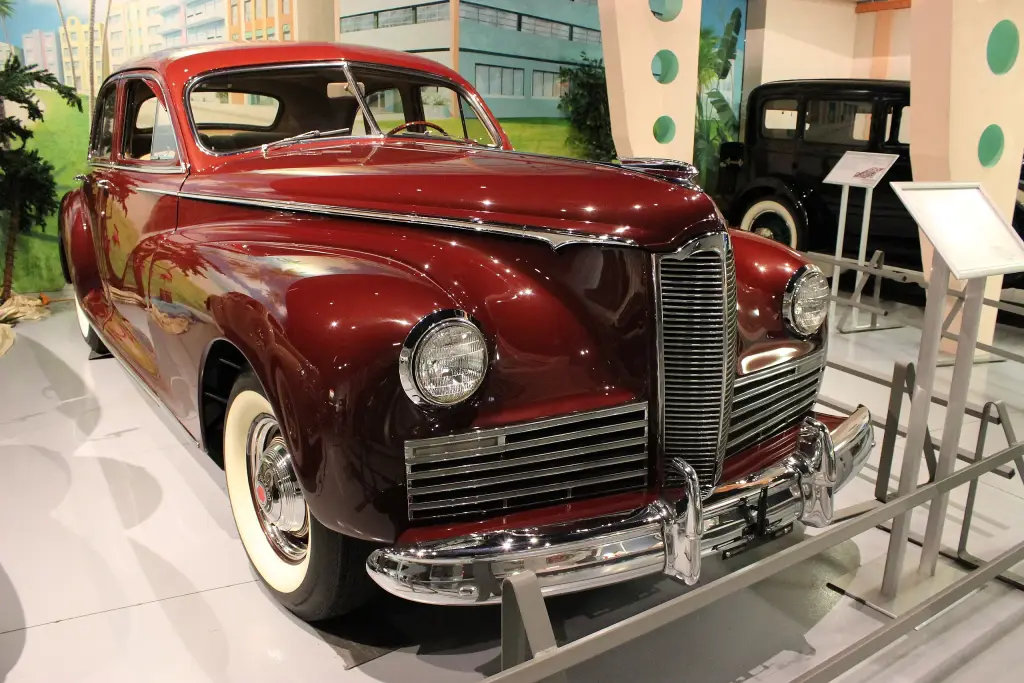
The Packard Clipper was introduced in April 1941 as the most modern car Packard had ever built: a full envelope body, low and wide, on a new chassis. Only 16,600 were made before the war ended civilian production, and by the time the name returned in 1953 it had been moved to Packard’s cheapest line.
Packard Clipper at a glance
| Maker | Packard Motor Car Company, Detroit |
|---|---|
| Model years | 1941–1942, 1946–1947, 1953–1957 |
| Introduced | April 1941 |
| Body at launch | four-door sedan only |
| Aimed at | Buick Roadmaster, Cadillac Series 62, Chrysler Saratoga and New Yorker, Lincoln |
| Built 1941 | 16,600 |
| Halted | 9 February 1942 |
| Post-war cars | 1946–1947, then the 1948–1950 restyle |
| 1953 | name moved to Packard’s lowest-priced line |
| 1956 | a separate marque under Studebaker-Packard |
| 1957 | the last Packards, built in South Bend, carried the name |
Based on one source, the English Wikipedia article on the Packard Clipper, which covers the model’s three separate periods.
History of the Packard Clipper
A new shape for 1941
By the late 1930s Packard’s president Max Gilman knew the company needed something entirely new. The One-Twenty and the One-Ten had saved the firm in the middle of the decade, but the 1938 recession cut sales and Packard’s 76,000 cars in the 1939 calendar year barely reached break-even, leaving a profit of only half a million dollars. Rivals — Cadillac and its LaSalle, the Chrysler Imperial, the Lincoln-Zephyr — were bringing out modern designs. The Clipper was Packard’s answer: a break with traditional styling and a new method of construction, introduced eight months before Pearl Harbor and offered at first only as a four-door sedan.
The war
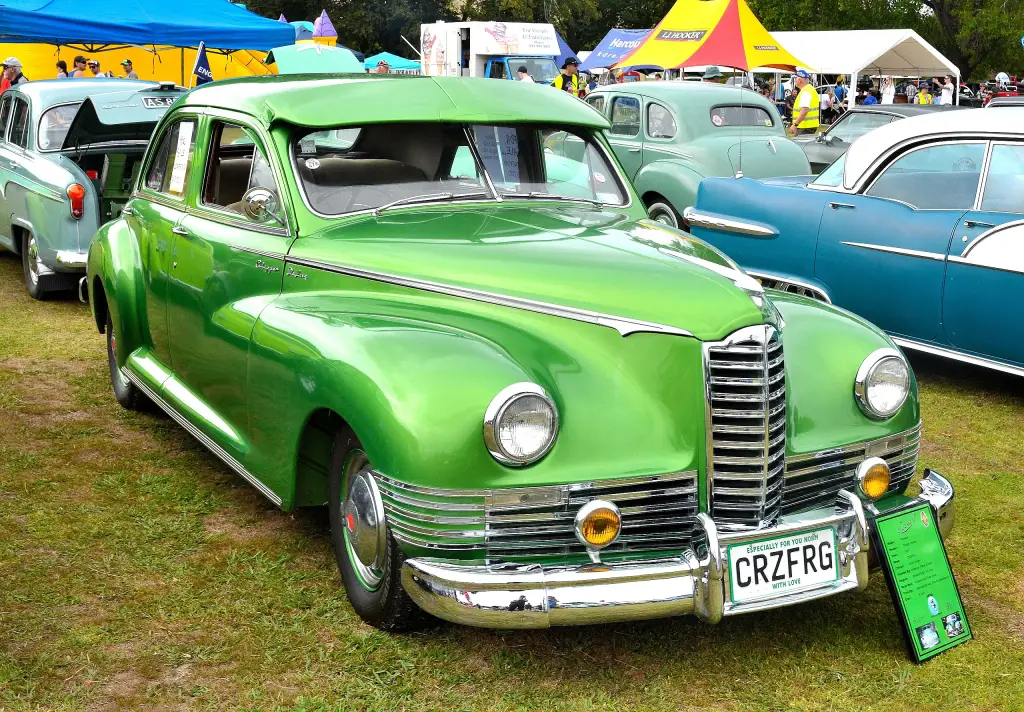
The timing could hardly have been worse. After 16,600 of the 1941 cars and a few thousand 1942s, Detroit stopped building civilian automobiles, and Clipper production ended on 9 February 1942, just as the shape was spreading through the whole Packard range. When cars returned in late 1945, four years had passed and the still-sleek Clipper no longer looked new. Only Packard, Ford with its restyled 1941 cars and Mercury, and Nash with its first unitised body had launched all-new 1941 models that the war made obsolete before their time; the Clipper was the most radical break of the three.
The 1948 restyle
Packard designer John Reinhart wanted to keep and “sweeten” the Clipper’s lines, but management, under pressure from the new post-war shapes of the Big Three, ordered the heavy 1948–1950 body that critics called a bathtub or a pregnant elephant. It sold reasonably at first and then aged badly, and reskinning the car cost as much as a new design would have. The Clipper’s reputation for value fell with it: a 1949 Mercury Eight that cost US$2,000 was worth US$430 five years later, while a 1949 Packard Eight that cost US$2,200 was worth US$375. The journalist Tom McCahill, who had praised the 1946 Clipper Deluxe eight, called the 1948 Packard “a dowager in a Queen Elizabeth hat” and “a goat”.
The name comes back
The Clipper name returned in 1953, but on Packard’s lowest-priced models rather than a full range, which led some buyers to think the Clipper had always been a cheap car. By 1955 the cheaper Clippers were seen as diluting Packard’s luxury image. For 1956 the Clipper was classified as a stand-alone marque, built by the Studebaker-Packard Corporation, and when Packard’s Detroit factory closed in 1956 the marque was discontinued; the cars built at Studebaker’s South Bend plant in 1957 still carried the Clipper name.
Design and features
- Modern body for 1941: a full envelope shape and a new construction method.
- Cut short by war: production began in April 1941 and stopped on 9 February 1942.
- Bathtub restyle: the 1948–1950 body that damaged the car’s reputation.
- Cheap Clipper: from 1953 the name sat on Packard’s lowest-priced line.
Packard Clipper versions
- 1941–1942 Clipper: four-door sedan only, 16,600 built in 1941.
- 1946–1947 Clipper: the pre-war shape, with a Deluxe eight in the range.
- 1948–1950 Clipper: the heavy restyled body.
- 1953–1955 Clipper: Packard’s cheapest models, including the 1955 Panama.
- 1956–1957 Clipper: a separate marque, then a name on the last Packards.
The Clipper came out of the success of the One-Twenty, and for 1953 it took over from the 200. More Packards are in the Packard collection.
Sources
- Packard Clipper, English Wikipedia: 1941 launch, war years, 1948 restyle, 1953–1957 history