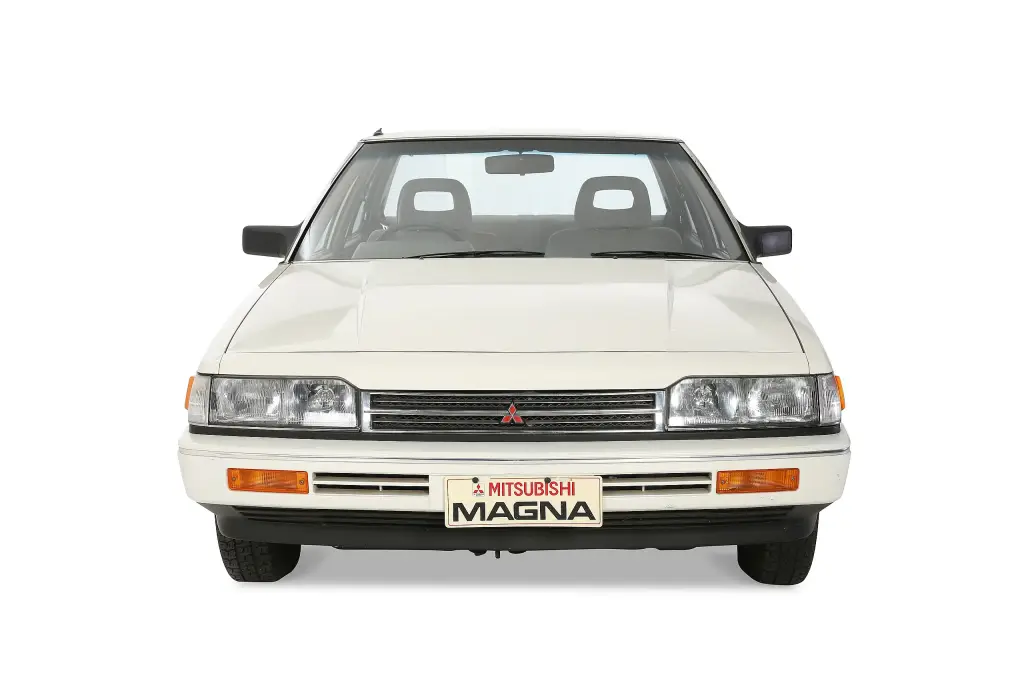
The Mitsubishi Magna is a mid-size car produced in three generations between 1985 and 2005 by Mitsubishi Motors Australia. Each generation was derived from a Japanese platform re-engineered for Australian conditions, and with the luxury Verada version the range became the first Australian-made vehicle exported worldwide in large numbers.
Mitsubishi Magna at a glance
| Maker | Mitsubishi Motors Australia, Clovelly Park, South Australia |
|---|---|
| Production | 1985–2005, three generations |
| First series | TM, April 1985 |
| Development cost | a claimed A$50 million |
| Base | fifth-generation Japanese Galant, widened by 65 mm |
| First engine | 2.6-litre 4G54 Astron II four, 85 kW |
| Wagon | added June 1987 |
| Second generation | 1991, with the Verada and a V6 |
| Engines | Astron II four, then 6G72 and 6G74 Cyclone V6 |
| Exports | mainly as the Mitsubishi Diamante |
| Replaced by | Mitsubishi 380 in 2005 |
Based on one source: the English Wikipedia article on the Mitsubishi Magna, of which the material available describes the first generation in most detail.
History of the Mitsubishi Magna
A wider Galant
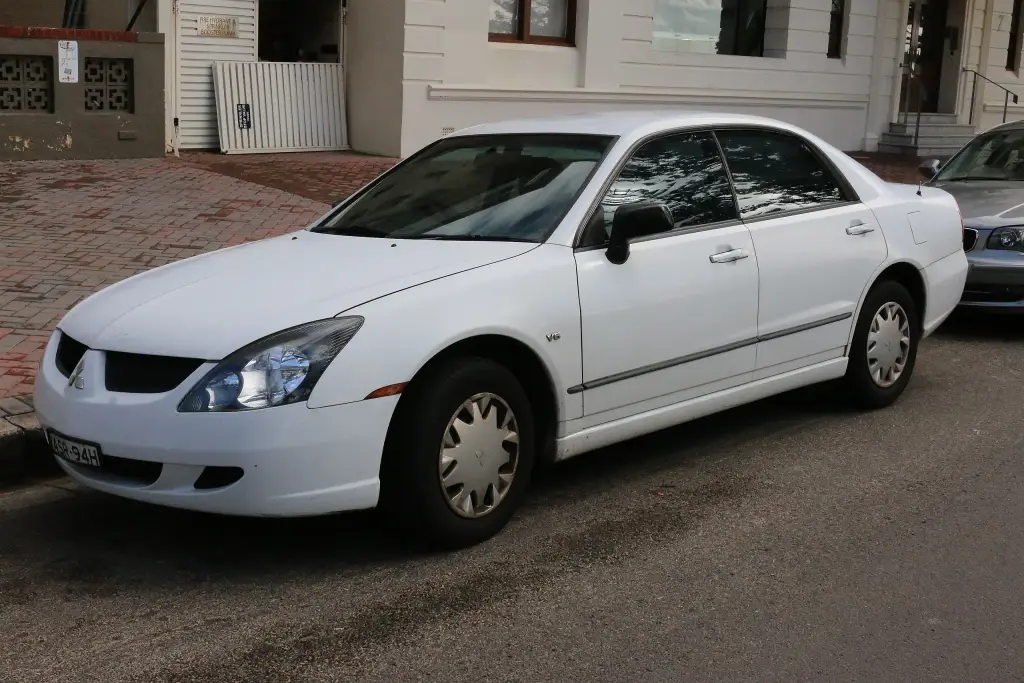
Mitsubishi developed the Magna as a replacement for the rear-wheel-drive Sigma. Until then the largest local Mitsubishi had been the Chrysler Valiant, inherited when Mitsubishi took over Chrysler Australia in 1980, but the Valiant went out of production the following year and the medium-sized Sigma became the company’s biggest offering. Mitsubishi Australia believed that width was crucial to Australian buyers, who traditionally favoured large cars, so former Chrysler engineers took the fifth-generation Japanese Galant Sigma of August 1983 and spliced an extra 65 mm of width through its body, strengthening it for local roads. The project cars were codenamed YF and YFW, W for wide, and the production car was named Magna from the Latin magnus, meaning big.
Apart from the wider body the styling and side profile were close to the Japanese donor, and doors, guards and pillars shared tooling. Although the Magna was smaller and lighter than the Ford Falcon and Holden Commodore, its front-wheel-drive layout gave more interior space. Because the widening added little weight and the footprint stayed small, a large four-cylinder engine could replace the sixes used by Holden and Ford, even though fuel economy was not much better: the official figures were 11.0 l/100 km in the city and 7.8 l/100 km on the highway, with a drag coefficient of 0.36. The approach worked, and the Magna competed with the Toyota Corona, Holden Camira, Nissan Bluebird, Ford Telstar and the larger Commodore.
TM, TN and TP
The Magna reached Australia in April 1985 after a claimed A$50 million development programme, built at Tonsley Park in South Australia, with a station wagon added in June 1987. The first series was the TM, with the 1987 and 1989 updates called TN and TP. It used the Australian-made 2.6-litre transversely mounted 4G54 Astron II four, an eight-valve single-overhead-camshaft design with hydraulic mounts and Mitsubishi’s Silent Shaft counterbalancing, producing 85 kW at 5,000 rpm and 198 Nm at 3,000 rpm. TM cars were carburetted, and the ECI Multi electronic fuel injection of the TN raised output to 93 kW.
The Magna came with a five-speed manual or a four-speed ELC automatic with electronic control and overdrive, although the Executive and Elite models were automatic only. Front suspension used MacPherson struts and the rear a three-link torsion beam axle with coil springs, while wagons had a four-link beam axle. Between 1985 and 1990 Mitsubishi Australia sold almost 209,000 Magnas. The TM range began with the GLX, SE and Elite, and in August 1986 it was expanded.
Verada, V6 and exports
The second generation of 1991 brought a V6 engine and a luxury variant called the Verada, and the Magna and Verada became the first Australian-made vehicle exported worldwide in large numbers, mostly as the Mitsubishi Diamante. The third and final generation arrived in 1996, gained all-wheel drive from 2002 and received a substantial styling update in 2003. The cars were built at Clovelly Park, and most of their engines, including the Astron II and the later Cyclone V6 units coded 6G72 and 6G74, were made at Lonsdale in South Australia.
The Magna and Verada were replaced by the Mitsubishi 380 in 2005, which ended passenger car production in Australia for the company.
Design and features
- Widened Galant: 65 mm added through the body for Australian buyers.
- Big four: the 2.6-litre Astron II instead of a six-cylinder engine.
- Verada: the luxury version from the second generation, exported as the Diamante.
- Local engines: built at Lonsdale, South Australia.
- Twenty years: three generations from 1985 to 2005.
Mitsubishi Magna versions
- TM (1985): the first Magna, GLX, SE and Elite.
- TN (1987) and TP (1989): updates, with fuel injection on the TN.
- Wagon (1987): four-link beam axle estate.
- Second generation (1991): V6 engines and the Verada.
- Third generation (1996): all-wheel drive from 2002.
- Verada: luxury derivative sold abroad as the Diamante.
The Magna was based on the Galant and exported as the Diamante, and it was replaced by the 380. More cars are in the Mitsubishi collection.
Sources
- Mitsubishi Magna, English Wikipedia: development, first generation, engines, exports