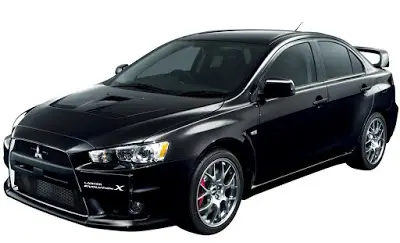
The Mitsubishi Lancer was produced from 1973 until 2024 in ten generations. Over six million were sold between 1973 and 2008, and the car was marketed as the Colt Lancer, Dodge Colt, Plymouth Colt, Chrysler Valiant Lancer, Eagle Summit and Mitsubishi Galant Fortis in different countries and periods.
Mitsubishi Lancer at a glance
| Maker | Mitsubishi Motors |
|---|---|
| Production | 1973–2024 |
| Generations | ten |
| Sales | over six million by 2008 |
| First generation | A70, February 1973 |
| First-generation bodies | two- and four-door sedans, hardtop coupé, estate |
| First-generation engines | 1.2, 1.4 and 1.6 litres |
| Rally | 1600 GSR won the Safari Rally twice and the Southern Cross four times |
| Celeste | hatchback coupé added in February 1975 |
| Second generation | Lancer EX, 1979 |
| Japanese name since 2007 | Galant Fortis |
| End | Taiwan production ended in 2024 |
Based on one source: the English Wikipedia article on the Mitsubishi Lancer, of which the material available describes the first two generations in detail.
History of the Mitsubishi Lancer
The A70
The first Lancer was launched in February 1973 to fill the gap between the Minica kei car and the larger Galant. The sporting 1600 GSR began the Lancer’s long rally history, winning the Safari Rally twice and the Southern Cross Rally four times. Four body styles were offered: two- and four-door sedans, a two-door hardtop coupé and a five-door estate that lasted until March 1984, when the front-wheel-drive Lancer and Mirage van replaced it. Engines were 1.2, 1.4 and 1.6-litre fours.
The car was sold under many names: Dodge Colt in the United States, Plymouth Colt in Canada, Dodge Lancer in some Latin American countries, Chrysler Valiant Lancer in Australia and Colt Lancer in some European markets.
The Celeste
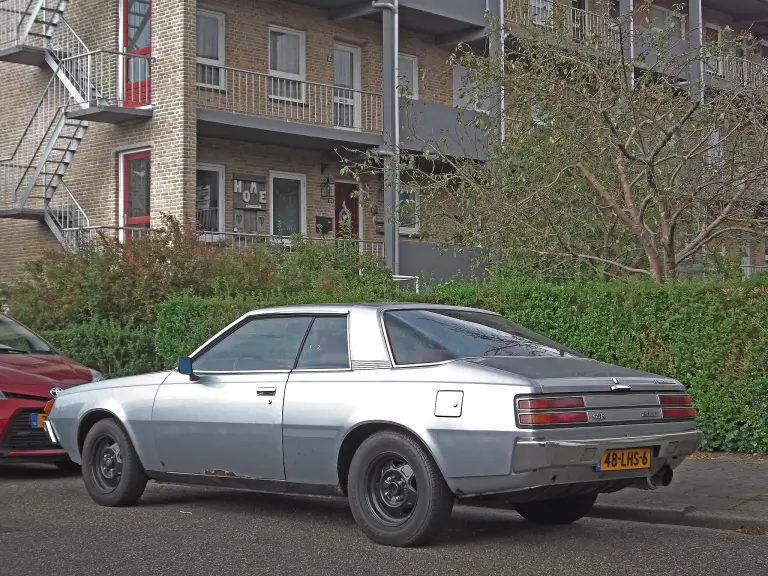
In February 1975 the range gained a hatchback coupé called the Lancer Celeste, which succeeded the Galant FTO. It was also called the Mitsubishi Celeste in New Zealand or the Colt Celeste in some markets, and was sold as the Chrysler Lancer in Australia, the Dodge Lancer Celeste in El Salvador, the Plymouth Arrow in the United States and the Dodge Arrow in Canada. It started with 1.4 and 1.6-litre engines, a 2.0-litre version followed, and the American Plymouth Fire Arrow had a 2.6-litre four. The Celeste was facelifted in 1978 with square headlights and bigger, squarer bumpers, and production ended in July 1981 before the front-wheel-drive Cordia replaced it in early 1982.
The Lancer EX
In 1979 the Lancer EX was presented in Japan, with revised styling and integrated plastic bumpers reflecting the recently introduced Galant and Sapporo. Only a four-door sedan was offered, while the previous Celeste coupé and the estate and van carried on for a few more years. It was more spacious and grew in every dimension. At first there were two engines: a 1.4-litre MCA-Jet unit with Silent Shaft technology and 80 PS, and a 1.6-litre with 85 PS. The MCA-Jet cylinder head used a small jet valve to introduce an extra swirl of air for a cleaner and more complete burn, and the Silent Shaft system used two counter-rotating balance shafts to cancel the vibration of an inline four.
The 1.8-litre Sirius 80 engines arrived in 1980, along with a turbocharged unit of 135 PS; an intercooler raised it to 160 PS in 1983. In New Zealand Todd Motors assembled the EX from 1980 with a 1.6-litre carburettor engine and a smaller 1.2 for the fleet market, and it was replaced there by the front-wheel-drive Tredia in 1982. In Indonesia the EX was built locally by PT Krama Yudha Kesuma Motor with the 1.4-litre 4G33 from the previous generation in a single SL trim. In Europe the EX sold well, its restrained styling matching European taste better than the fussy predecessor, and it was shown at the Frankfurt Show in 1979 with a 1.2-litre option for local tax rules.
Later generations
Eight more generations followed between 1982 and 2024, including the front-wheel-drive cars of the 1980s, the Lancer Evolution rally saloons from 1992 and the Galant Fortis name used in Japan from 2007. Mitsubishi ended Lancer production worldwide in August 2017 except in Taiwan, where a Chinese-market facelift by Pininfarina kept the car alive until production ended in 2024 and the nameplate closed after 51 years.
Design and features
- Ten generations: from the A70 of 1973 to the last Taiwanese cars of 2024.
- Rally record: the 1600 GSR won the Safari Rally twice and the Southern Cross four times.
- Many badges: Colt Lancer, Dodge Colt, Chrysler Valiant Lancer and Galant Fortis.
- MCA-Jet and Silent Shaft: the emissions and refinement technology of the EX.
- Celeste coupé: the hatchback that succeeded the Galant FTO.
Mitsubishi Lancer versions
- A70 (1973): first generation in four body styles.
- 1600 GSR: the rally homologation model.
- Lancer Celeste (1975): hatchback coupé, including the Plymouth Arrow.
- Lancer EX (1979): second generation with MCA-Jet engines.
- Lancer Evolution (1992): the rally-derived saloon line.
- Galant Fortis (2007): the Japanese name of the later Lancer.
The Lancer’s sporting branch is described in the Lancer Evolution page, and its coupé relative in the Celeste and Cordia pages. More cars are in the Mitsubishi collection.
Sources
- Mitsubishi Lancer, English Wikipedia: generations, first and second generation, markets