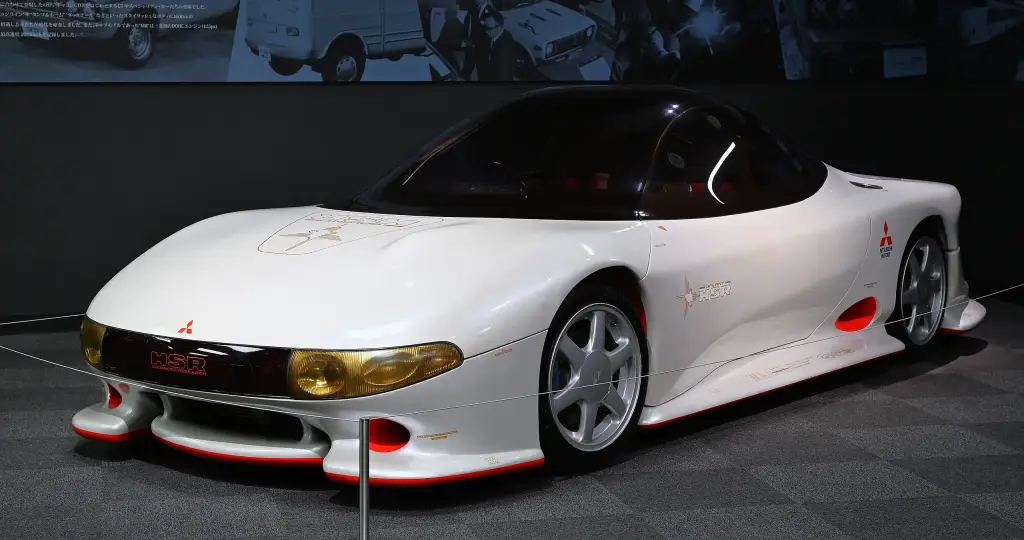
The Mitsubishi HSR, short for Highly Sophisticated-transport Research, is a series of concept cars shown by Mitsubishi Motors through the late 1980s and 1990s. Six distinct versions appeared every two years to coincide with the Tokyo Motor Show, each identified by a Roman numeral after the original.
Mitsubishi HSR at a glance
| Maker | Mitsubishi Motors |
|---|---|
| Shown | 1987 to 1997, six cars |
| Occasion | Tokyo Motor Show, every two years |
| Meaning | the acronym changed over the years |
| HSR (1987) | 2.0-litre turbo, 295 PS, claimed 300 km/h |
| HSR-II (1989) | active aerodynamics, Cd 0.20 to 0.40 |
| HSR-III (1991) | 1.6-litre V6, 180 PS |
| HSR-IV (1993) | four-wheel drive with all-wheel ABS |
| HSR-V (1995) | first Mitsubishi GDI engine |
| HSR-VI (1997) | 2.4 GDI, four-wheel steering, automated driving |
Based on one source: the English Wikipedia article on the Mitsubishi HSR, which describes the six concepts one by one.
History of the Mitsubishi HSR
Hi-speed Running Research
The first HSR of 1987 was a showcase for Mitsubishi’s integrated electronic systems, which controlled drivetrain, suspension, steering, brakes and driving position automatically according to driving conditions or weather. It was powered by a 2.0-litre 16-valve turbocharged engine of 295 PS and had a claimed maximum speed of 300 km/h. At that stage the letters stood for Hi-speed Running Research.
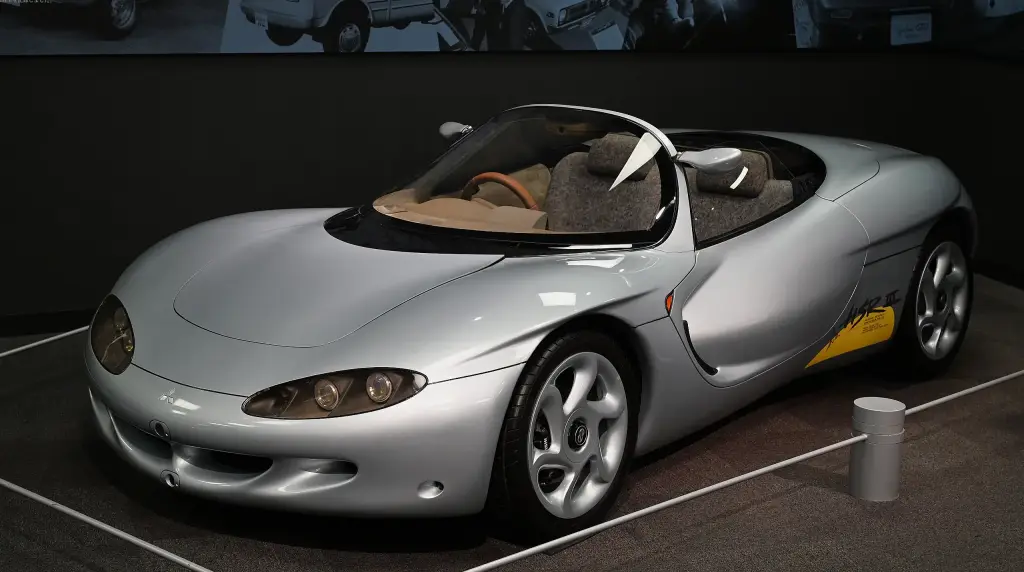
The second car, HSR-II of 1989, concentrated on active aerodynamics, with movable fins and spoilers that gave a drag factor varying from 0.20 to 0.40 depending on the setup. Much of that technology reached the Mitsubishi HSX, the precursor of the GTO sports car, and the HSR-II later appeared in the Gran Turismo 4, 5 and 6 games.
Small is beautiful
The HSR-III of 1991 was powered by the 180 PS 6A10 1.6-litre V6, the world’s smallest mass-produced V6, under the themes Human Scale Technology and Small is beautiful. It continued the active aerodynamics of the HSR-II and added a flexible skin on the rear spoiler called an elastic aerotail. Moving away from the overtly sporting earlier cars, it also emphasised cleanliness and recyclability, with every body part marked for easy recycling. The acronym now stood for Human Science Research.
The HSR-IV of 1993 used a modulated-displacement version of the same 1.6-litre V6 with 180 PS in a four-wheel-drive sports car with an all-wheel anti-lock braking system.
Direct injection and automation
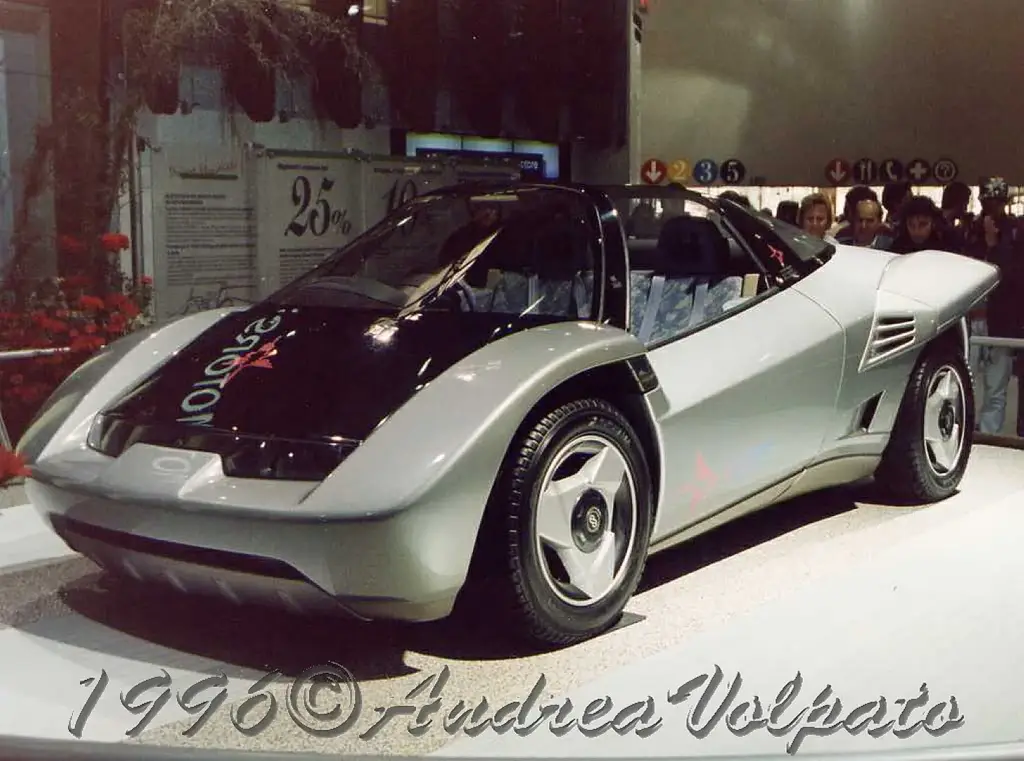
The HSR-V of 1995 was a targa-topped sports car with a folding hardtop roof, and it introduced Mitsubishi’s gasoline direct injection in its ICDIGE engine. The final car, the HSR-VI of 1997, had a 2.4-litre version of the GDI engine and combined four-wheel steering, active yaw control and traction control with an automated driving system.
The six cars trace the company’s priorities through a decade: electronics and speed at first, then aerodynamics, then small engines and recyclability, and finally direct injection and driver assistance.
Design and features
- Six concepts: one every two years from 1987 to 1997.
- Active aerodynamics: the HSR-II’s movable fins and spoilers.
- Small V6: the 1.6-litre 6A10 in the HSR-III and IV.
- First GDI: direct injection debuted in the HSR-V.
- Automated driving: the HSR-VI could drive itself.
Mitsubishi HSR versions
- HSR (1987): 295 PS turbo and integrated electronic control.
- HSR-II (1989): variable aerodynamics from Cd 0.20 to 0.40.
- HSR-III (1991): 1.6 V6, recyclable body, elastic aerotail.
- HSR-IV (1993): four-wheel drive and all-wheel ABS.
- HSR-V (1995): targa sports car with the first GDI engine.
- HSR-VI (1997): 2.4 GDI with automated driving.
The HSR led to the 3000GT through the HSX concept, and its diesel successor idea appeared in the Concept-RA. More cars are in the Mitsubishi collection.
Sources
- Mitsubishi HSR, English Wikipedia: the six concepts and their technology