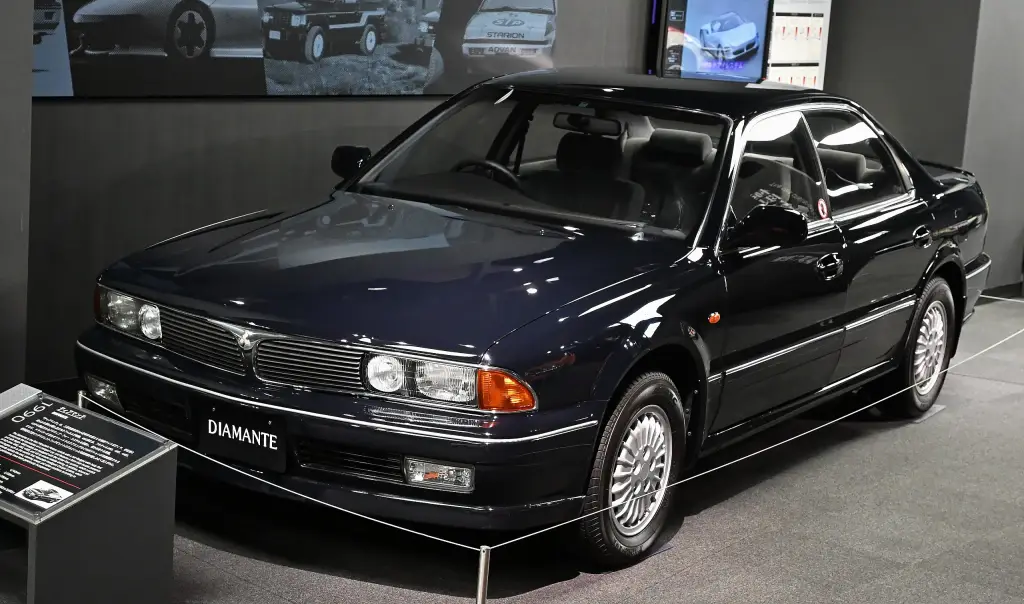
The Mitsubishi Diamante is an executive car manufactured from 1990 to 2005. The first series was a four-door hardtop shown at the Tokyo Motor Show in 1989 and created by lengthening the Galant, and it won Japan Car of the Year in 1990.
Mitsubishi Diamante at a glance
| Maker | Mitsubishi Motors |
|---|---|
| Production | 1990–2005 |
| First shown | Tokyo Motor Show, 1989 |
| On sale in Japan | May 1990 |
| Award | Japan Car of the Year 1990 |
| Basis | Galant, lengthened by 6.6 cm |
| Bodies | four-door hardtop, six-window sedan, estate |
| Engines | 2.0, 2.5 and 3.0-litre V6 |
| Drive | front-wheel drive or all-wheel drive |
| Related | Sigma, Magna and Verada, 3000GT |
| Name | from the word for diamond, after the three-diamond badge |
Based on one source: the English Wikipedia article on the Mitsubishi Diamante.
History of the Mitsubishi Diamante
Created to answer the Honda Legend
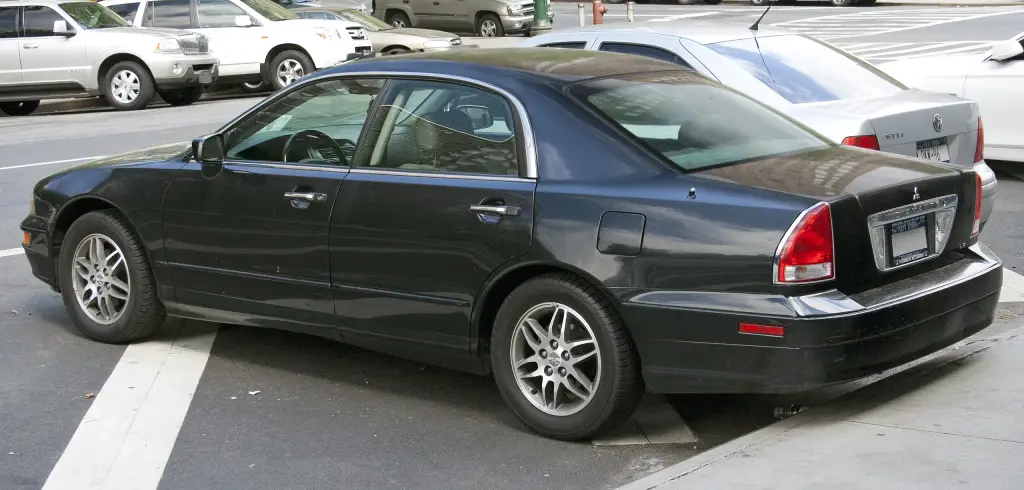
The Diamante was made by splicing an extra 6.6 cm into the middle of the Mitsubishi Galant, which had itself won Japan Car of the Year in 1987. It was first shown at the Tokyo Motor Show in 1989 and went on sale in Japan in May 1990 through the Car Plaza chain. The name comes from the Spanish, Portuguese and Italian word for diamond, a nod to the three-diamond Mitsubishi badge.
The car was a response to the Honda/Acura Legend, which had surprised manufacturers on its appearance in 1986 and inspired the creation of Lexus and Infiniti as well as a wave of new executive models. Until 1989 vehicle width affected Japanese taxation, and the Diamante, wider than the 1,700 mm breakpoint, would have carried a large penalty against rivals designed just inside that limit; the rule changed in 1989, and in the bubble economy the car became the surprise hit of 1990.
Three bodies and a lot of electronics
The first generation came in three forms. The four-side-window hardtop had frameless windows, was built only in Nagoya and sold only in Japan and North America, and offered four-wheel steering. The six-side-window sedan was sold in Japan as the Sigma, with a slightly taller roof, window sashes and revised front and rear styling; it was exported to Europe and formed the basis of the second-generation Magna and Verada built in Adelaide. The estate was designed and built only by Mitsubishi Australia and arrived in late 1992 for the 1993 model year.
Japanese hardtops were front- or all-wheel drive. Front-wheel-drive cars had MacPherson struts at the front and a multi-link rear, while all-wheel-drive models had double wishbones at the rear, ventilated discs all round, sat 5 mm lower and used a 70-litre tank instead of 72 litres. Three V6 engines of the 6G7 family were offered, of 2.0, 2.5 and 3.0 litres.
The Diamante carried an unusually long list of electronic aids. Chief among them was Preview Distance Control, described as the world’s first autonomous cruise control system, and a traction control system that combined active trace control with traction control, the first integration of the two in the world. Labelled TCL in 1990, it later developed into Mitsubishi’s Active Skid and Traction Control: a computer watched several sensors and, when too much throttle was applied in a corner, adjusted engine output and braking to keep the car on the intended line.
Sigma, Verada and the 3000GT
From 1991 a more conventional Sigma sedan was also built in Japan for the domestic and European markets, and it became the basis of the Australian Magna. Its luxury derivative, the Verada, was sold as the Diamante in export markets including New Zealand and North America a year later, and the estate was exported too, including to Japan. The Diamante platform was also used for the sporty 3000GT.
Design and features
- Stretched Galant: an extra 6.6 cm in the middle of the body.
- Japan Car of the Year 1990: the surprise hit of the bubble years.
- Early driver aids: Preview Distance Control and combined traction and trace control.
- Three bodies: hardtop, Sigma sedan and Australian-built estate.
- Shared platform: also used for the 3000GT.
Mitsubishi Diamante versions
- Four-side-window hardtop: frameless windows, Japan and North America only.
- Sigma sedan: six-window version, also exported to Europe.
- Estate: built by Mitsubishi Australia from late 1992.
- 25V 4WD, 30R 4WD and 30R-SE 4WD: all-wheel-drive models.
- Verada: Australian luxury version sold abroad as the Diamante.
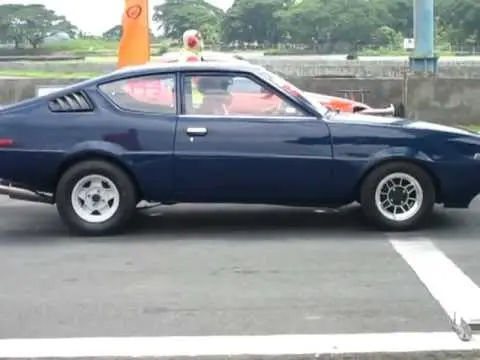
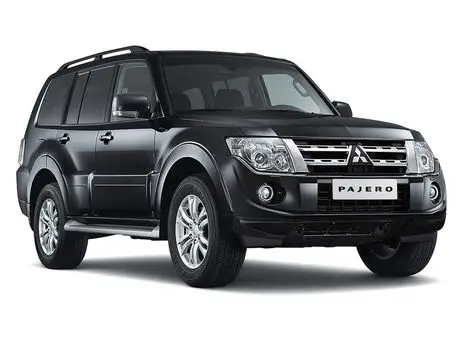
The Diamante was based on the Galant and shared its platform with the 3000GT. Its Australian relatives were the Magna and Verada, and more cars are in the Mitsubishi collection.
Sources
- Mitsubishi Diamante, English Wikipedia: origins, bodies, engines, driver aids, related models