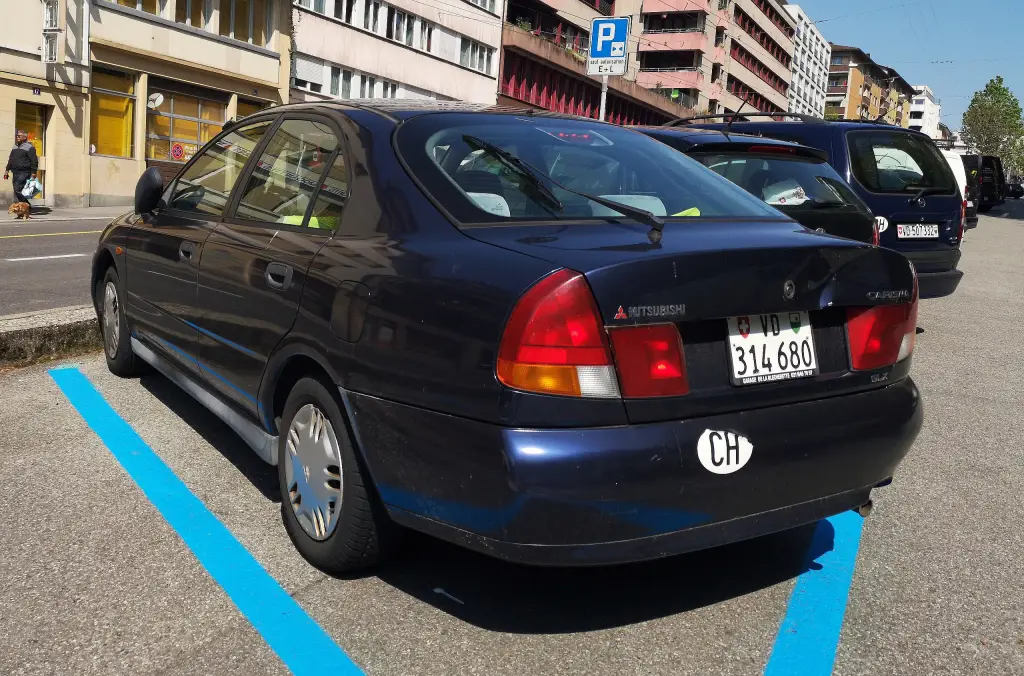
The Mitsubishi Carisma is a large family car produced for Europe between 1995 and 2004. It was developed together with Volvo, shared its chassis with the first-generation Volvo S40 and was built at the NedCar factory in the Netherlands, which the two companies then co-owned.
Mitsubishi Carisma at a glance
| Maker | Mitsubishi Motors, built at NedCar, Born, Netherlands |
|---|---|
| Production | 1995–2004 |
| Bodies | four-door saloon, five-door hatchback |
| Shared chassis | first-generation Volvo S40 |
| Engines | 1.3 to 1.8 petrol; 1.8 GDI from 1998; 1.9 turbodiesel from Renault |
| Diesel output | 90 hp, later 100 hp common-rail DI-D |
| Facelifts | 1999 and 2002 |
| Built | over 350,000 |
| Successor in Europe | Mitsubishi Lancer |
| Name | from English car and Greek kharisma, a divine gift |
Based on one source: the English Wikipedia article on the Mitsubishi Carisma.
History of the Mitsubishi Carisma
Born in the Netherlands
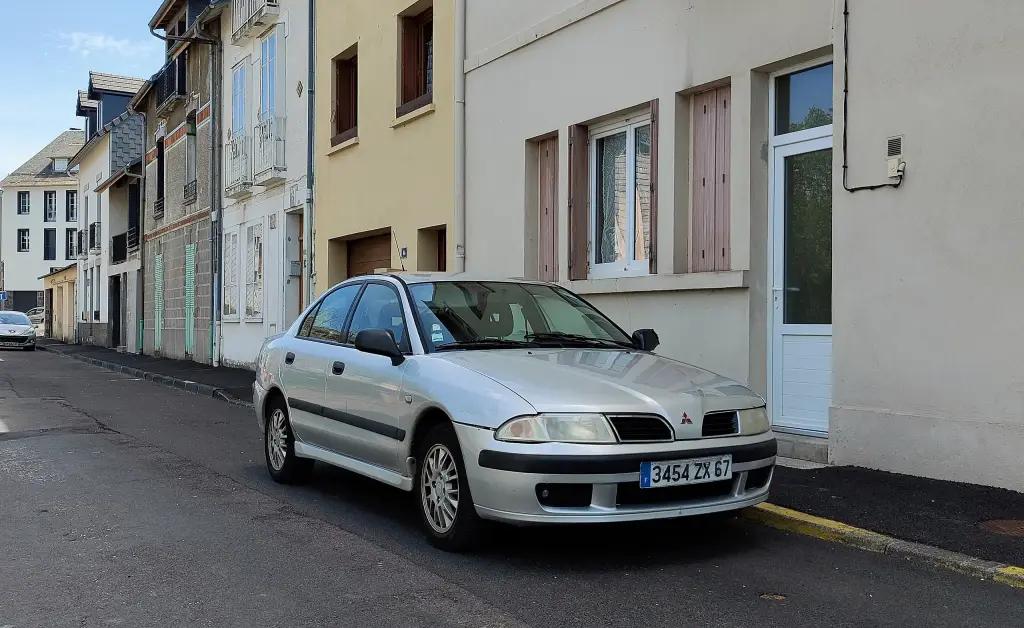
The name combined the English word car with the Greek kharisma, meaning a divine gift. Volume production began in May 1995 and sales started in the Netherlands in June, with the four-door saloon following the next year. The car was available only as a four-door saloon or a five-door hatchback.
The Carisma was Mitsubishi’s first attempt to target the conservative European company car market, where it competed with cars such as the Ford Mondeo, and its design was deliberately neutral as a result. It sat between the Lancer and the Galant in the range.
Engines and updates
The engine range ran from 1.3 litres, added later in the car’s life, to 1.8 litres, with a 1.8-litre direct-injection petrol engine from 1998. Mitsubishi claimed the GDI unit gave a 20 per cent saving in fuel consumption, 10 per cent more power and 20 per cent lower greenhouse gas emissions than a conventional 1.8. The 90 hp 1.9-litre turbodiesel came from Renault, later joined by a 100 hp common-rail DI-D version of the same engine as used in Volvo and Renault cars.
A facelift in 1999 brought a new front end, interior, boot lid and rear lights, anti-lock brakes as standard, a wider front track and uprated suspension; the new models were launched in Britain on 1 August 1999. A smaller revision in 2002 added tinted headlights, new alloy wheels and black grilles in place of chrome.
GT, Japan and Proton
In markets where the Lancer was not sold, the Lancer Evolution was rebadged as the Mitsubishi Carisma GT, while France had a special edition of the Carisma also called GT that appeared alongside it in brochures. In Japan the Carisma was sold only for 1996 and 1997 as a 1.8 saloon in L, LX and LS trim through the Car Plaza chain. Proton used the chassis to develop the Proton Waja. Production ended in December 2004 after more than 350,000 cars, and the Lancer took the Carisma’s place in the European range.
Design and features
- Joint development: a chassis shared with the first Volvo S40 and built at NedCar.
- European focus: a neutral design aimed at company car buyers.
- GDI engine: direct injection from 1998 with claimed fuel and emission gains.
- Renault diesel: 90 hp, later 100 hp common-rail.
- Carisma GT: the Lancer Evolution under another name in some markets.
Mitsubishi Carisma versions
- Saloon and hatchback: the only two body styles.
- 1.8 GDI (1998): direct-injection petrol engine.
- 1.9 DI-D: 100 hp common-rail diesel.
- Carisma GT: rebadged Lancer Evolution in markets without the Lancer.
- Japanese 1.8 saloon (1996–1997): L, LX and LS trim.
The Carisma was replaced in Europe by the Lancer, and it sat below the Galant. Its rally relative was the Lancer Evolution, and more cars are in the Mitsubishi collection.
Sources
- Mitsubishi Carisma, English Wikipedia: development, engines, facelifts, production