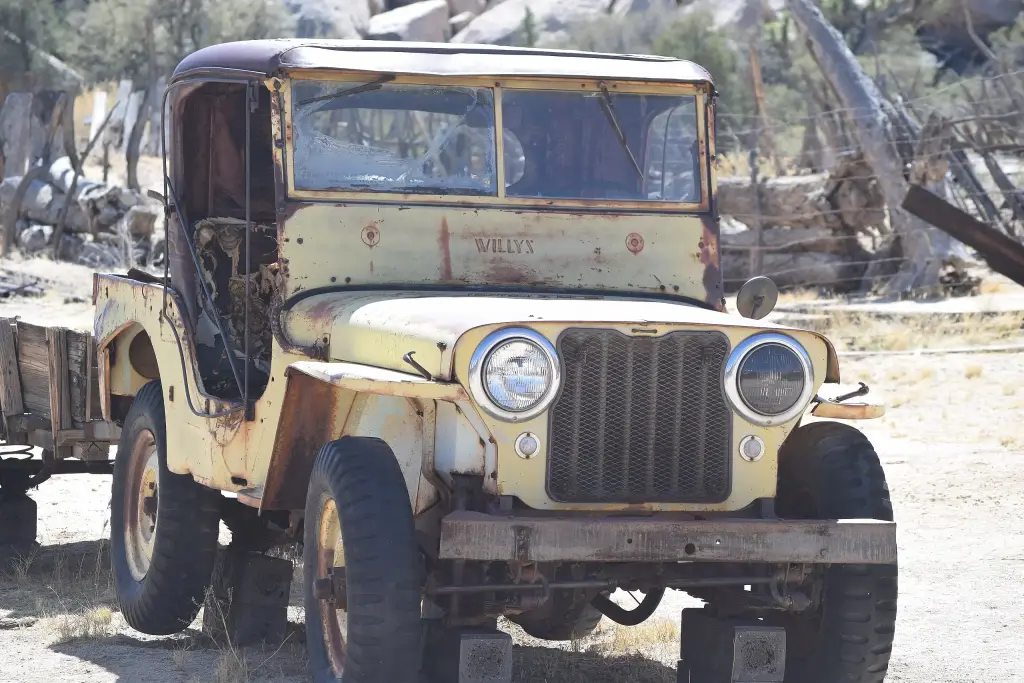
The Mitsubishi Jeep is the Japanese-built version of the Willys Jeep CJ, the civilian four-wheel-drive vehicle produced from 1945 to 1986. This page describes the CJ itself, since the English material available covers the American original rather than the Japanese production details.
Mitsubishi Jeep at a glance
| Original | Willys Jeep CJ, built 1945–1986 |
|---|---|
| First model | 1945 Willys Universal Jeep, CJ-2A |
| Meaning | CJ, civilian Jeep |
| Layout | separate body and frame, live axles with leaf springs |
| Body | open with removable hard or soft top, fold-flat windscreen |
| Drive | part-time four-wheel drive with high and low range |
| Notable change | CJ-5 of 1955 moved to round-fendered bodies |
| CJ-7 (1976) | wheelbase stretched by 10 inches, doors and hardtop common |
| Built | more than 1.5 million |
| Replaced by | Jeep Wrangler in 1987 |
Based on one source: the English Wikipedia article on the Jeep CJ. It describes the American original, not the Japanese licence production, so the Mitsubishi-specific part of the story is not covered here.
History of the Mitsubishi Jeep
From army Jeep to civilian car
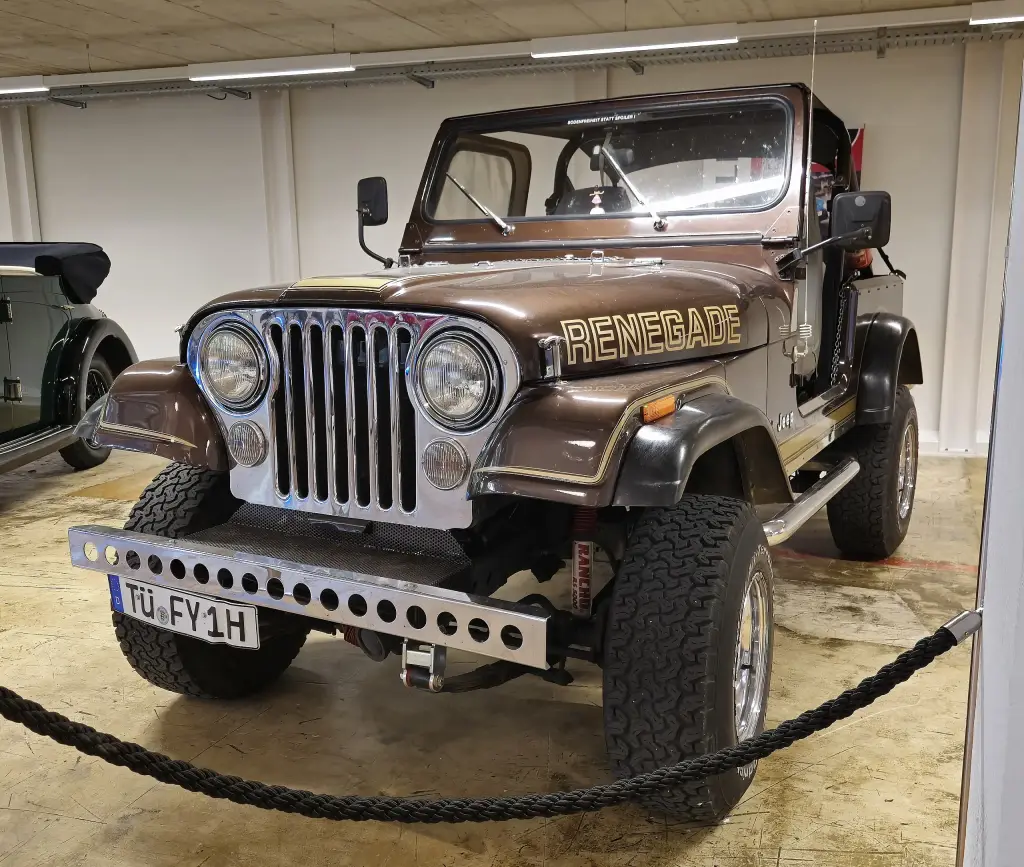
The CJ models were a series of small open-bodied off-road vehicles and compact pickups sold by successive incarnations of the Jeep marque from 1945 through 1986. The 1945 Willys Universal Jeep was the world’s first mass-produced civilian four-wheel-drive car. In 1944 Willys-Overland, the main manufacturer of the wartime military Jeep, built prototypes of a commercial version, the CJ, short for civilian Jeep.
The design was a direct evolution of the wartime Jeep, but the most obvious change was a tailgate, with the spare wheel moved to the side. Beyond civilian amenities, options and legally compliant lighting, the CJ needed a sturdier drivetrain than the military model, because rural buyers expected years of durability rather than the weeks a wartime vehicle had to last.
From then on all CJ Jeeps had a separate body and frame, rigid live axles with leaf springs front and rear, a tapering nose with flared fenders, a fold-flat windscreen and the ability to run without doors. With few exceptions they had part-time four-wheel drive with high and low gearing and open bodies with removable hard or soft tops.
Development through 42 model years
The most significant changes over 42 model years included the move from flat to round-fendered bodies with the CJ-5 of 1955, the arrival of straight-six and V8 engines, automatic gearboxes and different four-wheel-drive systems. The CJ-7 of 1976 stretched the wheelbase by 10 inches and made doors and a removable hardtop common items.
The line ended after 1986, with more than 1.5 million CJ Jeeps built and the same basic body style carried on for 45 years. Widely regarded as America’s workhorse, the CJ has been called probably the most successful utility vehicle ever made. In 1987 the CJ-7 was replaced by the first-generation Jeep Wrangler, which looked very similar, rode on the same wheelbase and carried over important components including leaf springs. A two-wheel-drive relative, the DJ Dispatcher, had been offered from 1956 for hotels, resorts, police and later the United States Postal Service.
Early prototypes
The first CJs were quick conversions of the military MB with a tailgate, lower gearing, a drawbar and a civilian canvas top, and no CJ-1s survive. The CJ-2 of 1944, known as the AgriJeep, was built in at least 40 examples but never sold to the public: the prototypes had tailgates, power take-offs, engine governors, column-shift T90 gearboxes, 5.38 gears and a 2.43:1 low-range transfer case, and were used for testing, probably at agricultural stations. The lessons from them led to the CJ-2A, the first full-production civilian Jeep, built from 1945.
Design and features
- Civilian Jeep: the tailgate and side-mounted spare marked the change from the military MB.
- Simple chassis: separate body and frame with live axles and leaf springs.
- Part-time four-wheel drive: high and low range on almost all models.
- Long career: 42 model years and more than 1.5 million built.
- Wrangler successor: the 1987 Wrangler kept the CJ-7’s wheelbase and leaf springs.
Mitsubishi Jeep versions
- CJ-1 and CJ-2: wartime prototypes, the CJ-2 known as the AgriJeep.
- CJ-2A (1945): the first production civilian Jeep.
- CJ-5 (1955): the round-fendered body.
- CJ-7 (1976): longer wheelbase, doors and hardtop.
- DJ Dispatcher (1956): two-wheel-drive version for fleets.
The Jeep was Mitsubishi’s first four-wheel-drive model, and that line continued with the Pajero and the Pajero Sport. More cars are in the Mitsubishi collection.
Sources
- Jeep CJ, English Wikipedia: CJ history, models, production