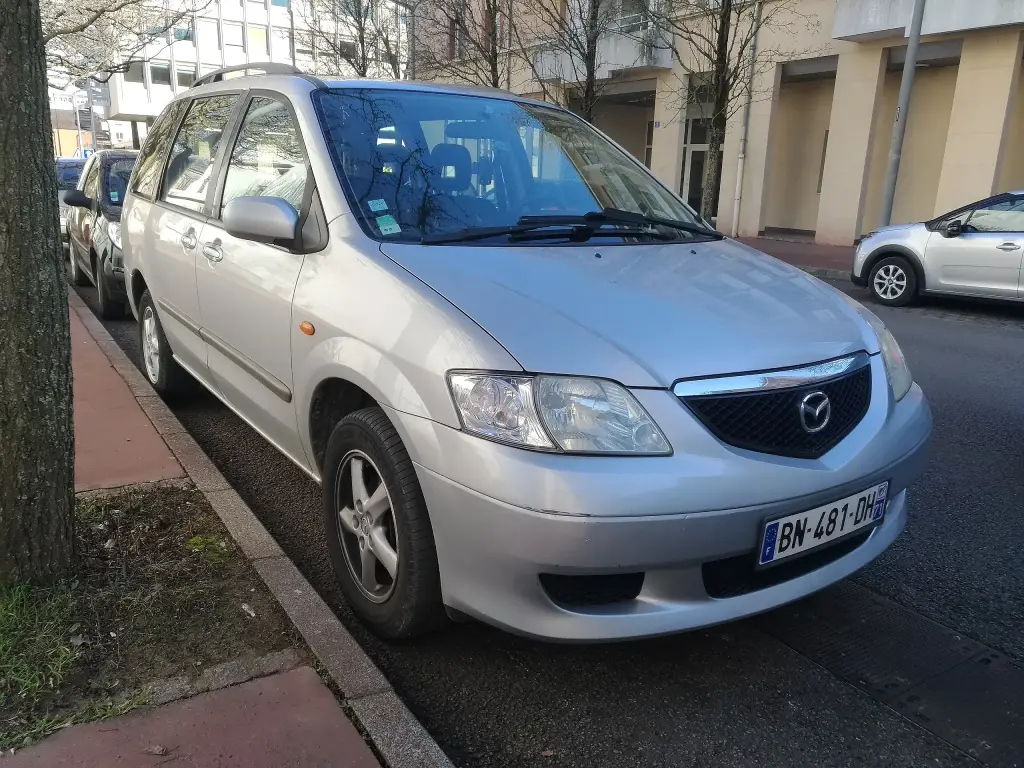
The Mazda MPV, for Multi-Purpose Passenger Vehicle, was Mazda’s first minivan. Introduced in 1988 as a rear-wheel-drive model with optional selectable four-wheel drive, it was replaced in 1999 by a front-wheel-drive version with optional all-wheel drive. More than a million MPVs have been produced.
Mazda MPV at a glance
| First generation | LV, 1988, for the 1989 model year |
|---|---|
| Layout | rear-wheel drive with optional selectable four-wheel drive |
| Platform | based on the large rear-wheel-drive Mazda Luce |
| Japanese launch | January 1990, sold through Efini dealers from 1991 |
| Seating | up to eight with the three-person middle bench |
| Doors | hinged, not sliding; only one rear door at first |
| Second generation | 1999, front-wheel drive with optional all-wheel drive |
| Awards | Car and Driver Ten Best for 1990 and 1991 |
| Built | over one million |
History of the Mazda MPV
The MPV was designed from the ground up as a minivan specifically for the American market and introduced in 1988 for the 1989 model year. It was based on the large rear-wheel-drive Mazda Luce platform, which allowed options such as a V6 engine and four-wheel drive, but the large platform brought liabilities elsewhere: when the car reached Japan in January 1990 its engine displacement and exterior dimensions exceeded the regulations for compact vehicles, so buyers paid extra annual taxes. From 1991 it was sold through Mazda’s Japanese luxury channel, Efini.
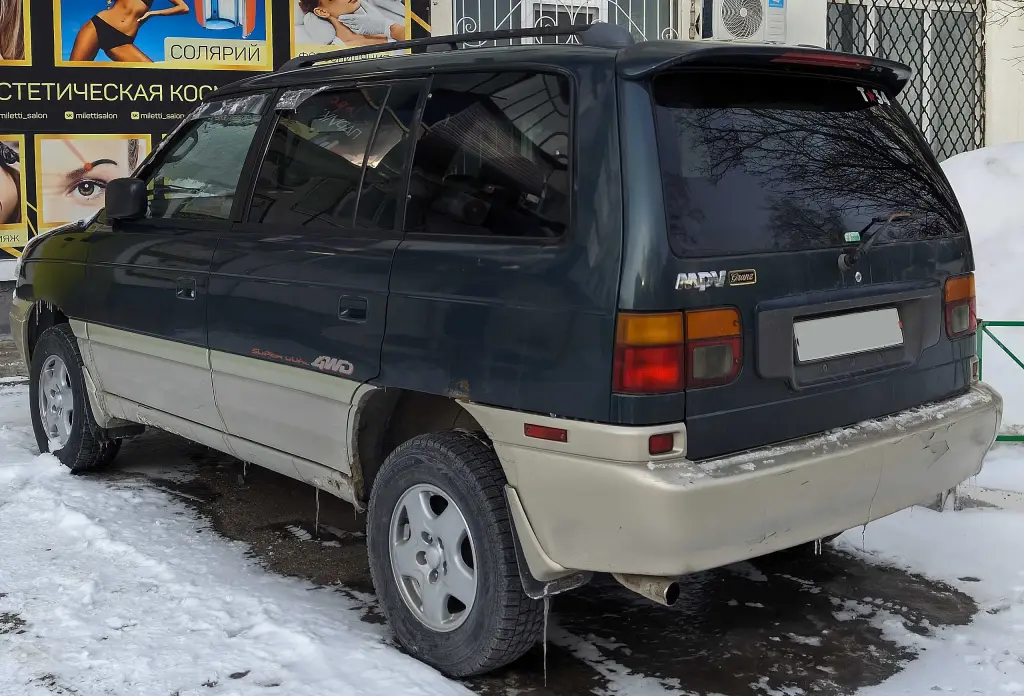
The selectable four-wheel-drive system should not be confused with an all-condition all-wheel-drive system: the MPV could be switched into locked four-wheel drive with a switch on the column gear selector, and a dash-mounted switch controlled the centre differential to lock the power split between the axles. It could be engaged and disengaged while moving but was not for dry roads. The MPV’s efficient use of interior space in a relatively small exterior drew on Mazda’s experience with one-box minivans such as the Bongo. Unlike most rivals it had hinged doors instead of sliding rear doors, and the original had only a single rear door. It was the only MPV generation sold in North America with a manual gearbox, offered from 1989 to 1991, and its middle row could be a three-person bench for eight seats where most minivans seated seven.
The van was named to Car and Driver’s Ten Best list for 1990 and 1991 and appeared among its vehicles for the coming fuel crisis. Sales started strongly but fell away once other makers offered all-wheel drive and V6 engines, with the Toyota Previa, Nissan Quest and Honda Odyssey taking share; crash-test results did not help either. A new Mazda emblem and remote keyless entry came for 1993, a driver’s airbag in early 1993, and a facelift for 1996 added a driver’s-side rear door, a passenger airbag and a longer nose for better crash protection. The second generation of 1999 switched to front-wheel drive with optional all-wheel drive in some markets.
Design and features
- Selectable 4WD: a lockable system with a dash-controlled centre differential, not a permanent all-wheel drive.
- Eight seats: a three-person middle bench where most minivans seated seven.
- Hinged doors: a single rear door at first, unusual among minivans.
- Car and Driver Ten Best: chosen in 1990 and 1991.
Mazda MPV versions
- MPV LV (1988–1999): first generation, rear-wheel drive, optional 4WD and V6.
- Second generation (from 1999): front-wheel drive, optional all-wheel drive.
The MPV sits above the Mazda 5 and Mazda Biante in Mazda’s minivan history, and shares its platform origins with the Mazda Luce. More Mazdas are in the Mazda collection.
Sources
- Mazda MPV, English Wikipedia: first generation, 4WD, seating, awards
- Mazda MPV, German Wikipedia: European versions
- マツダ・MPV, Japanese Wikipedia: Japanese market