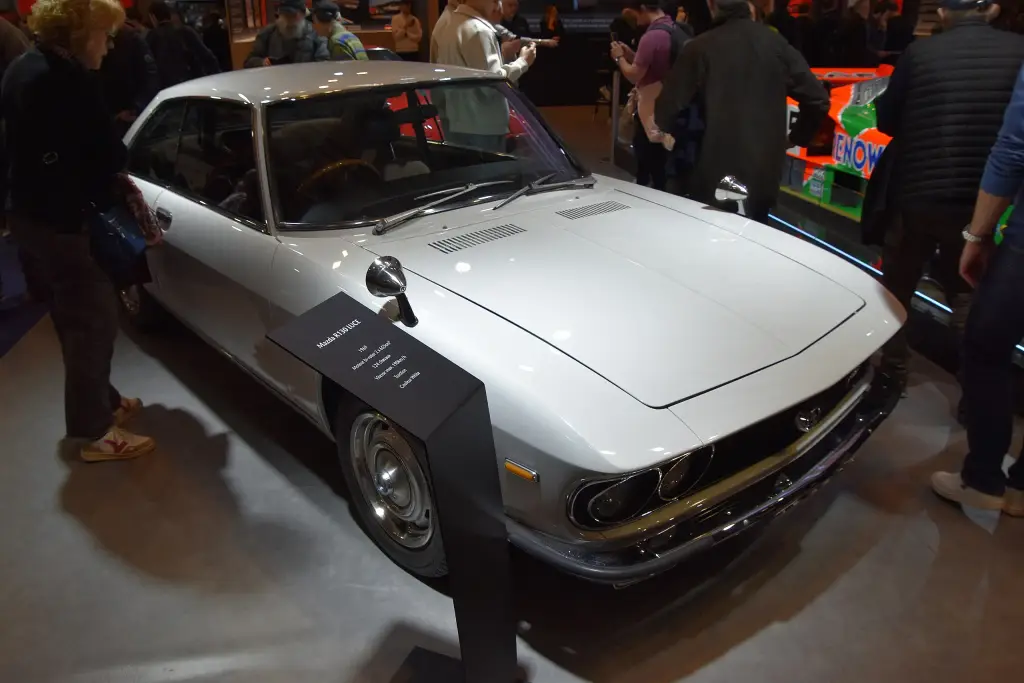
The Mazda Luce was Mazda’s executive car from 1966 until 1991 and, from 1973, the model exported as the Mazda 929. Its name comes from the Italian word for light. The first generations were sold abroad as the Mazda 1500 and 1800, and rotary-engined versions carried the Luce name too.
Mazda Luce at a glance
| Built | 1966–1991 |
|---|---|
| Export names | Mazda 1500 and 1800 (early cars), Mazda 929 (from 1973) |
| Name | from the Italian word for light |
| Design | 1965 Luce 1500 show car by Giorgetto Giugiaro at Bertone |
| Launch | production from July 1966, on sale in August |
| 1500 engine | 1,490 cc SOHC, 78 PS at 5,500 rpm |
| 1500 SS | from June 1967, twin carburettors, 86 PS |
| 1800 engine | 1,796 cc, 104 PS, from December 1968 |
| Bodies | four-door saloon and, from April 1967, an estate |
| Replaced by | Mazda Sentia, in 1991 |
The 1500, 1800, 2000, 2500 and RX-4 records are merged into this page because they are engine versions of the Luce.
History of the Mazda Luce
Following an agreement signed with Bertone in April 1962, the 1965 Luce 1500 show car was designed by Giorgetto Giugiaro. It was low and sharp, closer in look to a contemporary BMW Bavaria than to Mazda’s smaller Familia and Carol. The production version, the SUA, started production in July 1966 and was launched in August with a higher roofline but the same BMW-like look. It was a front-engine, rear-wheel-drive four-door saloon with a square 1,490 cc 1500 SOHC engine producing 78 PS at 5,500 rpm and 114.6 N·m, and at ¥695,000 it sold poorly.
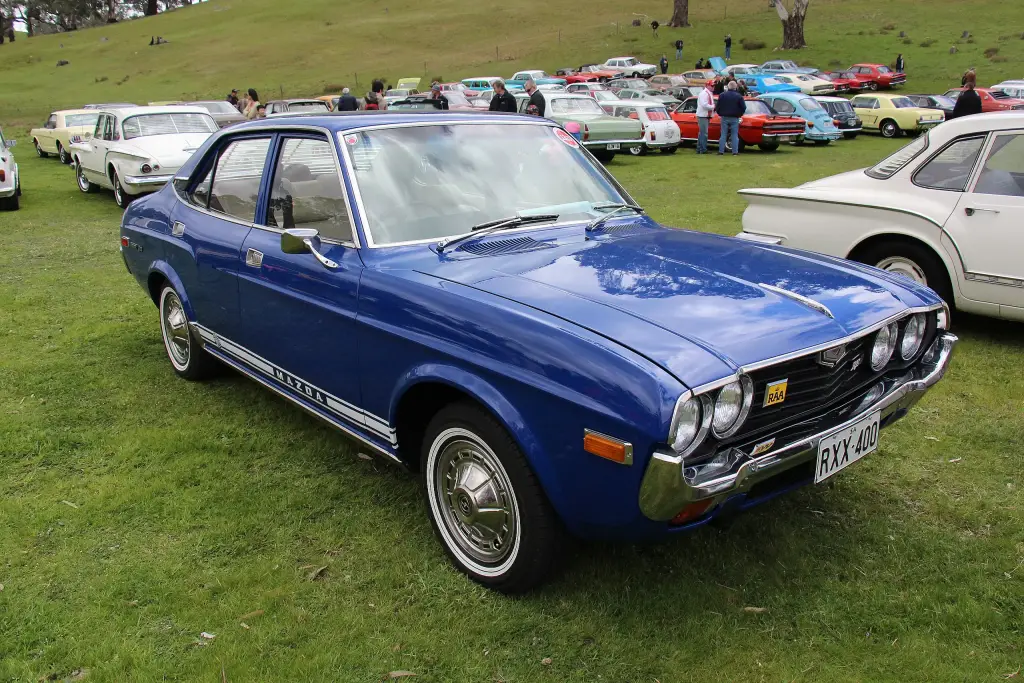
The 1500 SS with twin carburettors arrived in June 1967 with 86 PS at 5,500 rpm and 117.8 N·m. A stroked 1,796 cc engine was added in December 1968; the Luce 1800 produced 104 PS at 5,500 rpm and 152 N·m at 2,500 rpm, and to fit the taller engine the bonnet gained a slight bump in the middle with an air inlet at its leading edge. An estate joined in April 1967 with the same engine as the saloon, and unusually for a commercial vehicle of the time it could be ordered with a three-speed automatic.
The Luce Mark I was sold in Australia and most other export markets as the Mazda 1500 and Mazda 1800. Mazda considered assembling it in South Africa and brought in 50 cars for evaluation and company use in 1967, but chose instead to concentrate on the 1200 and its compact pickups. In the United States the 1800 produced 98 hp and cost $2,280, but with the three-speed automatic it was slow – 0 to 60 mph in 17.5 seconds – and it was gone from the market by 1972, although in Europe the same engine with a four-speed manual was considered much better, reaching 60 mph in 13.4 seconds.
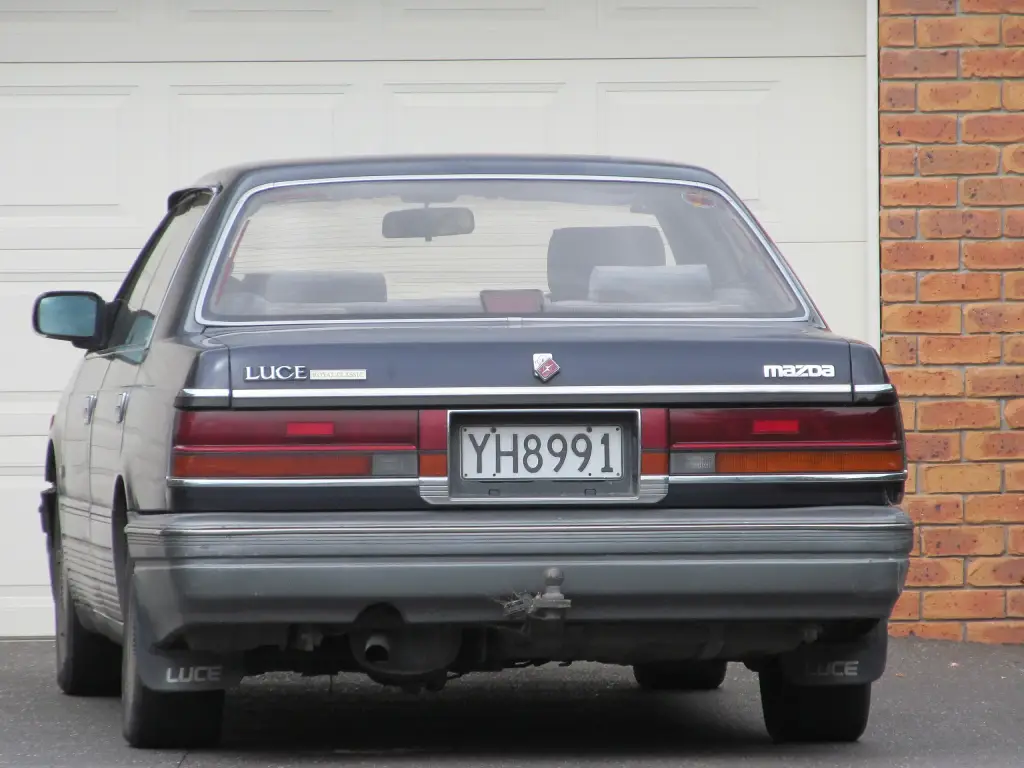
From 1973 the Luce was exported as the 929, and the line continued through several generations until 1991, when the Sentia took over and inherited the 929 name. Rotary-engined versions included the R130 coupé and the RX-4, which used the same body as the piston-engined Luce.
Design and features
- Giugiaro design: the 1965 show car and the production shape came from Bertone.
- Export 929: from 1973 the Luce was Mazda’s largest saloon in most export markets.
- Engine range: 1.5, 1.8 and later 2.0 and 2.5-litre fours, plus rotary versions.
- Rotary Luce: the R130 coupé and RX-4 brought Wankel power to the model.
Mazda Luce versions
- Luce 1500 (1966): 1,490 cc, 78 PS; the 1500 SS from 1967 with 86 PS.
- Luce 1800 (1968): 1,796 cc, 104 PS, with a raised bonnet.
- Luce estate (1967): the same engine as the saloon, with an optional automatic.
- Luce R130 and RX-4: rotary-engined versions.
- Later Luce generations: exported as the 929 until 1991.
The Luce was exported as the Mazda 929 and was replaced by the Mazda Sentia; its rotary versions connect to the Cosmo. More Mazdas are in the Mazda collection.
Sources
- Mazda Luce, English Wikipedia: first generation, engines, export markets
- Mazda 1500, German Wikipedia: European and German market
- マツダ・ルーチェ, Japanese Wikipedia: Japanese generations