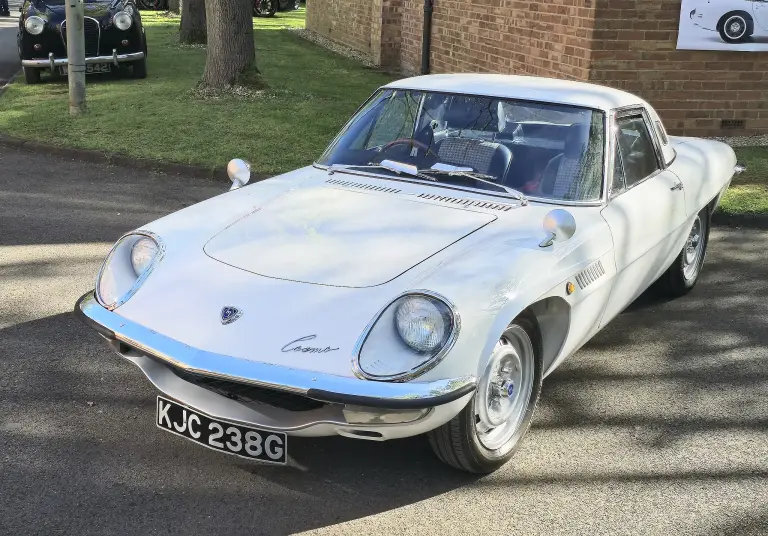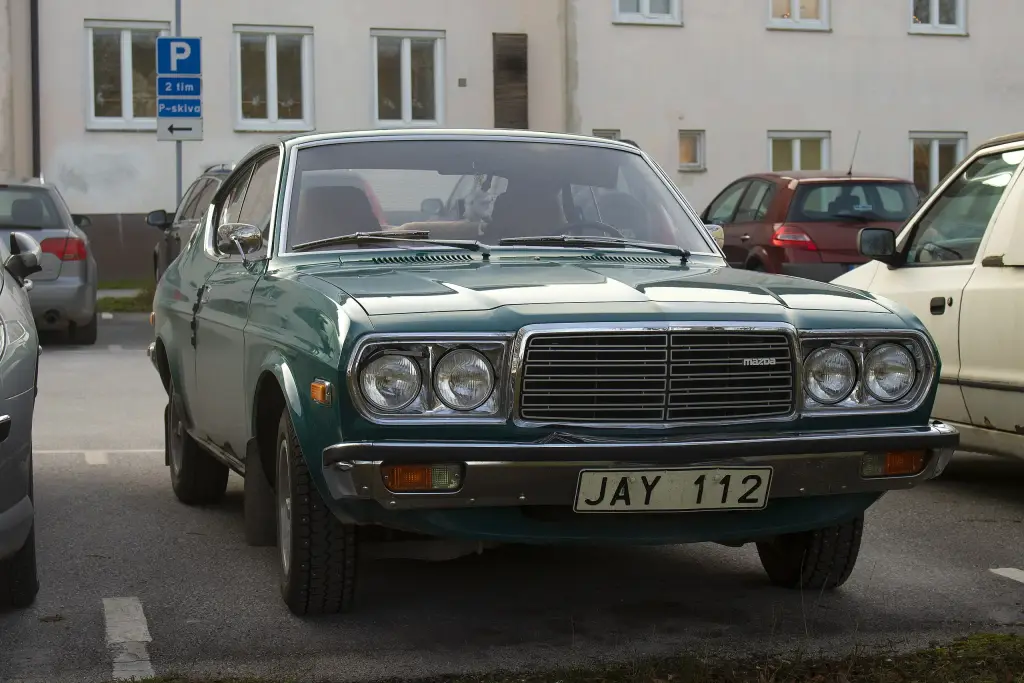
The Mazda 929 was the export name for Mazda’s full-size saloon between 1973 and 1997. For most of that time it was a rebadged Luce; from 1991 the name went to export versions of the Sentia. Between 1982 and 1986 Mazda also used the 929 name on its Cosmo coupé in some markets.
Mazda 929 at a glance
| Sold | 1973–1997, export markets only |
|---|---|
| Based on | Mazda Luce until 1991, then Mazda Sentia |
| Also a Cosmo | 1982–1986, the coupé in some export markets |
| Drive | rear-wheel drive in every generation |
| LA2 | 1973–1978, 1.8-litre with 83 PS |
| LA4 | 1978–1982, sold in Germany as the 929L |
| HB | 1982–1987, 2.0-litre with 66 kW |
| HC | 1987–1991 |
| HD | 1991–1995 |
| HE | 1996–1997 |
History of the Mazda 929
Production of the first 929, the LA2 series, began in November 1973 as a saloon, estate and coupé. It came with a single engine, a 1.8-litre petrol four of 61 kW (83 PS). A facelift in October 1976 brought rubber inserts around the bumpers and a larger grille, and in spring 1977 the car reached Germany, though not as an estate. The second generation, the LA4, arrived in September 1978 as a saloon, with an estate added in April 1979; the coupé was not replaced at first. A facelift in April 1980 replaced the two vertically stacked headlights with larger horizontal ones and brought wide rear lights.
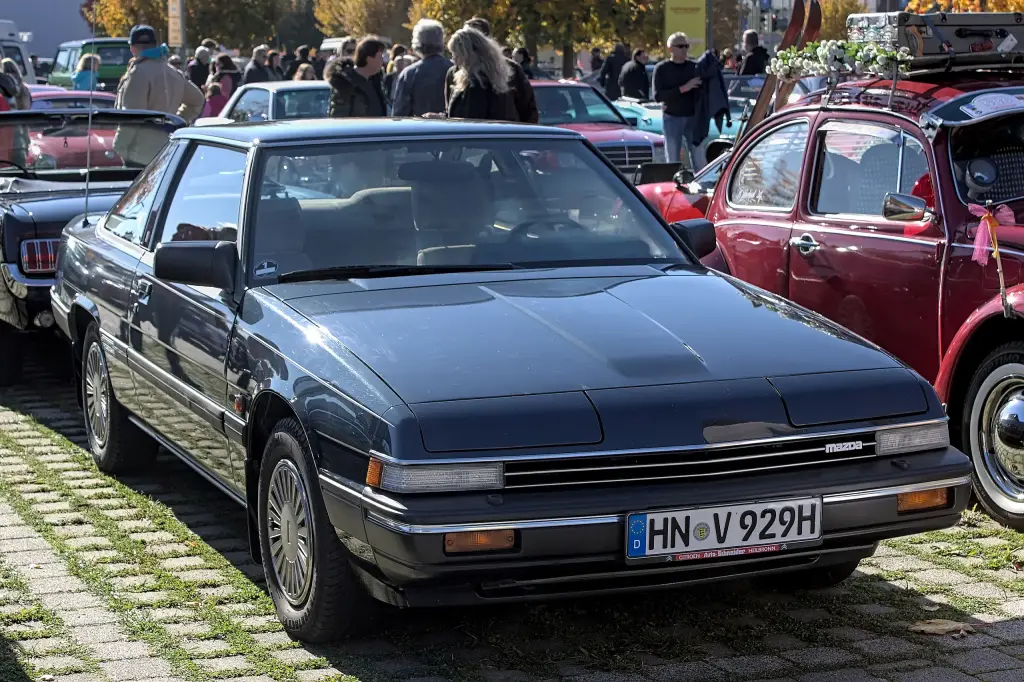
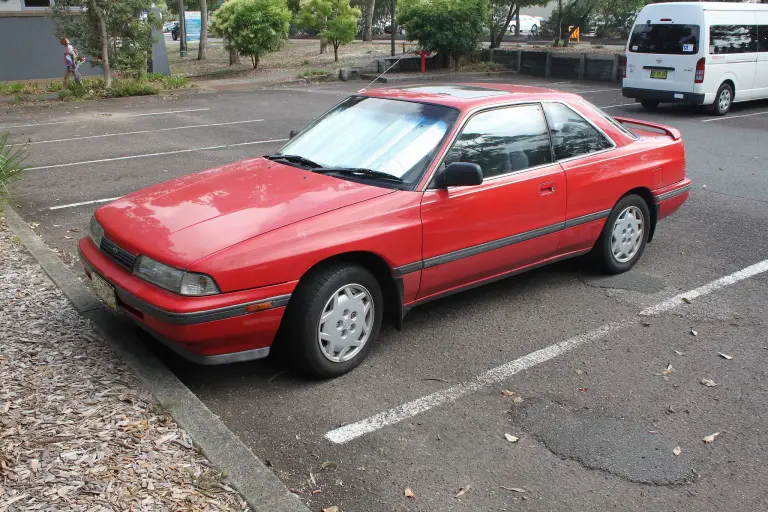
In Germany the LA4 saloon was sold as the 929L and the estate as the 929L Kombi, model code FA4V, with a 2.0-litre carburettor engine of 66 kW (90 PS) known for smoothness and economy. The HB of April 1982 was a new design with a less baroque body, again with the 2.0-litre 66 kW engine in Germany, and it was offered as a saloon and as a 929 coupé with pop-up headlights and an analogue instrument display in digital style. The rotary engine of the RX-7, whose coupé was called the Cosmo, was reserved for export models. The estate, code HV, was adapted to the new look and built until about 1988; its tools and engines later formed the basis of the Chinese Haima brand.
A facelift in March 1984 brought two new engines: a 2.0-litre carburettor unit with 101 PS and a 2.0-litre injection unit with 120 PS. The coupé lost its third side window and gained new trim, and the colour and upholstery range was widened beyond the original three paints and brown interior. The HC generation followed in April 1987, then the HD in 1991 and the HE in 1996, the last of the line before the 929 name was retired in 1997.
Design and features
- Export-only name: the 929 was never used in Japan, where the car was the Luce, Cosmo or Sentia.
- Rear-wheel drive: every generation drove the rear wheels.
- 929L: the German name for the LA4 saloon and its estate.
- Coupé with pop-up lights: the HB coupé had concealed headlamps and a digital-look dash.
Mazda 929 versions
- LA2 (1973–1978): 1.8-litre, saloon, estate and coupé.
- LA4 / 929L (1978–1982): 2.0-litre, saloon and estate.
- HB (1982–1987): new body, saloon and coupé, later 2.0 injection with 120 PS.
- HC, HD and HE (1987–1997): the last three generations.
The 929 was the export version of the Mazda Luce and was followed by the Mazda Sentia. More Mazdas are in the Mazda collection.
Sources
- Mazda 929, English Wikipedia: generations and name history
- Mazda 929, German Wikipedia: engines, German market, facelifts