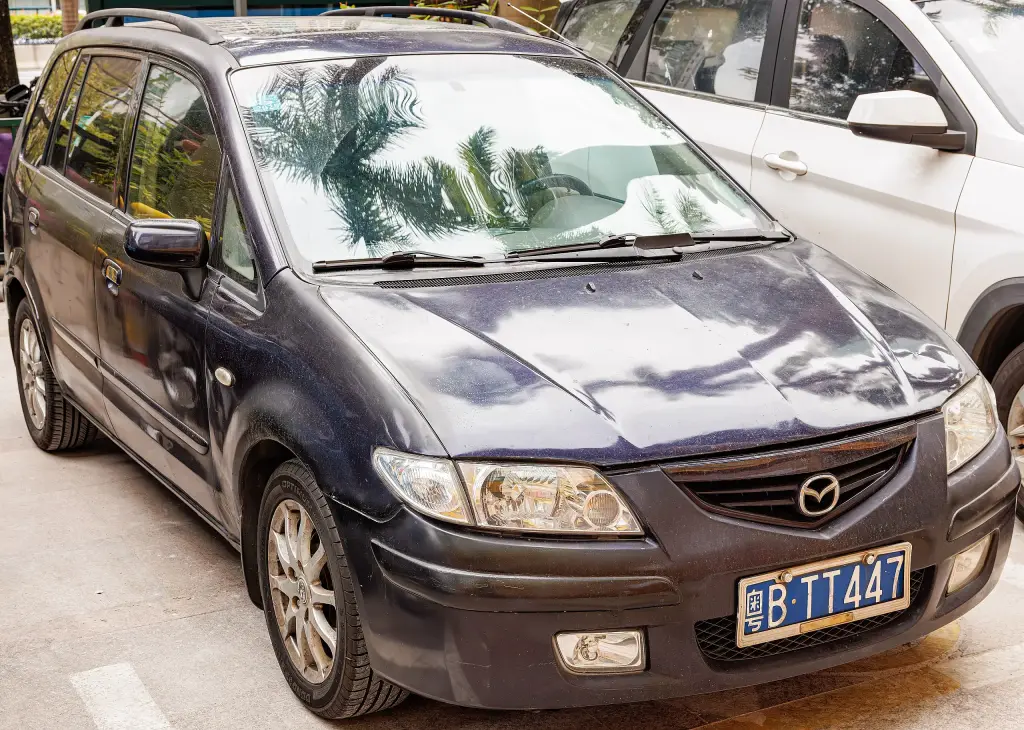
The Mazda 5 is the export name of the Premacy, a compact MPV that Mazda built from 1999 to 2018. The first generation was one of the cheapest seven-seaters on the market when it appeared in 1999; from 2005 the second generation was sold as the Mazda 5 everywhere except Japan, where the Premacy name stayed.
Mazda 5 at a glance
| Built | 1999–2018 |
|---|---|
| Names | Premacy in Japan, Mazda 5 elsewhere from 2005 |
| First generation | CP, shown at Geneva on 9 March 1999, on sale from April 1999 |
| Second generation | CR, on sale in Japan on 7 February 2005 |
| Platform | second generation on Ford’s global C1 platform, shared with the Mazda 3 |
| Seats | five or seven; six in North America in the second generation |
| Doors | rear sliding doors on the second generation |
| Ford versions | Ford Ixion (Asia) and Ford i-Max (Taiwan, 2007–2011) |
The Premacy and Mazda 5 are the same model under two names; this page covers both generations.
History of the Mazda 5
The first-generation Premacy, the CP, was unveiled on 9 March 1999 at the Geneva Motor Show and went on sale in April 1999. It was one of the least expensive seven-seaters on the market, with front- or all-wheel drive and a four-speed automatic gearbox; the second and third rows of seats could be folded and removed. Engines were a 1.8 and a 2.0 petrol four with up to 131 PS, and a 2.0 diesel with 90 or 100 PS. In some Asian markets the same car was sold as the Ford Ixion, and in China it was built by FAW Haima as the Haima Freema.
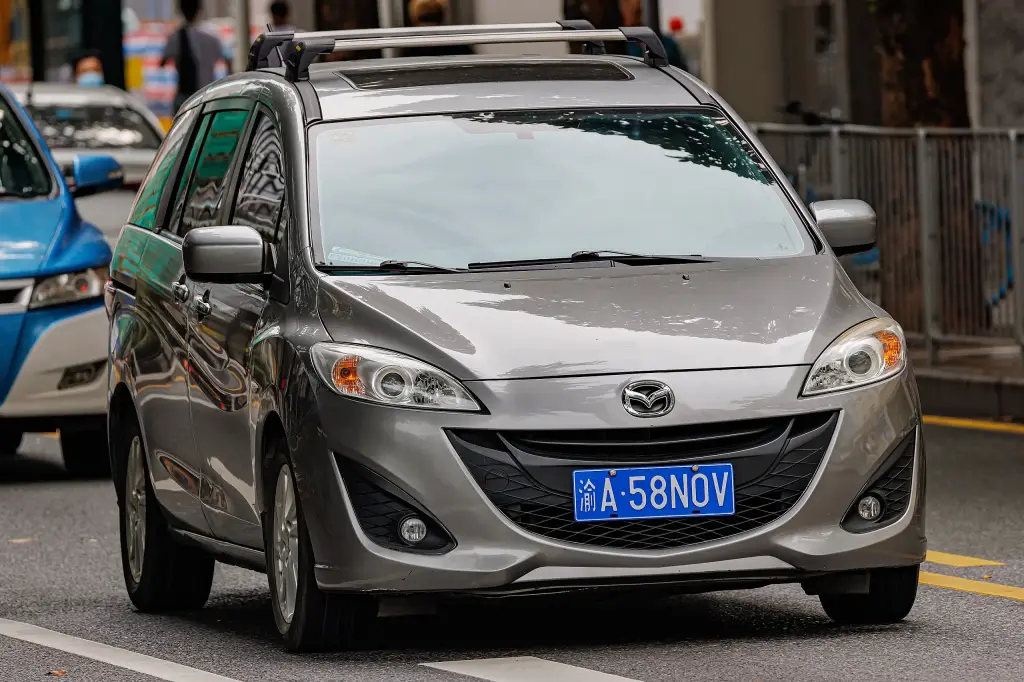
The second generation went on sale in Japan on 7 February 2005 and in export markets in mid-2005, larger in every dimension and sold as the Mazda 5 everywhere except Japan. It used Ford’s global C1 platform, so it shared much with the Mazda 3, and it replaced the Mazda MPV as Mazda’s minivan in most export markets. In North America safety rules limited it to six seats in three rows of two; elsewhere it was a seven-seater using Mazda’s Karakuri seating, with a folding jump seat in the middle of the second row. The middle row slid and reclined and folded flat, as did the rear row. The car was previewed by the MX-FLEXA concept at the 2004 Geneva show.
In Europe the second-generation Mazda 5 was launched in Germany on 18 June 2005 with three trim levels and engines from a 1.8 petrol with 115 PS to a 2.0 diesel with 143 PS. It had sliding doors on both sides of the rear compartment instead of the usual hinged doors, a two-stage tailgate, and was claimed to be 90 percent recyclable. A facelifted version was shown at the Bologna Motor Show on 7 December 2007. In Taiwan from 2007 the car was sold with changes as the Ford i-Max.
Design and features
- Seven seats: the first generation was among the cheapest seven-seaters on sale in 1999.
- Karakuri seating: a folding, sliding and tumbling seat system in the second generation.
- Sliding rear doors: fitted on both sides of the second-generation car.
- Mazda 3 underpinnings: the second generation used Ford’s C1 platform.
Mazda 5 versions
- Premacy CP (1999–2005): first generation, five or seven seats, front- or all-wheel drive.
- Ford Ixion: Asian-market version of the first generation.
- Mazda 5 CR (2005–2010): second generation on the C1 platform.
- Ford i-Max: Taiwanese version of the second generation from 2007.
The Mazda 5 sat between the Mazda 3 and the larger Mazda MPV. More Mazdas are in the Mazda collection.
Sources
- Mazda Premacy, English Wikipedia: generations, engines, seating
- Mazda5, German Wikipedia: European launch, trims, equipment